Designed with versatility in mind, Roger On Sphere is engineered to excel in notoriously difficult environments such as bustling restaurants, dynamic business meetings, lively family gatherings, interactive classrooms, and other demanding situations. The system seamlessly combines Phonak’s advanced Sphere speech-processing technology with the robust Roger wireless transmission protocol. According to company statements, this new microphone delivers an impressive additional 3 dB signal-to-noise ratio (SNR) benefit compared to its predecessor, the Roger On microphone, while also boasting the ability to automatically adapt to diverse listening situations without manual user intervention. Phonak proudly positions Roger On Sphere as the first remote microphone to incorporate real-time DNN-based speech-from-noise separation, underscoring its pioneering role in integrating artificial intelligence directly into a portable assistive listening device.
The Dawn of AI-Powered Hearing: A Technological Deep Dive
The introduction of Roger On Sphere underscores a significant paradigm shift in the field of audiology, where artificial intelligence, particularly deep neural networks, is becoming an increasingly integral component of hearing solutions. DNN technology, a subset of machine learning, functions by processing vast amounts of audio data to "learn" the intricate patterns of human speech and differentiate them from various types of background noise. Unlike traditional noise reduction algorithms that often rely on fixed rules or spectral subtraction, DNNs can adapt and refine their understanding of sound environments, leading to more nuanced and effective speech separation. In Roger On Sphere, this intelligence is embedded directly into the microphone, allowing it to perform sophisticated real-time analysis and enhancement of the incoming audio before it is transmitted to the listener’s hearing device.
This innovation builds upon Phonak’s existing Sphere processing architecture, which has previously applied AI-based techniques to improve speech understanding within their hearing aid platforms. By integrating this powerful processing directly into the remote microphone, Roger On Sphere is capable of delivering an already enhanced speech signal to compatible hearing aids and other listening devices. The device’s operating system, RogerSense OS™, is crucial to its performance, continuously analyzing the acoustic environment and dynamically applying speech-from-noise separation across all microphone modes and noise levels. This continuous, intelligent adaptation is designed to provide a more natural and less fatiguing listening experience, reducing the cognitive effort typically required to follow conversations in noisy settings.

Alain Kertész, Senior Director of Roger at Phonak, articulated the significance of this development: “Roger has transformed communication in demanding listening environments for nearly two decades. Roger On Sphere brings AI-driven speech separation to a remote microphone, giving users greater clarity and confidence in situations that were previously difficult to manage.” This statement highlights not only the technological advancement but also Phonak’s long-standing commitment to improving accessibility and communication for individuals with hearing loss.
Quantifiable Improvements: The 3 dB SNR Advantage
One of the most compelling performance claims accompanying the launch of Roger On Sphere is the reported additional 3 dB improvement in signal-to-noise ratio compared to the previous Roger On microphone. For individuals with hearing loss, particularly in challenging acoustic environments, even a modest improvement in SNR can yield significant benefits in speech intelligibility. A 3 dB increase in SNR is scientifically significant, as it corresponds to approximately 50% less noise power relative to the speech signal. In practical terms, this could potentially allow users to communicate effectively in environments with twice the noise level while maintaining a comparable signal-to-noise ratio, effectively expanding their accessible listening world.
Phonak attributes these findings to a 2026 Phonak Insight publication authored by Roh, Gigandet, and Sans, titled Expand your world, with Roger On Sphere. The reported 3 dB advantage is stated to apply within the device’s typical operating range, indicating rigorous internal validation of the technology’s effectiveness. This distinction is particularly relevant for hearing care professionals (HCPs), who routinely encounter patients struggling with speech intelligibility despite being fitted with advanced hearing aids. While modern hearing aids excel in many situations, they often face inherent limitations when the target speaker is at a distance, or when competing sounds are overwhelmingly strong. Remote microphones like Roger On Sphere are designed to bridge this gap by capturing speech closer to its source, thereby improving the signal-to-noise ratio reaching the listener’s ear. The addition of AI-based processing is intended to further refine this signal by actively suppressing interfering noise, making the desired speech even clearer.
However, it is crucial for both professionals and prospective users to understand that the manufacturer’s reported SNR improvement, while indicative of enhanced technical performance, should not be interpreted as a guaranteed identical improvement in speech understanding for every listener or in every environment. Individual benefits will invariably depend on a complex interplay of factors, including the user’s specific hearing status, the precise placement of the microphone, the characteristics of the background noise, and the specific hearing technology to which the Roger On Sphere is connected. Nevertheless, the documented SNR improvement provides a strong evidence base for the potential real-world advantages of this new technology.
Automatic Adaptation: Enhancing User Experience

A key design principle behind Roger On Sphere is its commitment to user convenience and seamless integration into daily life. The system is engineered to support a vast array of everyday communication situations without imposing the burden of manual mode switching on the user. This intelligent automation is a direct response to feedback from users and hearing care professionals who often highlight the desire for hearing technology that adapts effortlessly to dynamic environments.
The device automatically adjusts its operational parameters to optimize performance for various settings, including professional meetings, educational lectures, online video calls, social restaurant outings, intimate family gatherings, and even challenging acoustic environments like car journeys. This capability allows the microphone to fluidly adapt to different communication arrangements, whether it’s a one-on-one conversation, a multi-speaker group discussion, or a distant speaker in a lecture hall. The core of this adaptive intelligence lies in its AI-powered speech-from-noise separation, driven by RogerSense OS, combined with automatic microphone mode adjustments and Phonak’s proprietary low-latency Roger wireless transmission protocol. The goal is to minimize the cognitive load on the user, allowing them to focus on the conversation rather than on managing their device.
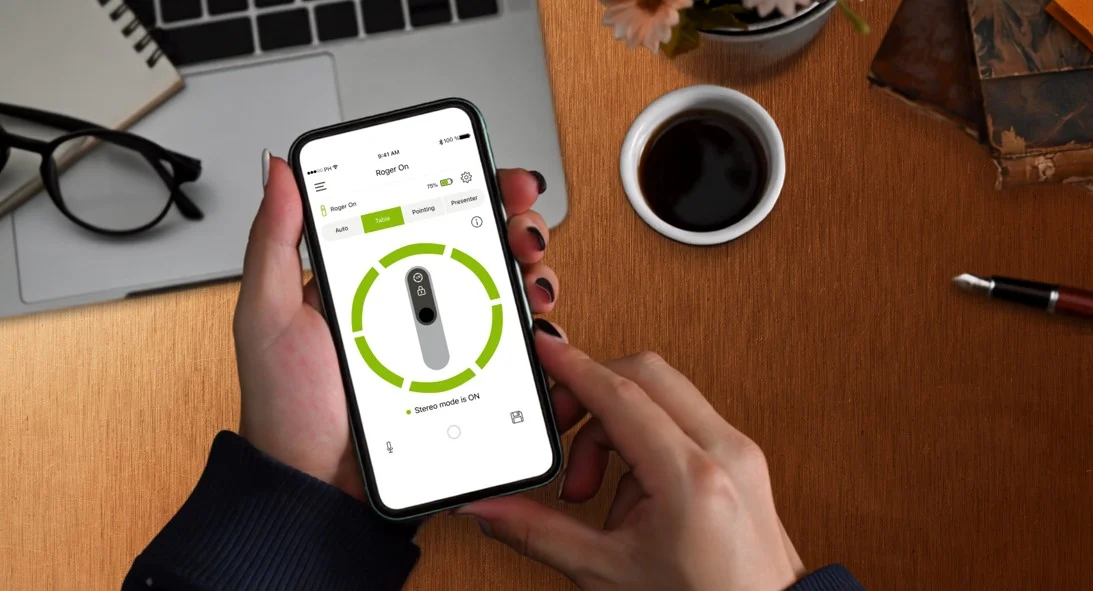
Beyond these functional enhancements, Phonak has also refined the physical design of the Roger On Sphere, introducing an updated hardware aesthetic and improvements to the myRogerMic application experience. These updates collectively aim to provide a more intuitive and user-friendly interaction, further reducing the need for manual intervention and ensuring a more natural listening experience across diverse scenarios.
Broader Impact: Addressing the Global Challenge of Hearing Loss
The launch of Roger On Sphere comes at a time when the global prevalence of hearing loss continues to rise, impacting hundreds of millions worldwide. The World Health Organization (WHO) estimates that over 1.5 billion people currently live with some degree of hearing loss, and this number is projected to increase significantly in the coming decades. Untreated hearing loss can have profound implications for an individual’s quality of life, leading to social isolation, communication difficulties, reduced educational and employment opportunities, and even accelerated cognitive decline.
While hearing aids have made remarkable strides in compensating for hearing loss, they often reach their limits in particularly noisy or reverberant environments, or when the desired sound source is distant. This "listening gap" is precisely where assistive listening devices (ALDs) like the Roger platform have proven invaluable. By capturing speech closer to the source and transmitting it directly to the ear, ALDs significantly improve the signal-to-noise ratio, making speech more accessible. The integration of DNN technology into Roger On Sphere represents a critical advancement in closing this gap even further, offering a more robust and intelligent solution for the most challenging listening situations.

The market for assistive listening devices is also experiencing growth, driven by an aging global population, increased awareness of hearing health, and continuous technological innovation. Phonak’s move to incorporate AI into a remote microphone is indicative of a broader industry trend towards leveraging advanced computing to enhance sensory experiences. This development not only reinforces Phonak’s position as an innovator but also sets a new benchmark for what users can expect from their assistive listening technology.
Professional Perspectives and Clinical Applications
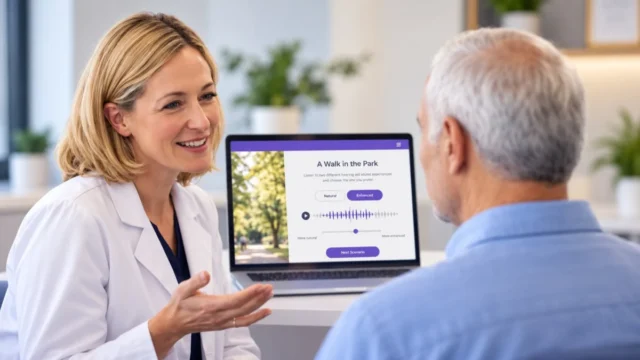
For hearing care professionals, Roger On Sphere offers a powerful new tool in their clinical armamentarium. Phonak actively encourages HCPs to demonstrate the device during patient appointments, allowing individuals to experience its potential benefits firsthand in realistic listening conditions. Such demonstrations are particularly vital for patients who report persistent and debilitating difficulty understanding speech in noisy environments like restaurants, group conversations, or workplace meetings, even after receiving optimally fitted and programmed hearing aids. These are often the patients who express the highest levels of frustration and communication fatigue.
Beyond conventional hearing aid fittings, remote microphone systems like Roger On Sphere are increasingly considered an integral part of comprehensive audiological rehabilitation strategies. They provide essential support for individuals who require additional assistance in educational settings, professional environments, and various social contexts. For children in classrooms, a remote microphone can ensure consistent access to the teacher’s voice, overcoming issues of distance and classroom noise. For professionals, it can facilitate participation in critical meetings and conferences.
The broad compatibility of Roger On Sphere with a wide range of hearing solutions, including Phonak Naída and Virto hearing aids, as well as Advanced Bionics cochlear implant systems (both part of the Sonova portfolio), is a crucial advantage. This interoperability ensures that a larger segment of individuals with hearing loss, including those with profound hearing loss relying on cochlear implants, can benefit from this advanced technology. For cochlear implant recipients, who often face unique challenges in processing speech in complex noise, the enhanced signal provided by Roger On Sphere could be transformative, offering a clearer pathway to speech understanding. Specific connectivity requirements and any necessary Roger receivers or accessories should always be confirmed for each individual hearing aid or cochlear implant configuration by a qualified hearing care professional.
Availability and the Future of Hearing Technology

Phonak Roger On Sphere is slated to become available in most global markets beginning in mid-November 2026. While the company has not yet released specific pricing information in its launch announcement, it is anticipated that details will follow closer to the release date. This strategic launch timing allows for thorough preparation of the market, including training for hearing care professionals and the dissemination of detailed product information.
The integration of deep neural networks into remote microphones marks an exciting chapter in the evolution of hearing technology. It suggests a future where hearing devices are not just amplifiers but intelligent processors capable of creating personalized, optimized soundscapes for every user, in every environment. This trend points towards more predictive algorithms, even more seamless integration across various smart devices, and ultimately, a world where hearing loss is less of a barrier to full participation in life. Phonak, through innovations like Roger On Sphere, continues to solidify its position at the forefront of this technological revolution, driving progress towards a more inclusive and accessible auditory future.
For additional information and updates, interested parties are encouraged to visit www.phonak.com.
References
- Roh, M., Gigandet, X., & Sans, M. (2026). Expand your world, with Roger On Sphere. Phonak Insight. Reported 3 dB signal-to-noise ratio benefit compared with the preceding Roger On model, within the typical operating range.
About Phonak
Founded in 1947 and headquartered in Stäfa, Switzerland, Phonak is a leading developer of hearing aids, wireless communication systems, and other advanced hearing solutions, operating as a key brand within the Sonova Group. Its comprehensive portfolio encompasses cutting-edge hearing technologies meticulously designed to enhance communication across diverse everyday listening environments. Phonak’s acclaimed Roger wireless microphone systems are specifically engineered to provide superior speech access for individuals experiencing hearing loss in challenging acoustic conditions, underscoring the company’s dedication to innovation and patient-centric solutions. For further details, please visit www.phonak.com.