

The conference underscored a fundamental shift in how the scientific community approaches tinnitus. Rather than seeking a "silver bullet" cure, researchers are increasingly focused on the heterogeneity of the condition, acknowledging that tinnitus is not a monolithic disorder but a symptom arising from a complex interplay of auditory and non-auditory neural networks.
The Complexity of the Auditory System and Brain Networks
For decades, the prevailing clinical view localized tinnitus primarily within the inner ear, focusing on cochlear damage as the root cause. However, modern research presented at the conference suggests a more holistic, systems-based reality. Tinnitus is now understood as a manifestation of a brain attempting to recalibrate in response to sensory deprivation.
When the auditory system experiences damage—often through noise-induced hearing loss, aging, or acoustic trauma—the brain’s auditory cortex may initiate a compensatory mechanism. Much like an amplifier turning up the volume on a degraded radio signal to overcome static, the brain increases its gain. This "hyper-sensitivity" can lead to the neural activity being perceived by the patient as a constant ringing, buzzing, or hissing sound.
Beyond the auditory cortex, speakers emphasized the involvement of the limbic system and the autonomic nervous system. The persistent nature of tinnitus is exacerbated by the brain’s inability to filter out this internal signal, which becomes inextricably linked with networks responsible for stress, attention, and emotional processing. This explains why, for many patients, the condition is not merely a sound, but a profound psychological burden.
A Chronology of Research Evolution
The path to the current international discourse on pharmacology and gene therapy has been marked by several key stages in medical understanding:
- 1990s–2000s: The Era of Habituation. Clinical efforts were almost exclusively focused on Tinnitus Retraining Therapy (TRT) and psychological coping mechanisms. The scientific community prioritized behavioral modification to help patients "ignore" the sound.
- 2010s: The Neuroplasticity Shift. Research shifted toward understanding how the brain rewires itself following hearing loss. This period solidified the theory that tinnitus is a hallmark of maladaptive neural plasticity.
- 2020s: The Molecular and Genetic Frontier. The current era is characterized by the integration of molecular biology. Researchers are now looking at ion channels, neurotransmitter imbalances (specifically glutamate and GABA), and genetic predispositions that may make some individuals more susceptible to tinnitus than others.
Challenges in Pharmacological Translation
Despite the excitement surrounding potential pharmaceutical interventions, the path from the laboratory to the pharmacy shelf remains fraught with challenges. A primary hurdle is the lack of objective biomarkers. Unlike hypertension, which can be measured with a sphygmomanometer, or blood glucose levels, which are tracked via testing, tinnitus remains entirely subjective.
Because researchers cannot yet "see" or "measure" the severity of tinnitus with a standardized biological test, clinical trials for new drugs struggle with high levels of variability. A drug that effectively modulates neural excitability in one patient may prove ineffective in another due to the vastly different underlying mechanisms driving their specific case. This "stratified medicine" approach is now considered the most viable way forward. Researchers are working to categorize patients into subgroups—such as those whose tinnitus is driven by somatosensory issues, those with hearing loss-linked tinnitus, and those with emotional-processing dominance—to tailor future pharmacological treatments accordingly.
Integrating Behavioral and Biological Models
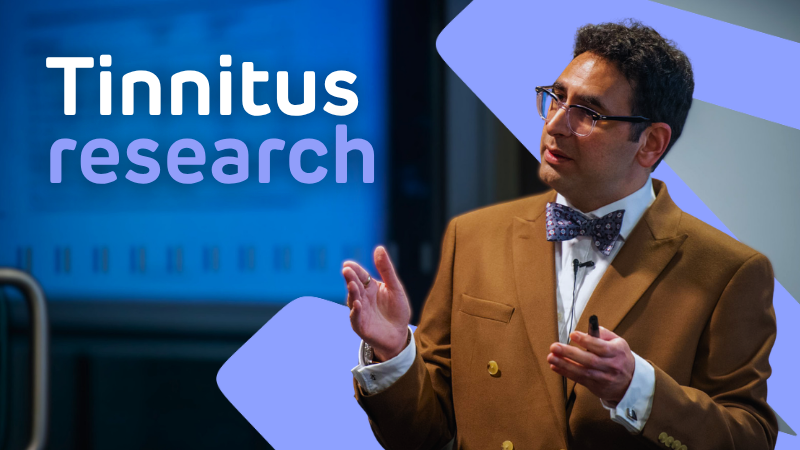
A critical consensus emerged during the conference: pharmacological interventions and behavioral therapies should not be viewed as competing paradigms. Dr. Hashir Aazh, President of the upcoming 4th World Tinnitus Congress, noted that while cognitive behavioral therapy (CBT) provides the essential tools for managing the patient’s reaction to the sound, future pharmacology could serve as the "biological key" to silence the sound at its source.
This dual-track strategy acknowledges that even if a future drug can reduce the intensity of the neural signal, patients may still require psychological support to reverse the conditioned stress response that has been established over years of living with the condition.
Global Collaboration and the Path to 2027
The momentum generated by the 2nd International Conference on Pharmacology and Gene Therapy for Tinnitus will culminate in the 4th World Tinnitus Congress and 15th International Tinnitus Seminar, scheduled for 2027 in London. This landmark event, organized in partnership with a coalition of global entities including Tinnitus UK, the American Auditory Society, and the International Society of Audiology, aims to synthesize the latest advancements in gene therapy and neuro-pharmacology.
The scale of this collaboration reflects a growing international commitment to move beyond palliative care. With organizations like the RNID, the European Federation of Audiology Societies, and various academic institutions from the University of California to London-based research centers involved, the focus is squarely on global data sharing and the harmonization of clinical standards.
Implications for Future Patient Care
The implications of this research are significant. As the medical community moves toward a more nuanced, personalized approach, the "one-size-fits-all" treatment model is rapidly becoming obsolete. For the patient, this means that the future of care will likely involve:
- Diagnostic Stratification: Detailed testing to identify the specific neural and physical drivers of a patient’s tinnitus.
- Targeted Pharmacotherapy: Medications specifically designed to address identified neurotransmitter imbalances or ion channel dysfunctions.
- Integrated Care Pathways: A multidisciplinary approach where ENT specialists, audiologists, and psychologists work in tandem from the initial diagnosis, ensuring both the biological and psychological aspects of the condition are managed simultaneously.
While a universal cure remains an elusive goal, the scientific focus has transitioned from a period of observation to a period of active intervention. The recognition that tinnitus is a complex, multi-system disorder is the most important step taken in recent years. By dismantling the stigma and complexity of the condition, researchers are creating a roadmap that prioritizes patient-centered care and rigorous, evidence-based biological innovation. As we look toward the 2027 London summit, the global scientific community remains unified in its mission: to provide not only the comfort of management but the tangible hope of restoration.