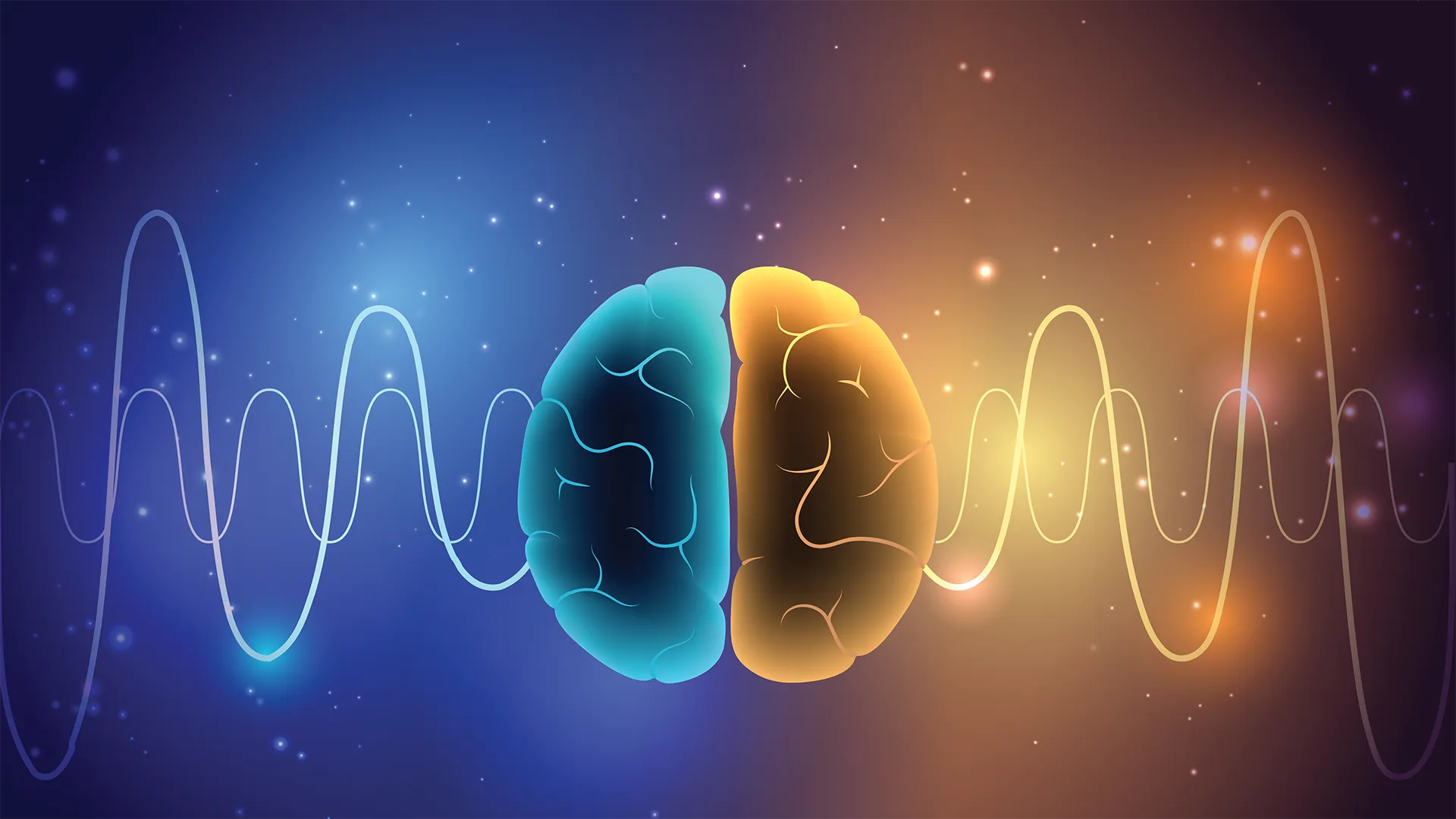
For decades, the standard neurological model of auditory perception suggested that sound waves are converted into electrical signals in the ear, which then travel to the primary auditory cortex to be registered and categorized. While this model accounts for the basic reception of sound, it fails to capture the intricate "orchestration" that occurs when the brain is exposed to continuous, rhythmic, or melodic streams of information. The study led by Dr. Mattia Rosso and Associate Professor Leonardo Bonetti at Aarhus University’s Center for Music in the Brain reveals that the brain undergoes a profound reconfiguration, shifting its functional networks to align with the frequency and rhythm of the external stimulus.
The Technological Breakthrough: Understanding FREQ-NESS
At the heart of this research is FREQ-NESS, a novel neuroimaging methodology that represents a significant leap forward from traditional data analysis techniques. In standard neuroimaging, researchers often focus on predefined frequency bands—such as alpha, beta, or gamma waves—or specific "regions of interest" (ROIs) within the brain. While useful, these methods often miss the fluid, overlapping nature of neural activity.
FREQ-NESS utilizes advanced source separation algorithms to disentangle these overlapping networks based on their dominant frequencies. By isolating a unique frequency, the method can trace exactly how that specific signal propagates across the brain’s geography. Dr. Rosso compares the traditional view of brainwaves to "fixed radio stations," whereas FREQ-NESS reveals a much more fluid and "rich" landscape. This data-driven approach allows for the mapping of the whole brain’s internal organization without the bias of pre-existing assumptions about where or how a response should occur.
The technical innovation of FREQ-NESS lies in its ability to handle "source separation." In a crowded room, the human ear can often focus on a single voice despite a cacophony of background noise—a phenomenon known as the cocktail party effect. FREQ-NESS performs a mathematical version of this for the brain, separating the "voices" of different neural networks that are firing simultaneously. This allows researchers to see not just that the brain is active, but how different parts of the brain are collaborating and synchronizing at specific frequencies to process rhythmic information.
A Chronology of Discovery: From Signal Processing to Advanced Science
The development of this study follows a multi-year trajectory of research into neural entrainment and music cognition. The Center for Music in the Brain at Aarhus University has long been at the forefront of investigating how the human mind interprets temporal structures.
The timeline of this specific breakthrough began several years ago with the conceptualization of a mathematical framework that could better integrate Magnetoencephalography (MEG) data with frequency-domain analysis. MEG is a non-invasive neuroimaging technique that records the magnetic fields produced by electrical currents in the brain. While MEG offers excellent temporal resolution (measuring changes in milliseconds), it historically struggled with spatial precision when multiple signals overlapped.
By 2022, the research team, in collaboration with the University of Oxford’s Centre for Eudaimonia and Human Flourishing, began refining the FREQ-NESS algorithm. Throughout 2023, the team conducted rigorous testing, applying the method to datasets involving subjects exposed to varying auditory stimuli, ranging from simple metronomic beeps to complex musical compositions. The results consistently showed that the brain’s functional connectivity—the way different regions talk to each other—changed instantly as the frequency of the sound changed. The culmination of this work was the publication in Advanced Science in late 2024, marking a new era in the study of real-time neural plasticity.
Data Analysis: Mapping the Rhythmic Brain
The empirical data provided by the FREQ-NESS method offers a detailed look at how the brain manages its resources. When a subject hears a steady rhythm, the brain doesn’t just activate the auditory cortex; it recruits a "global network" involving the motor cortex, the prefrontal cortex, and the cerebellum.
According to the study’s data, these networks are not static. For example, a 10Hz (alpha) rhythm might trigger a specific spatial pattern of connectivity across the parietal lobe, but as soon as the stimulus shifts to a 20Hz (beta) rhythm, the brain’s "map" reorganizes. The researchers found that these frequency-specific networks are highly reliable across different experimental conditions, meaning the brain has a consistent, albeit dynamic, way of reconfiguring itself for different types of sensory input.
This reliability is crucial for the scientific community. In many neuroimaging studies, results can vary significantly between individuals or even between different sessions for the same person. However, the high "test-retest" reliability of FREQ-NESS suggests that these frequency-based networks are a fundamental property of human brain architecture. This opens the door for "individualized brain mapping," where doctors could potentially use a person’s unique frequency response to diagnose neurological conditions.
Expert Reactions and Scientific Commentary
The implications of this study have resonated throughout the international neuroscience community. Professor Leonardo Bonetti, a key figure in the research, emphasizes that this discovery changes the very definition of a "brain response."
"The brain doesn’t just react: it reconfigures," says Professor Bonetti. "And now we can see it. This could change how we study brain responses to music and beyond, including consciousness, mind-wandering, and broader interactions with the external world."
Independent experts in the field of neurophysics have noted that FREQ-NESS solves a "bottleneck" problem in data analysis. Traditionally, scientists had to choose between looking at "where" something happened in the brain (spatial) or "when/at what frequency" it happened (spectral). FREQ-NESS provides both simultaneously at a high level of detail.
Researchers at the University of Oxford have also highlighted the potential for this method to study "altered states of consciousness." By observing how these frequency-resolved networks break down or shift during sleep, anesthesia, or even meditative states, scientists can gain a deeper understanding of the biological basis of the human experience.
Broader Impact: Clinical Diagnostics and Brain-Computer Interfaces
Beyond the realm of basic neuroscience, the development of FREQ-NESS and the understanding of real-time brain reorganization have profound practical applications. One of the most promising areas is in clinical diagnostics, particularly for neurodegenerative and neurodevelopmental disorders.
- Early Detection of Dementia: Conditions like Alzheimer’s disease often manifest as "dysconnectivity" in the brain—regions that should be talking to each other stop doing so. By using FREQ-NESS to map a patient’s frequency-specific networks, clinicians might be able to detect subtle changes in brain reorganization years before physical symptoms appear.
- Epilepsy and Seizure Mapping: Understanding how a frequency-specific signal propagates through space is vital for treating epilepsy. FREQ-NESS could help neurosurgeons pinpoint the exact origin of an abnormal frequency (a seizure) and see how it spreads through the brain’s networks.
- Brain-Computer Interfaces (BCIs): Companies like Neuralink and other BCI developers rely on interpreting brain signals to control external devices. The precision of FREQ-NESS could allow for more sophisticated interfaces that respond to the user’s internal "frequency shifts," leading to more natural and fluid control of prosthetic limbs or communication tools for the paralyzed.
Implications for Music Cognition and Education
The study’s origins in the Center for Music in the Brain also highlight its importance for understanding the human relationship with music. Music is perhaps the most complex auditory stimulus humans encounter, involving melody, harmony, rhythm, and timbre. The fact that the brain reorganizes itself in real time to process these elements explains why music is such a powerful tool for therapy and learning.
In educational settings, this research supports the idea that rhythmic training can "prime" the brain for other types of cognitive tasks. By reorganizing neural networks to be more efficient at frequency processing, music education may enhance the brain’s general ability to manage complex, multi-layered information.
The Path Forward for Individualized Neuroscience
A large-scale research program is currently underway to build upon the FREQ-NESS methodology. Supported by an international network of neuroscientists, the next phase of research will involve applying this method to larger and more diverse populations to create a "standardized map" of frequency-resolved networks.
The ultimate goal, as Professor Bonetti suggests, is individualized brain mapping. If scientists can establish what a "healthy" reconfiguration looks like for various stimuli, they can identify deviations that indicate pathology. Moreover, it allows for a more personalized approach to neuroscience, recognizing that while the fundamental principles of brain reorganization are universal, the specific "symphony" played by each person’s brain is unique.
As the scientific community continues to digest the findings from Aarhus and Oxford, one thing is clear: the image of the brain as a static organ with fixed regions for fixed tasks is fading. In its place is a more vibrant, dynamic, and adaptive model—a brain that is constantly reshaping itself to better understand and interact with the world of sound. The development of FREQ-NESS has not only provided a new tool for observation but has also provided a new lens through which to view the complexity of human consciousness.