
The Global Challenge of Parkinson’s Disease Diagnosis
Parkinson’s disease is the second most common neurodegenerative disorder globally, affecting an estimated 10 million people worldwide. Characterized by the progressive loss of dopaminergic neurons in the substantia nigra—a region of the brain responsible for movement control—the disease manifests through tremors, bradykinesia (slowness of movement), limb rigidity, and gait instability. However, the most significant challenge in managing PD is that clinical symptoms often do not appear until 60% to 80% of the relevant neurons have already been lost.
Currently, the "gold standard" for diagnosis relies on clinical rating scales, such as the Unified Parkinson’s Disease Rating Scale (UPDRS), and sophisticated neural imaging techniques like Dopamine Transporter (DaTscan) or Positron Emission Tomography (PET) scans. While effective, these methods are often subjective, invasive, or prohibitively expensive, costing thousands of dollars per scan. This financial and logistical barrier frequently delays diagnosis, preventing patients from receiving early interventions—such as levodopa therapy or deep brain stimulation—that are most effective when initiated in the early stages of the disease.
The Science of Scent: From "Super Smellers" to Sebum Analysis
The foundation of the earwax study lies in a fascinating intersection of biology and chemistry: the human body’s ability to emit unique chemical signatures during illness. The concept gained international attention several years ago through the case of Joy Milne, a "super smeller" who could detect a distinct, musky odor on her husband years before he was clinically diagnosed with Parkinson’s.
Subsequent research confirmed that people with PD exhibit changes in their sebum—an oily, waxy substance secreted by the sebaceous glands to moisturize and protect the skin. These changes are believed to be driven by the systemic physiological shifts associated with PD, including neurodegeneration, chronic systemic inflammation, and heightened oxidative stress. These processes alter the metabolic pathways of the body, leading to the production of specific volatile organic compounds that are released through the skin.
However, using skin sebum as a diagnostic medium presents practical hurdles. Sebum on the forehead or back is exposed to environmental pollutants, humidity, temperature fluctuations, and hygiene products like soaps and lotions. These external factors can contaminate the sample, leading to "noise" in the data and reducing the reliability of the test.
Why Earwax? The Advantages of a Protected Environment
To overcome the limitations of skin-based testing, the research team focused on cerumen, commonly known as earwax. Earwax is primarily composed of sebum mixed with dead skin cells and secretions from the ceruminous glands. Crucially, the ear canal provides a semi-enclosed, stable environment that protects the sebum from the external elements that typically degrade samples on other parts of the body.
By targeting the ear canal, researchers hypothesized they could obtain a more concentrated and "pure" chemical snapshot of the patient’s metabolic state. This shift in focus from external skin to the ear canal represents a strategic refinement in the search for reliable non-invasive biomarkers.
Methodology: Gas Chromatography and the Identification of Biomarkers
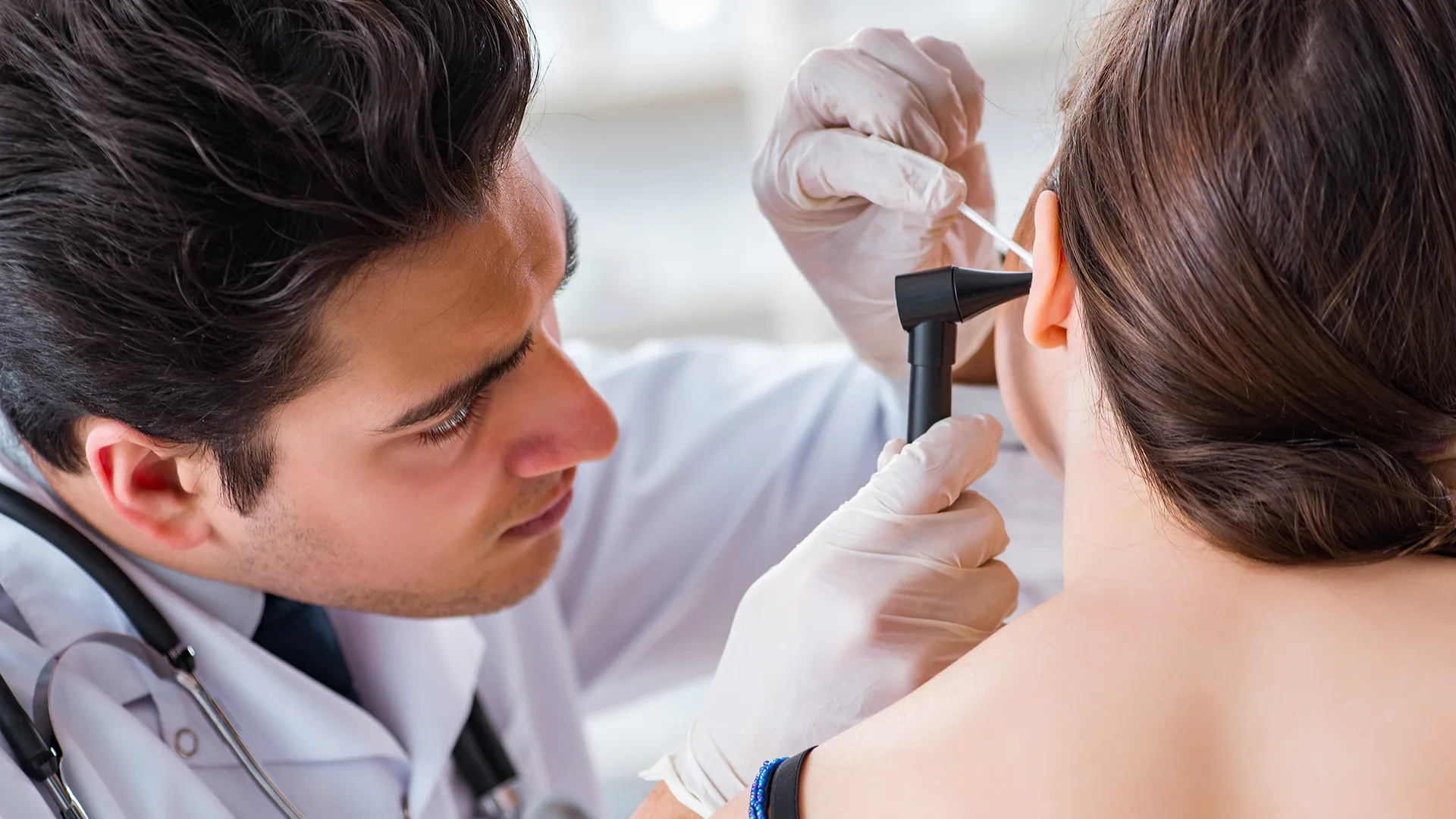
The study involved a cohort of 209 human subjects recruited in China, consisting of 108 patients diagnosed with Parkinson’s disease and 101 healthy control subjects. The researchers utilized a meticulous sampling process, swabbing the ear canals of participants to collect cerumen samples.
To analyze these samples, the team employed Gas Chromatography-Mass Spectrometry (GC-MS), an analytical method that combines the features of gas-liquid chromatography and mass spectrometry to identify different substances within a test sample. This allowed the researchers to isolate and identify the specific volatile organic compounds that differed between the PD group and the control group.
The analysis revealed four specific VOCs that were significantly altered in the earwax of PD patients:
- Ethylbenzene: A compound often associated with metabolic changes and environmental exposure.
- 4-ethyltoluene: A volatile aromatic hydrocarbon.
- Pentanal: An aldehyde that is a known byproduct of lipid peroxidation, a process directly linked to oxidative stress in the body.
- 2-pentadecyl-1,3-dioxolane: A complex organic molecule whose presence in increased or decreased levels serves as a distinctive marker.
The identification of these four chemicals provides a molecular "fingerprint" of Parkinson’s disease, suggesting that the disease’s impact on the body’s chemistry is consistent enough to be measured through a simple swab.
Integrating Artificial Intelligence: The AIO System
Identifying the biomarkers was only the first step. To make the discovery commercially and clinically viable, the researchers developed an Artificial Intelligence Olfactory (AIO) system. This "electronic nose" was trained using the VOC data collected from the 209 subjects.
By applying machine learning algorithms to the chemical profiles, the AIO system learned to recognize the subtle patterns and ratios of the four key VOCs that indicate the presence of Parkinson’s. When tested on the earwax samples, the AI-based model achieved a staggering 94% accuracy rate. This level of precision is comparable to, and in some cases exceeds, the accuracy of traditional clinical assessments in their early stages.
The use of AI in this context is critical because it allows for rapid, automated analysis. Rather than requiring a highly trained chemist to manually interpret GC-MS results, an AIO system could theoretically be integrated into a portable device used in a primary care setting.
Chronology of Progress in PD Diagnostics
The development of the earwax test is the latest milestone in a long timeline of diagnostic evolution:
- 1817: James Parkinson publishes "An Essay on the Shaking Palsy," providing the first clinical description of the disease.
- 1960s: Discovery of dopamine deficiency leads to the development of Levodopa and standardized motor assessments.
- 1990s-2000s: Introduction of MRI and PET imaging allows for better visualization of brain structure and function.
- 2012-2015: Joy Milne’s "super smelling" abilities are scientifically validated, sparking interest in sebum-based VOCs.
- 2019-2021: Initial studies focus on skin sebum from the upper back, identifying potential chemical markers but struggling with environmental contamination.
- 2024: The publication of the earwax study marks the transition to more stable, protected biological mediums combined with AI for high-accuracy screening.
Implications for Healthcare and Patient Care
The implications of an inexpensive, 94% accurate screening tool are profound. From a clinical perspective, early diagnosis allows for "neuroprotective" strategies. While a cure for Parkinson’s does not yet exist, early lifestyle interventions, physical therapy, and pharmacological treatments can significantly slow the progression of symptoms and improve the long-term quality of life for patients.
From a socioeconomic standpoint, the cost-benefit analysis is compelling. In the United States alone, the economic burden of Parkinson’s disease is estimated at $52 billion annually, including direct medical costs and indirect costs like lost wages. By shifting the diagnostic window earlier, healthcare systems can reduce the need for emergency interventions and intensive long-term care, potentially saving billions of dollars.
Furthermore, this method democratizes access to specialized care. In many developing nations or rural areas, access to PET scans and movement disorder specialists is limited. A simple earwax test, processed by an AI system, could serve as a first-line screening tool in community clinics, ensuring that only those with a high probability of PD are referred for more expensive, specialized testing.
Limitations and Future Research Directions
Despite the promising results, lead researcher Hao Dong emphasizes that the study is currently in its "small-scale single-center" phase. For the earwax test to become a global standard, several hurdles must be cleared.
First, the researchers must determine if these biomarkers remain consistent across different ethnic groups and geographic locations. Diet, genetics, and local environmental factors can all influence the composition of earwax, and a truly universal diagnostic tool must account for these variables.
Second, the study must be expanded to include patients at various stages of the disease. It is vital to know if the VOC signature is present in the "prodromal" phase—the period before any motor symptoms appear. If the AIO system can detect PD five to ten years before a tremor starts, it would revolutionize the field of neurology.
Finally, further research is needed to ensure that the test can distinguish Parkinson’s from other "Parkinson-plus" syndromes, such as Multiple System Atrophy (MSA) or Progressive Supranuclear Palsy (PSP), which may share similar chemical profiles but require different treatment approaches.
The Path Forward
The research team is currently planning multi-center trials across different regions of China and eventually internationally. The goal is to refine the AIO system and potentially develop a point-of-care device that could be used in a doctor’s office.
The development of this earwax-based screening method represents a significant achievement in the marriage of analytical chemistry and artificial intelligence. By looking—and smelling—where others had not, Dong, Zhu, and their colleagues have opened a new door in the fight against Parkinson’s disease. As the global population ages and the prevalence of neurodegenerative diseases rises, such innovative, non-invasive, and cost-effective tools will be essential in maintaining public health and improving the lives of millions.