
The research followed 1,939 older adults over an average of eight years, uncovering that those who remained most intellectually engaged throughout their lives developed Alzheimer’s disease approximately five years later than those with the lowest levels of mental stimulation. Even more striking was the impact on mild cognitive impairment (MCI), a precursor to dementia, which appeared seven years later on average for the most cognitively active participants. These findings underscore a growing body of evidence suggesting that while genetics and biology play significant roles in neurodegenerative diseases, the "use it or lose it" philosophy of brain health may hold the key to extending the "healthspan" of the aging population.
Methodology and the Multi-Stage Life Review
The study, led by Andrea Zammit, PhD, an instructor in the Department of Neurological Sciences at Rush University Medical Center, adopted a longitudinal approach to track cognitive enrichment across three distinct phases of life. At the start of the study, the participants had an average age of 80 and showed no signs of dementia. By monitoring them for nearly a decade, researchers were able to observe the transition from healthy cognition to impairment in real-time.
To quantify "cognitive enrichment," the research team developed a scoring system based on self-reported data regarding three life stages:
Early Life Enrichment (Before Age 18)
The researchers looked at the intellectual environment of the participants’ childhood homes. Key metrics included how frequently they were read to as children, the availability of reading materials such as books, newspapers, and atlases, and whether they engaged in the formal study of a foreign language for five years or more. This stage is considered critical for neuroplasticity, as the developing brain establishes the fundamental neural pathways that will support complex thinking in later years.
Middle-Age Enrichment (Around Age 40)
This stage focused on the intersection of socioeconomic status and intellectual access. Researchers evaluated income levels at age 40, access to information resources such as magazine subscriptions, dictionaries, and library cards, and the frequency of cultural engagement, such as visiting museums or libraries. The inclusion of income level is particularly relevant, as it often dictates the quality of healthcare, nutrition, and leisure time available for mental stimulation.
Late-Life Enrichment (Age 80 and Beyond)
As participants entered their senior years, the study tracked their continued engagement with the world. This included activities such as reading books and newspapers, writing letters or journals, and playing games like cards or puzzles. Furthermore, the researchers considered financial stability in later life, accounting for income from Social Security, retirement funds, and other investments, noting how financial security can reduce chronic stress—a known contributor to cognitive decline.
Quantitative Analysis of Risk Reduction
Over the course of the eight-year observation period, 551 participants were diagnosed with Alzheimer’s disease, and 719 developed mild cognitive impairment. When the data was stratified, a clear disparity emerged between those who lived "cognitively rich" lives and those who did not.
Researchers compared the top 10% of participants (those with the highest enrichment scores) against the bottom 10%. In the high-enrichment group, only 21% developed Alzheimer’s disease during the study. In contrast, 34% of the low-enrichment group received the same diagnosis. After adjusting for variables including age, sex, and formal education levels, the researchers concluded that higher lifetime enrichment was associated with a 38% lower risk of developing Alzheimer’s disease and a 36% lower risk of mild cognitive impairment.
The timing of the onset was perhaps the most significant finding for public health experts. On average, individuals in the high-enrichment category who did develop Alzheimer’s did not do so until the age of 94. For the low-enrichment group, the average age of onset was 88. A similar gap was observed in the onset of MCI, with high-enrichment participants showing symptoms at age 85 compared to age 78 for their low-enrichment counterparts.
The "Cognitive Reserve" and Post-Mortem Evidence
One of the most profound aspects of the study involved a sub-group of participants who passed away during the research period and had previously consented to organ donation for brain autopsies. This allowed the researchers to examine the physical state of the brain and compare it to the individual’s cognitive performance before death.
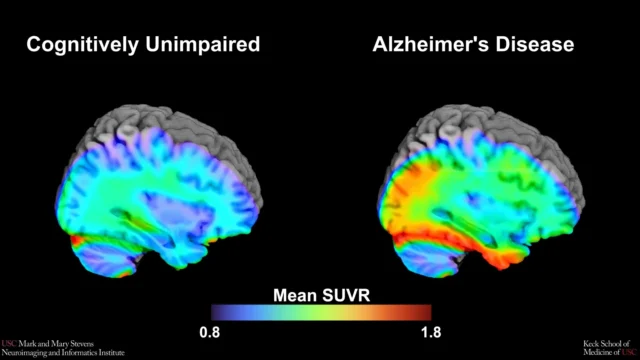
In many cases of Alzheimer’s, the brain becomes littered with plaques of amyloid protein and tangles of tau protein. Conventionally, the presence of these markers is expected to correlate with memory loss and confusion. However, the study found that participants with high lifetime enrichment maintained stronger memory and thinking abilities even when their brains showed significant levels of amyloid and tau.
This phenomenon supports the "cognitive reserve" hypothesis. The theory suggests that intellectual stimulation builds a more robust network of neural connections. When the biological pathology of Alzheimer’s begins to destroy certain pathways, a "resilient" brain can bypass the damage by utilizing alternative networks. Essentially, these individuals were able to function normally despite having the physical hallmarks of the disease. This suggests that while cognitive enrichment may not stop the biological progression of Alzheimer’s, it can significantly delay the clinical symptoms.
Public Health Implications and Expert Reactions
The implications of this study extend beyond individual lifestyle choices, pointing toward a need for systemic changes in how society approaches education and aging. Dr. Andrea Zammit emphasized that the findings should encourage public investment in intellectual infrastructure.
"Our findings suggest that consistently engaging in a variety of mentally stimulating activities throughout life may make a difference in cognition," Zammit stated. "Public investments that expand access to enriching environments—like libraries and early education programs designed to spark a lifelong love of learning—may help reduce the incidence of dementia."
The socioeconomic component of the study also highlights a "neurological divide." If cognitive health is tied to resources like magazine subscriptions, museum visits, and library access, then individuals in lower-income brackets may be at a structural disadvantage regarding their long-term brain health. Public health analysts suggest that providing free or subsidized access to cultural and educational resources for all age groups could be viewed as a preventative medical intervention, potentially saving billions in future long-term care costs associated with dementia.
Chronology of Scientific Understanding
The Rush University study sits within a broader timeline of research into the "non-pharmacological" prevention of dementia.
- 1980s: The "Nun Study" began, providing early evidence that linguistic ability and positive emotions in early life could predict lower rates of Alzheimer’s decades later.
- 2000s: The concept of "Neuroplasticity" became mainstream, debunking the myth that the adult brain is "hard-wired" and incapable of growth.
- 2010s: Large-scale trials like the FINGER study in Finland demonstrated that a combination of diet, exercise, and cognitive training could slow cognitive decline.
- 2020s: Current research, including the Neurology study, is increasingly focusing on the "Lifespan Perspective," acknowledging that the seeds of late-life dementia are often sown (or prevented) in childhood and middle age.
Limitations and Future Research
Despite the encouraging results, the researchers noted certain limitations. Because the study relied on participants recalling details about their childhood and midlife experiences while they were already in their 80s, there is a potential for "recall bias." Those with early-stage cognitive decline might have had difficulty accurately remembering the frequency of their reading habits or their family’s resources from 60 to 70 years prior.
Furthermore, as an observational study, it cannot definitively prove that mental stimulation causes the delay in Alzheimer’s. It remains possible that individuals who are biologically predisposed to resist Alzheimer’s are also naturally more inclined to seek out intellectually stimulating activities.
Nevertheless, the statistical strength of the five-to-seven-year delay in symptom onset is viewed by the medical community as a "game-changer." In geriatric medicine, delaying the onset of a debilitating disease by five years can often mean the difference between a patient spending their final years in a specialized memory care unit or living independently until the end of their natural life.
Conclusion: A Lifelong Mandate for Learning
The Rush University study reinforces the idea that the brain is a dynamic organ that requires constant "exercise" to maintain its integrity. By identifying specific stages of life where enrichment is most effective, the research provides a roadmap for both individuals and policymakers.
For the individual, the message is clear: the benefits of learning a new language, reading a challenging book, or visiting a museum are cumulative. These activities are not merely hobbies; they are investments in the brain’s future resilience. For society, the study serves as a reminder that education and cultural access are fundamental pillars of public health, essential for mitigating the looming global crisis of an aging population affected by neurodegenerative disease.
The study was supported by the National Institutes of Health and Michael Urbut, a former member of the Rush University Board of Governors, reflecting a growing collaboration between public and private sectors to solve the mysteries of the aging mind.