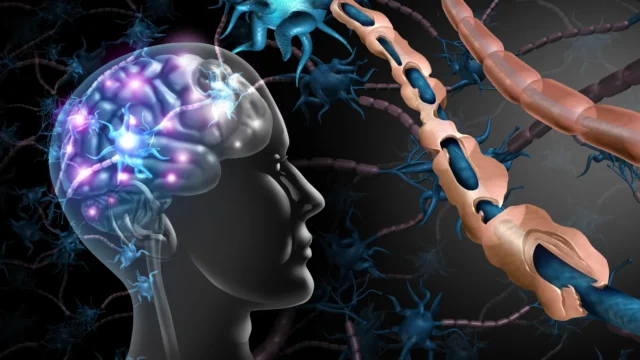

While the medical community has long recognized that mid-life obesity and hypertension are significant risk factors for late-life dementia, this new data indicates that the "silent" phase of brain injury begins in early adulthood. By measuring specific proteins in the blood that signal neuronal damage, researchers found that young adults with obesity exhibit biological profiles strikingly similar to those of elderly patients diagnosed with mild cognitive impairment.
The Biological Link Between Metabolic Stress and the Brain
The human brain does not operate in isolation from the rest of the body’s systems. When the body experiences metabolic dysfunction—characterized by obesity, insulin resistance, and elevated liver enzymes—the resulting systemic inflammation can cross the blood-brain barrier. Over time, this chronic inflammatory state places immense pressure on the vascular and nervous systems.
In this study, researchers focused on a specific biomarker known as Neurofilament Light Chain (NfL). NfL is a structural protein found within the axons of neurons. When brain cells are damaged or die, NfL leaks into the cerebrospinal fluid and eventually into the bloodstream. In recent years, NfL has gained prominence in the scientific community as a highly sensitive indicator of neurodegeneration, often used to track the progression of Alzheimer’s disease, multiple sclerosis, and traumatic brain injury.
The ASU-led team discovered that young adults with obesity had significantly higher circulating levels of NfL compared to their healthy-weight counterparts. This finding is particularly concerning because the participants were in their prime years of cognitive function, showing no outward symptoms of memory loss or behavioral changes. The presence of elevated NfL suggests that subclinical brain cell injury is occurring in real-time, potentially shortening the "cognitive reserve" these individuals will rely on as they age.
Choline: The Essential but Overlooked Nutrient
A pivotal finding of the research involves the role of choline, an organic, water-soluble compound that is neither a vitamin nor a mineral but is often grouped with the B-vitamin complex. Choline is critical for several bodily functions: it maintains the structural integrity of cell membranes, aids in the transport of fats from the liver, and serves as a precursor to acetylcholine, a neurotransmitter vital for memory, mood, and muscle control.
The study revealed that young adults with obesity had markedly lower blood levels of choline. Furthermore, those with the lowest choline levels also exhibited the highest levels of NfL and systemic inflammation. This suggests a "two-hit" scenario: obesity creates a pro-inflammatory environment that stresses the brain, while a lack of choline deprives the brain of the very tools it needs to repair itself and maintain healthy signaling.
"This research adds to the growing evidence that choline is a valuable marker of metabolic and brain dysfunction," said Ramon Velazquez, the study’s lead author and a researcher at the ASU-Banner Neurodegenerative Disease Research Center. Velazquez noted that recent scientific literature has increasingly linked low choline to broader issues, including heightened anxiety and impaired spatial memory.
Gender Disparities and Public Health Trends
The researchers observed a notable gender-based trend within their data: women in the study tended to have lower choline levels than men. This observation carries significant weight in the context of Alzheimer’s research, as women are disproportionately affected by the disease, accounting for nearly two-thirds of all cases in the United States. While hormonal factors have long been studied as a cause for this disparity, the ASU study suggests that nutritional and metabolic differences in early adulthood may also play a contributing role.
The dietary implications are stark. According to National Health and Nutrition Examination Surveys (NHANES), approximately 90% of the American population does not meet the recommended daily intake of choline. The Adequate Intake (AI) level is set at 550 mg per day for men and 425 mg per day for women. However, the average intake for many teenagers and young adults falls well below these targets.
Choline is primarily obtained through the diet. The richest sources include:
- Whole Eggs: Particularly the yolk, which contains high concentrations of lecithin.
- Animal Proteins: Beef liver, chicken breast, and fatty fish like salmon.
- Legumes: Soybeans, kidney beans, and lentils.
- Cruciferous Vegetables: Broccoli, cauliflower, and Brussels sprouts.
- Nuts: Specifically almonds and pistachios.
As dietary habits shift toward processed foods and plant-based diets that may lack these specific nutrient-dense sources, the risk of choline deficiency appears to be rising among the younger population.
Methodology and Comparative Analysis
The study was meticulously designed to compare metabolic and neurological markers across different health profiles. The research involved 30 adults, aged 20 to 39, who were categorized based on their Body Mass Index (BMI). Half of the group consisted of individuals with obesity, while the other half served as a healthy-weight control group.
Participants provided fasting blood samples, which were analyzed for a comprehensive panel of markers, including:
- Metabolic Markers: Insulin, glucose, and liver enzymes (such as ALT and AST) to assess liver strain and metabolic syndrome.
- Inflammatory Cytokines: Proteins that signal the presence of systemic inflammation.
- Nutritional Levels: Circulating choline and related metabolites.
- Neurodegenerative Markers: NfL levels to detect early neuronal injury.
To validate the significance of their findings, the team compared the data from these young adults with existing data from older cohorts. They found that the correlation between low choline and high NfL in obese 20-year-olds mirrored the patterns seen in elderly patients with Alzheimer’s disease. This suggests that the biological "clock" of neurodegeneration may be accelerated by decades in those with poor metabolic health.
The Intersection of Weight-Loss Drugs and Nutrition
The study also touches upon a modern medical phenomenon: the rise of GLP-1 receptor agonists, such as semaglutide (Ozempic/Wegovy) and tirzepatide (Mounjaro). While these medications are highly effective at inducing weight loss and improving cardiovascular health, they work primarily by suppressing appetite and slowing gastric emptying.
The researchers raised a cautionary note regarding nutrient density. If patients on these medications significantly reduce their food intake without focusing on high-quality nutrition, they may inadvertently worsen their choline deficiency. "Modern weight-loss drugs have transformed obesity treatment," the authors noted, but they emphasized that future clinical trials should investigate whether pairing these therapies with choline supplementation could enhance brain health outcomes.
"Most people don’t realize they aren’t getting enough choline," said Wendy Winslow, first co-author of the study. She suggested that for those utilizing weight-loss medications, being intentional about consuming choline-rich foods is essential to protect the brain while the body undergoes rapid metabolic changes.
Implications for Future Prevention and Treatment
The ASU study serves as a call to action for a more preventative approach to brain health. Historically, Alzheimer’s research has focused on the "amyloid cascade hypothesis," targeting the plaques that form in the brains of the elderly. However, the failure of many amyloid-targeting drugs has led researchers to look earlier in the lifespan for the actual "roots" of the disease.
The findings suggest that the path to preventing Alzheimer’s may start in the kitchen and the gym during one’s 20s. By maintaining a healthy weight, managing insulin sensitivity, and ensuring adequate intake of neuroprotective nutrients like choline, individuals may be able to prevent the early neuronal leakage indicated by NfL.
"Our results suggest that, in young adults, good metabolic health and adequate choline contribute to neuronal health, laying the groundwork for healthy aging," explained Jessica Judd, a study co-author.
Analysis of Broader Impact
This research marks a shift in how the medical community views obesity. It is no longer just a risk factor for "physical" ailments like heart disease or joint pain; it is a direct threat to the structural integrity of the brain. The identification of NfL as a measurable marker in young, asymptomatic adults provides a potential new tool for clinicians to assess long-term cognitive risk and motivate lifestyle interventions.
Furthermore, the study highlights the necessity of "precision nutrition." As the link between the liver, the metabolic system, and the brain becomes clearer, the role of specific nutrients like choline will likely move to the forefront of public health guidelines.
Moving forward, the ASU-Banner Neurodegenerative Disease Research Center plans to expand this research into larger longitudinal studies. These will track individuals over several decades to determine if early interventions—such as choline supplementation or metabolic correction—can successfully lower NfL levels and reduce the eventual incidence of dementia. For now, the message is clear: the health of the brain in old age is inextricably linked to the metabolic choices made in youth.