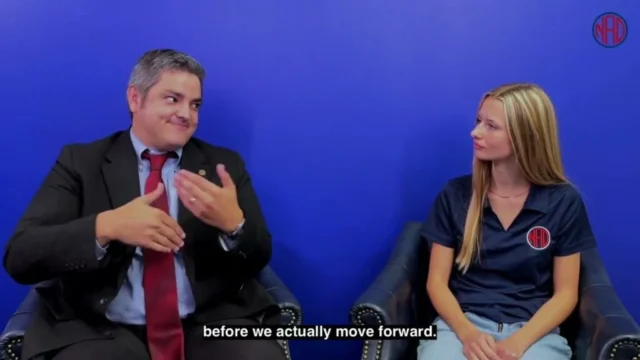
The announcement, presented via a formal video address by Board President Stephanie Hakulin, signals a new era for the organization as it approaches its 58th Biennial Conference in San Francisco this summer. Kiego’s appointment follows an extensive, nationwide search process conducted by a dedicated committee, which solicited input from various community stakeholders to ensure the selection aligned with the long-term needs of the federation.
A Period of Strategic Stabilization
The transition of power arrives at a pivotal juncture for the NAD. Over the past two years, the organization has undergone a rigorous internal assessment under the guidance of Bobbie Beth Scoggins. Following a period of organizational volatility, Scoggins was tasked with restoring institutional stability and establishing a sustainable foundation for growth.
During her tenure, Scoggins prioritized financial oversight and organizational transparency. Her work was instrumental in addressing internal challenges that had previously threatened the association’s operational efficacy. According to board communications, the organization currently stands on a more secure footing, allowing the incoming CEO to pivot from crisis management to long-term strategic development. The Board of Directors has lauded Scoggins for her "heavy lifting," noting that her leadership allowed the organization to maintain its advocacy efforts on behalf of deaf Americans despite internal pressures.
Defining the Mandate: The Kiego Era
Nicholas Kiego enters the CEO role with a clearly defined mandate. In his introductory remarks, Kiego outlined a multi-faceted agenda aimed at revitalizing the organization’s core operations. His primary objectives include rebuilding institutional trust, ensuring long-term financial stability, expanding the organization’s membership base, and diversifying revenue streams.
Beyond the administrative requirements of the position, Kiego emphasized the necessity of reconnecting with the legacy of the NAD. "The work I have to do is clear: rebuild trust, make NAD financially stable, grow our membership, grow our revenue, focus on our mission, and remind the community of the significance of NAD’s legacy," Kiego stated.
The emphasis on "rebuilding trust" suggests that the Board and the new CEO recognize the necessity of mending fractured relationships within the Deaf community. As a member-driven federation, the NAD relies heavily on the active participation of its state associations and individual members. Kiego’s commitment to engaging directly with the community—exemplified by his invitation for members to approach him for conversation during the upcoming San Francisco conference—underscores a shift toward a more grassroots-oriented leadership style.
The 58th Biennial Conference: A Catalyst for Change
The 58th Biennial NAD Conference, scheduled for June 30 to July 5, 2026, in San Francisco, will serve as the formal introduction of Kiego to the broader membership. This event is expected to be more than a symbolic handover; it is being positioned as a critical forum for strategic goal setting.
The NAD functions as a federation, meaning its strength is derived from the alignment of its state-level affiliates with the national office. The conference will provide a venue for these affiliates to contribute to the strategic vision that will guide the organization for the next decade. By involving members in the planning process, the Board aims to create a sense of collective ownership over the association’s future direction.
Historical Context and Institutional Significance
Founded in 1880, the National Association of the Deaf is the oldest national disability rights organization in the United States. Throughout its 146-year history, the NAD has been at the forefront of advocacy for American Sign Language (ASL), deaf education, and equal access to information and technology.
The organization’s structure has evolved significantly over the last century, transitioning from a grassroots advocacy group to a complex non-profit entity that manages national legislative lobbying, legal advocacy, and community outreach. However, the organization has faced recurring challenges regarding the balance between its historical identity and the demands of modern organizational management.
The search for a new CEO was driven by a need to reconcile these two aspects. The Search Committee was tasked with finding a candidate who possessed the business acumen to navigate a modern non-profit environment while maintaining the cultural integrity required to lead an organization representing a linguistic minority.
Analytical Outlook: Implications for the Deaf Community
The selection of Nicholas Kiego reflects a broader trend in the non-profit sector where organizations are increasingly prioritizing financial resilience alongside social impact. For the NAD, the implications of this leadership change are twofold:
- Financial and Operational Sustainability: By placing a high premium on revenue growth and financial stability, the Board is signaling a departure from the reactive posture of recent years. The success of the NAD in the next five years will likely be measured by its ability to secure consistent funding sources that do not rely solely on traditional membership dues or intermittent grants.
- Community Cohesion: The NAD has historically faced internal debates regarding its representation of the diversity within the Deaf community. Kiego’s success will depend on his ability to foster an inclusive environment that brings together various segments of the community, including those who may have felt marginalized by past administrative decisions.
Industry experts observe that the NAD’s ability to influence federal policy—such as the enforcement of the Americans with Disabilities Act (ADA) and the expansion of telecommunications relay services—is directly tied to its standing as a unified voice. If Kiego can successfully harmonize the interests of the state affiliates with the national strategy, the organization is poised to regain its status as a highly influential force in Washington, D.C., and beyond.
Looking Toward the Future
As the organization prepares for the San Francisco conference, the sentiment among the Board and incoming leadership is one of cautious optimism. The transition is designed to be seamless, with Scoggins and Kiego working in tandem until the official handover in August. This collaborative approach is intended to prevent the loss of institutional knowledge and maintain momentum on ongoing legislative and legal projects.
The Board of Directors, led by President Stephanie Hakulin, has expressed full confidence in Kiego’s strategic vision. By focusing on rebuilding the organization from the ground up—starting with membership engagement and fiscal transparency—the NAD is positioning itself to address the contemporary challenges facing the Deaf community, including advancements in technology, changes in educational accessibility, and the ongoing fight for linguistic rights.
As the countdown to August 1 begins, all eyes will be on the 58th Biennial Conference. It represents not only a celebration of the NAD’s long-standing legacy but a critical opportunity for the organization to define its role in a rapidly changing world. The community’s active participation in this transition will be the ultimate indicator of the organization’s health and its potential for future impact. Whether the NAD can successfully bridge its storied past with the requirements of a modern advocacy organization remains the central question for the coming years, a question that Nicholas Kiego is now tasked with answering.