
The Foundational Role of Semantic HTML in Modern Development
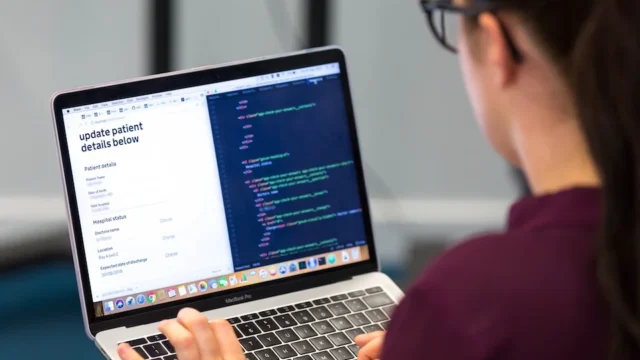
Dilwoar Hussain, Lead Frontend Developer at the Ministry of Housing, Communities and Local Government, explains that HTML elements fall into two primary categories: generic and specific. While generic elements like <div> and <span> offer no inherent meaning, specific elements such as <nav>, <button>, and <header> provide a structural roadmap for computers. When developers use the correct tags, they enable assistive technologies to interpret the page accurately. This structural clarity also benefits search engine optimization (SEO), as crawlers can better categorize the importance of information on a page.
James Gordon, Senior Frontend Developer at the DWP, highlights a common pitfall in modern web development: the "imposter" element. He cites the example of an image that functions as a link through JavaScript click events. While a sighted user might perceive it as a link, a screen reader may only identify it as an uninformative image unless extensive ARIA (Accessible Rich Internet Applications) attributes are manually added. By contrast, using the semantic <a> tag ensures the element is inherently accessible without additional layers of code. Gordon argues that the current state of web development often involves "shoring up gaps" created by over-reliance on JavaScript, a practice that can be avoided by returning to semantic foundations.
Regulatory Framework and the "Shift Left" Methodology
The emphasis on accessibility in the UK public sector is driven by the Public Sector Bodies (Websites and Mobile Applications) (No. 2) Accessibility Regulations 2018. These regulations mandate that public sector websites must be perceivable, operable, understandable, and robust—the four pillars of the Web Content Accessibility Guidelines (WCAG). As of 2025, developers are increasingly focused on meeting WCAG 2.2 standards, which introduced new criteria for focus appearance, target size, and redundant entry.
To meet these legal and ethical standards, developers are adopting a "shift left" approach, which involves considering accessibility at the earliest possible stage of the development lifecycle. Michael Cheung, Senior Front-end Developer at NHS England, notes that starting with hand-coded semantic HTML provides "accessibility for free." By referencing official HTML specifications and WCAG guidelines during the initial coding phase, developers reduce the need for costly remediation later in the project.
Holly Blues of DWP Digital emphasizes that accessibility is a collective responsibility that spans the entire team, from Product Owners to Quality Assurance (QA) testers. This collaborative environment ensures that potential barriers are identified during the design phase rather than during final testing. The use of established design systems, such as the GDS Design System or the NHS Digital Service Manual, provides a pre-vetted foundation of components that have already undergone rigorous accessibility testing.
Statistical Context: The Global Challenge of Web Accessibility
The focus on semantic code is underscored by global data regarding web accessibility failures. According to the 2024 WebAIM Million report—an annual accessibility evaluation of the top one million homepages—95.9% of homepages had detectable WCAG 2 failures. The most common issues included low-contrast text (81%), missing alternative text for images (54.5%), and empty links (44.6%). Furthermore, the report found that pages with complex frameworks often had significantly more accessibility errors than those using simpler, semantic structures.
In the UK, approximately 16 million people—or 24% of the population—report having a disability. As government services transition to a "digital by default" model, the stakes for accessibility are high. A failure to provide accessible code can result in the exclusion of nearly a quarter of the population from essential services, including healthcare, social security, and housing support.

Addressing Dynamic Content and Interactive Complexity
As web applications become more interactive, developers face the challenge of making dynamic content—such as modals, carousels, and live-updating forms—accessible to keyboard and screen reader users. These elements often "wrestle control" away from the user, as James Gordon describes it, requiring careful management of focus and announcements.
David Biddle, a Frontend Developer at GDS, suggests using newer HTML elements like <dialog> for modals, which provide built-in focus management and keyboard interactions that were previously difficult to implement manually. He stresses that any interaction possible with a mouse must be equally navigable via keyboard, ensuring that focus indicators are always visible to help users track their location on the page.
For collapsible elements like accordions, Dilwoar Hussain advocates for the use of ARIA attributes such as aria-expanded and aria-controls. These attributes provide real-time feedback to screen reader users, informing them whether a section is open or closed. Hussain also champions the principle of "progressive enhancement." This technique ensures that the core functionality of a website works even if JavaScript fails to load or is disabled. In the case of an accordion, a progressive enhancement approach would ensure that all content is visible by default, with the interactive "collapse" feature only appearing once the necessary scripts are active.
Timeline of Web Accessibility Standards
The evolution of these practices can be traced through a clear chronology of technical standards:
- 1999: The first version of WCAG (1.0) is published, focusing primarily on HTML.
- 2008: WCAG 2.0 is released, introducing the "POUR" principles (Perceivable, Operable, Understandable, Robust).
- 2014: HTML5 reaches "W3C Recommendation" status, introducing new semantic elements like
<main>,<section>, and<article>. - 2018: The UK government passes the Public Sector Bodies Accessibility Regulations, making WCAG 2.1 AA compliance a legal requirement.
- 2023: WCAG 2.2 is published, adding nine new success criteria to address mobile accessibility and cognitive disabilities.
- 2025: Current focus shifts toward "Universal Design," where accessibility is integrated into the DNA of frontend frameworks rather than treated as an add-on.
Analysis of Implications for the Public Sector
The insights shared by these frontend developers indicate a maturing of the digital profession within the public sector. The move away from "extra tools or plugins" toward native browser capabilities and semantic HTML suggests a focus on long-term sustainability. Over-reliance on third-party accessibility "overlays"—automated tools that claim to fix accessibility issues via JavaScript—has been widely criticized by the disability community and experts for failing to provide true access and sometimes even interfering with assistive technologies.
By prioritizing semantic HTML, the UK government is building a more "robust" web. Robustness, the fourth principle of WCAG, ensures that content remains compatible with current and future user agents. As new devices, such as wearable tech or AI-driven voice assistants, enter the market, they rely on the underlying semantic structure of the web to parse information. A website built with meaningful tags is essentially "future-proofed."
Furthermore, the collaborative use of design systems across departments like the NHS and DWP represents a significant efficiency gain. Instead of each department "reinventing the wheel," they contribute to a shared library of accessible components. This not only saves taxpayer money but also provides a consistent user experience. A citizen moving from a DWP service to an NHS service will encounter familiar patterns, reducing the cognitive load required to navigate complex government systems.
The "Unlocking Accessibility" series reinforces the reality that digital inclusion is a technical discipline as much as it is a social one. As frontend developers continue to refine their approach to semantic code and dynamic interactivity, the goal remains a digital landscape where the "front door" of government is open to every citizen, regardless of how they access the internet. The consensus among these experts is clear: the most accessible code is often the simplest, and the best user experience is one that leaves no one behind.