The Anatomy of a Silent Failure
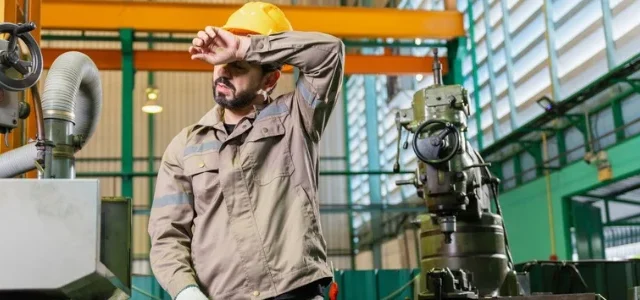
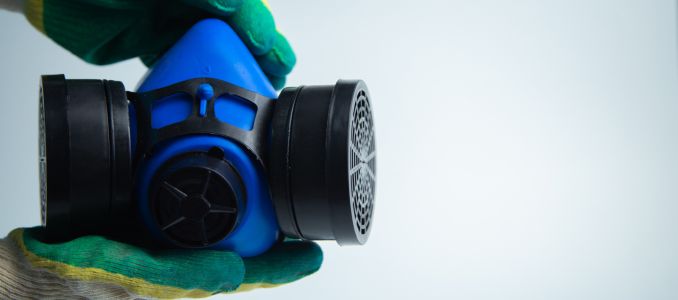
Consider a standard manufacturing facility where a veteran employee relies on a half-mask respirator to mitigate exposure to airborne particulates. On paper, the worker is compliant; he successfully completed his annual fit test. However, the reality of the work environment often deviates from the controlled testing environment. Over the course of hundreds of shifts, the physical condition of the respirator—the elasticity of the straps, the integrity of the valves, and the seal of the facepiece—inevitably degrades.
When a respirator becomes uncomfortable, workers often loosen straps to relieve pressure. This minor adjustment, while providing immediate relief, compromises the seal and allows for "inward leakage." Unlike an acute workplace accident—a slip, fall, or equipment failure—this exposure is invisible and asymptomatic. A worker may inhale microscopic particulate matter shift after shift for years, accumulating damage that does not trigger a near-miss report or an incident log. The failure is only realized when the worker presents with chronic respiratory symptoms, such as shortness of breath or persistent coughing, by which time the damage to lung tissue is often irreversible.

Statistical Context: The Disease Burden vs. Acute Trauma
The global safety community has historically focused on the prevention of acute trauma. However, data from the International Labour Organization (ILO) and the World Health Organization (WHO) reveal a stark reality: the vast majority of work-related deaths are not the result of dramatic accidents, but of slow-moving, systemic health failures.
Since the turn of the millennium, global work-related fatalities have climbed by approximately 12%. Of the 2.93 million work-related deaths recorded in 2019, only 330,000 were attributed to traumatic injuries. The remaining 2.6 million deaths were caused by occupational diseases. This means that for every worker who loses their life in a catastrophic accident, roughly eight others die from illnesses linked to long-term workplace exposure.

These diseases—ranging from chronic obstructive pulmonary disease (COPD) and pneumoconiosis to various forms of lung cancer—are costly, painful, and largely preventable. The "silent killer" of occupational exposure is a direct consequence of a focus on compliance rather than comprehensive protection. When organizations treat respiratory protection as a bureaucratic requirement rather than a clinical necessity, they leave their most valuable assets—their workers—exposed to invisible hazards that take decades to manifest.
Chronology of an Exposure Gap
The evolution of respiratory protection standards has not kept pace with the nuances of long-term health monitoring. The following timeline highlights the historical context of these regulatory shifts and the persistent gaps that remain:

- 1970–1980s: The Foundation. Regulatory frameworks begin to mandate basic personal protective equipment (PPE) for hazardous environments. The focus is primarily on preventing immediate poisoning or acute respiratory distress.
- 1990s: The Rise of Quantitative Testing. The industry shifts from qualitative (pass/fail based on taste) to quantitative fit testing. While more accurate, it remains a snapshot in time.
- 2000s: Expanding the Scope. Increased awareness of chronic particulate matter exposure leads to stricter Permissible Exposure Limits (PELs). However, workplace culture often prioritizes throughput over equipment maintenance.
- 2010s–Present: The Data Gap. Despite technological advances in real-time monitoring and wearable sensors, most industries still rely on annual certification. This creates a "trust gap" where employers assume the seal remains intact for 364 days following a test.
Addressing the Compliance-to-Protection Gap
To bridge the gap between mere compliance and true protection, safety managers must shift their focus from annual benchmarks to continuous, data-driven oversight. Experts in industrial hygiene suggest that the "annual fit test" should be viewed as the bare minimum, not the goal.
Effective respiratory protection programs require a multi-faceted approach:

- Continuous Worker Education: Workers must be trained not just on how to put on a mask, but on how to identify the early warning signs of seal failure. Empowering employees to request new equipment when they notice discomfort or degraded components is vital.
- Effective Recordkeeping: Digitizing fit test results allows safety managers to track equipment usage patterns, identify trends in filter replacement, and prompt maintenance checks before a mask loses its effectiveness.
- Environmental Monitoring: Coupling individual respiratory protection with area monitoring ensures that the level of protection provided by the PPE matches the actual hazard level in the breathing zone.
- Routine Self-Checks: Instituting mandatory "seal checks" at the start of every shift should be standard operating procedure, reinforced by management oversight that does not view these checks as a delay to production, but as a critical safety step.
Official Perspectives and Industry Implications
Industry safety leaders emphasize that the disconnect often stems from a lack of integration between health and safety departments. "We see many organizations silo their fit testing," notes a senior industrial hygienist. "The compliance team handles the paperwork, while the operations team handles the work. When these two sides don’t communicate, the worker is the one who pays the price."
The economic implications for employers are equally significant. Beyond the moral obligation, companies face rising insurance premiums, potential legal liabilities, and the loss of experienced talent due to chronic illness. The costs associated with occupational disease—medical expenses, disability claims, and lost productivity—dwarf the costs of implementing a robust, proactive respiratory protection program.

Moving Toward a Proactive Safety Culture
The challenge of 2026 and beyond is to move past the era of static compliance. As the global workforce continues to expand and the nature of industrial hazards evolves, the methodology for protecting workers must become more dynamic.
Organizations that succeed in reducing the incidence of chronic occupational disease are those that treat respiratory protection as a continuous process. This involves regular medical evaluations to detect early signs of lung function decline—before they become irreversible. It involves investing in high-quality, ergonomic PPE that workers are more likely to wear correctly. And, perhaps most importantly, it involves fostering a culture where the worker’s long-term health is valued more than the short-term efficiency of a production line.

In summary, the gap between a passing fit test and a protected worker is bridged by diligence, education, and an unwavering commitment to health over compliance. As long as respiratory protection is viewed as a once-a-year event, the silent threat of occupational disease will continue to grow. By integrating real-time oversight and prioritizing the daily reality of the worker over the annual audit, organizations can finally close the gap and ensure that the end of a career does not mark the beginning of a health tragedy. The history of occupational medicine has shown that the most effective way to combat disease is to prevent it at the source; for respiratory health, that source is a mask that actually works, every single day, for every single shift.