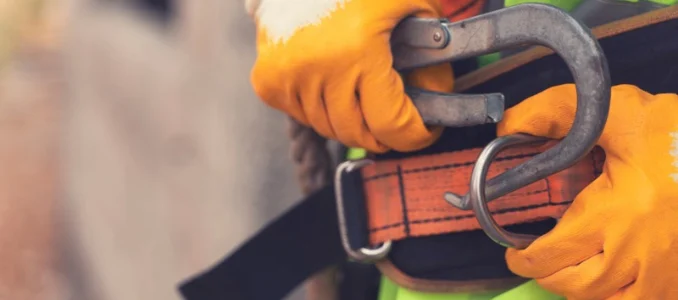
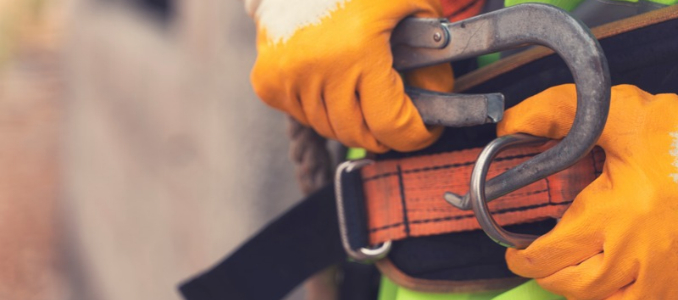
The top honors were awarded to the Guardian Hero Self-Retracting Lifeline, a system engineered to provide fully automated retraction. According to the National Safety Council, the primary design objective of this technology is to enhance fall protection for personnel operating at height while simultaneously reducing the physical fatigue and mobility constraints often associated with traditional tethering systems. The second-place award was claimed by Honeywell’s ModRAE, a modular wireless gas detection monitor designed to offer real-time hazard monitoring in complex industrial environments. The third spot returned to the realm of fall protection with the 3M DBI-SALA Nano-Lok Edge Anchor Mounted Self-Retracting Lifeline, a specialized tool optimized for foot-level tie-off applications in challenging elevated settings.
A Legacy of Safety Leadership: The NSC Context
The NSC Safety Congress & Expo has long served as the premier gathering for the environmental, health, and safety (EHS) industry. With a history spanning over a century, the event provides a platform for manufacturers to demonstrate how their products translate into reduced workplace injuries and fatalities. The 2026 iteration was particularly notable for its scale, drawing an attendance of more than 11,000 professionals, all seeking to navigate the evolving landscape of workplace safety standards.
The exhibit floor, spanning an expansive 557,600 square feet, hosted 1,000 exhibitors. This massive footprint allowed for a comprehensive showcase of not only hardware—such as the award-winning lifelines—but also software, artificial intelligence-driven risk management tools, and ergonomic gear. The concentration of exhibitors provided a longitudinal look at how safety technology has shifted from passive protection to active, intelligent monitoring systems.
The Chronology of Excellence: The 2026 Awards
The recognition of these specific products followed a rigorous selection process that began months prior to the event. The NSC’s New Product Showcase is designed to highlight advancements that offer tangible improvements over existing market solutions. The selection process evaluates products based on safety, innovation, and practical utility.

On September 11, the opening day of the Congress, the buzz surrounding the product showcases reached its peak. Throughout the week, judges from the safety community examined the entries, leading to the formal announcement of the winners in the council’s post-event recap on November 2. The timeline of the event reflects the deliberate nature of these accolades:
- Pre-Event Phase (Early 2026): Manufacturers submit entries for the New Product Showcase, providing technical specifications and case studies on how their products address specific OSHA-regulated hazards.
- September 11-17, 2026: The Congress convenes in Indianapolis. Product demonstrations, live testing, and expert panels allow for a critical evaluation of entries.
- November 2, 2026: The National Safety Council officially publishes the comprehensive list of award recipients, formalizing the impact of these technologies on the industry.
Technical Analysis of Winning Innovations
The success of the Guardian Hero and the 3M DBI-SALA Nano-Lok highlights a significant trend in fall protection engineering: the push toward "smart" and "compact" solutions.
The Guardian Hero’s fully automated retraction mechanism addresses a long-standing issue in construction and maintenance: the "slack" that can occur in traditional lifelines. By ensuring the line remains taut without requiring manual intervention, the device minimizes the "free-fall" distance, a crucial metric in preventing severe injuries.
Conversely, the 3M DBI-SALA Nano-Lok’s focus on "foot-level tie-off" represents a practical advancement for workers who do not have overhead anchor points available. In many industrial settings, such as steel erection or roof work, finding a suitable overhead anchor is difficult. By engineering a lifeline that is safe to use at the feet, 3M has addressed a specific, high-risk operational constraint.
The Honeywell ModRAE’s second-place finish serves as a reminder that safety is not limited to physical prevention but also encompasses environmental awareness. As gas detection moves toward modular, wireless configurations, industrial facilities gain the ability to scale their monitoring systems to match specific, shifting site requirements. This flexibility is essential for incident response, where time-to-detection is the primary variable in preventing health crises.
Implications for the EHS Industry
The fact that two of the top three awards went to fall protection technology is indicative of the persistent danger represented by falls in the workplace. According to the Bureau of Labor Statistics, falls remain one of the leading causes of workplace fatalities and injuries in the United States, particularly within the construction sector.

The industry’s heavy investment in these devices signals a shift toward "proactive prevention." Rather than simply providing the bare minimum of protection required by federal regulations, manufacturers are moving toward designing equipment that actively assists the user. This "human-centric" design philosophy is expected to be a primary driver of safety innovation in the coming decade.
Furthermore, the integration of these products into a 557,600-square-foot exhibition space suggests that the demand for high-end safety gear is not waning. Companies are increasingly willing to invest in advanced, more expensive protective equipment if it demonstrably improves worker mobility and efficiency, thereby reducing the "cost of safety" by increasing productivity alongside protection.
Official Responses and Industry Outlook
While specific quotes from the individual award recipients were not provided in the council’s summary, the consensus among industry experts at the event was that the competition reflected a tightening of safety standards across all sectors. The NSC’s recognition of these products acts as a form of industry validation, often signaling to procurement officers and safety directors that these tools represent the current "gold standard" in the field.
The success of these companies also sets a roadmap for future product development. As the industry moves toward 2027, the focus is expected to shift toward the integration of Internet of Things (IoT) capabilities within these devices. For example, future iterations of the winning lifelines may include sensors that alert supervisors when a fall has occurred or when a device has reached the end of its functional lifespan.
Looking Forward: The Path to Anaheim
With the 2026 Congress now in the rearview, the industry’s attention is already turning to the 2027 Safety Congress & Expo, scheduled for September 24-30 in Anaheim, California. The transition from Indianapolis to the West Coast is expected to maintain the momentum built this year, particularly as new regulatory developments continue to push firms toward more robust safety implementations.
The 115th Congress will likely build upon the lessons learned in 2026, with a continued emphasis on technological integration and the reduction of human error. For those looking to participate, the NSC has provided resources at congress.nsc.org, where stakeholders can find information on exhibition opportunities, registration, and the ongoing call for safety solutions.
As safety professionals reflect on the 2026 winners, the overarching message remains clear: the industry is no longer content with passive safety equipment. The future of workplace protection lies in devices that are as dynamic as the environments they are meant to protect. Whether through automated lifelines or wireless environmental monitoring, the innovation showcased in Indianapolis is set to define the next era of industrial safety, ultimately serving the primary goal of the National Safety Council: to eliminate preventable deaths at work, in homes and communities, and on the road.