Historical Context of Carbon Monoxide Regulation
Carbon monoxide remains a pervasive and silent killer in industrial settings. Odorless, colorless, and tasteless, it is a byproduct of incomplete combustion from internal combustion engines, furnaces, heaters, and various industrial processes. Because of its physiological effects—primarily its ability to bind to hemoglobin in the blood more effectively than oxygen, thereby inducing tissue hypoxia—it has been a focal point of occupational health research for decades.
In 1972, NIOSH established its original recommendations for occupational exposure to carbon monoxide. At that time, the guidance focused heavily on ceiling limits—the absolute concentration that should not be exceeded at any point during the workday. While these standards provided a baseline, the medical community and industrial hygienists have long argued that a ceiling limit alone may not adequately address the risks posed by fluctuating exposure levels. The current proposal seeks to address this by shifting to a STEL approach, which typically accounts for a 15-minute time-weighted average, offering a more nuanced view of the physiological stress placed on the human body during brief, high-intensity exposure events.

Advancements in Monitoring and Detection
The decision to revisit the 1972 guidelines is not merely a bureaucratic exercise; it is driven by the rapid evolution of sensor technology. In the early 1970s, detecting carbon monoxide often required bulky, periodic sampling equipment that lacked the sensitivity and real-time data logging capabilities of modern devices.
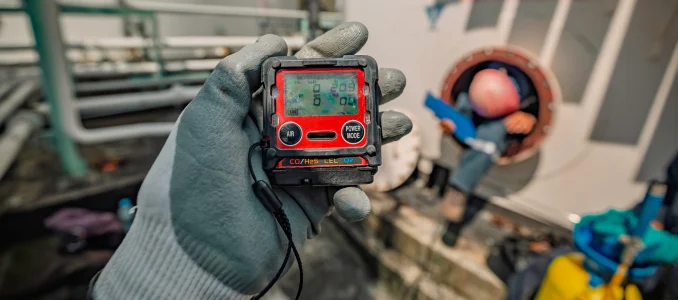
Today, portable gas detectors utilize advanced electrochemical sensors that can track minute-by-minute changes in gas concentration. These devices are now standard in sectors ranging from construction and mining to confined space maintenance and logistics. By adopting a STEL-based framework, NIOSH is aligning its guidance with the reality of how these tools are currently used in the field. Modern instrumentation allows safety officers to move beyond "point-in-time" checks and instead analyze trends over short durations, ensuring that workers are not subjected to dangerous spikes in concentration that might stay technically under a broad ceiling limit but still cause long-term health complications or acute distress.

The Regulatory Path Forward
The formal notice, published under docket number NIOSH-357 and CDC-2026-1849, serves as an invitation for stakeholders to contribute to the final rule-making process. The public comment period is a critical juncture in the federal administrative process. NIOSH is specifically seeking input from industrial hygienists, corporate safety managers, medical professionals, and labor advocates.
Interested parties must submit their feedback via the Regulations.gov portal before the February 22, 2027, deadline. The agency has emphasized that all submissions must explicitly reference the correct docket numbers to ensure they are captured in the official record. Following the conclusion of this period, NIOSH will synthesize the feedback to determine if the transition to a STEL will be adopted as the formal recommendation, potentially paving the way for the Occupational Safety and Health Administration (OSHA) to eventually incorporate these standards into enforceable federal regulations.

Physiological Implications and Health Risks
To understand the necessity of this shift, one must examine the specific physiological damage caused by carbon monoxide. When inhaled, CO reacts with hemoglobin to form carboxyhemoglobin (COHb). Because the affinity of hemoglobin for CO is approximately 200 to 250 times greater than its affinity for oxygen, even low concentrations of CO can significantly impair the blood’s oxygen-carrying capacity.
The symptoms of exposure range from mild headaches, dizziness, and nausea to more severe cognitive impairment, cardiovascular strain, and, in high-concentration scenarios, loss of consciousness or death. A ceiling limit, while protective against massive, sudden exposure, may fail to protect workers from the cumulative fatigue or subtle neurological effects caused by frequent, short-lived spikes in CO levels. A STEL approach recognizes that a 15-minute window of elevated exposure can be just as damaging as a sustained lower-level exposure, depending on the intensity of the concentration. By standardizing this measurement, NIOSH aims to mitigate these risks with greater precision.

Broader Implications for Industrial Safety
If adopted, this proposal will likely necessitate a comprehensive audit of workplace safety procedures across multiple industries. Employers may find themselves needing to recalibrate their gas detection fleets to ensure they are capable of calculating and alerting for STELs. Furthermore, safety training programs will need to be updated to educate workers on the differences between ceiling limits and short-term exposure limits.
For many companies, this shift may require a transition from passive safety monitoring to active, data-driven health management. The ability to log STEL data allows safety directors to identify specific tasks or pieces of equipment that contribute to the most significant exposure incidents. This granular data can lead to more targeted engineering controls, such as improved ventilation in confined spaces or the retrofitting of exhaust systems on heavy machinery.

Industry Perspectives and Anticipated Reactions
While the official public comment period is ongoing, industry reaction is expected to be mixed. Organizations representing labor and worker safety are likely to applaud the move, viewing it as a long-overdue update that prioritizes worker well-being over the status quo. Conversely, some industry trade groups may express concerns regarding the cost of compliance, particularly for smaller firms that may need to replace legacy monitoring equipment or undergo rigorous retraining of their safety personnel.
However, the consensus among occupational health experts is that the long-term benefits—such as reduced insurance premiums, fewer lost-time incidents, and increased worker productivity—outweigh the initial costs of updating systems. Furthermore, harmonizing U.S. guidelines with international best practices regarding short-term exposure monitoring is seen as a positive step for multinational corporations that operate under global safety standards.

Timeline and Conclusion
The proposed update is the culmination of years of review and scientific assessment. Since the 1972 recommendations were first released, the workplace has transformed significantly. The growth of the "gig" economy in industrial sectors, the expansion of high-density logistics hubs, and the move toward more enclosed, energy-efficient workspaces have all altered the landscape of potential exposure.
The timeline for the final implementation remains contingent on the quality and volume of the public feedback. Following the February 2027 deadline, NIOSH will review all submissions, conduct further internal assessments, and likely publish a final recommendation. While these recommendations are technically voluntary guidelines, they form the scientific bedrock upon which OSHA standards are built.

In summary, the transition from a ceiling limit to a short-term exposure limit for carbon monoxide represents a proactive shift toward modernizing occupational health. By leveraging better science and more sophisticated monitoring technology, NIOSH is attempting to close a regulatory gap that has existed for over half a century. Whether this change will lead to a broader overhaul of gas exposure standards remains to be seen, but for now, it stands as a pivotal moment for industrial safety professionals to help shape the future of workplace protection. The outcome of this process will ultimately define how the next generation of workers is protected from one of the most common, yet avoidable, hazards in the modern industrial environment.