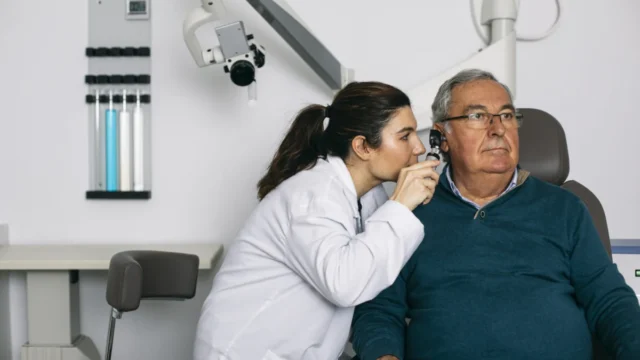

For individuals experiencing disappointment with the performance of their hearing aids, the conclusion that these devices are inherently unsuitable may be premature. Often, the issues stem from the need for device attention, fine-tuning, or adjustments. In other instances, a progression of hearing loss may necessitate a reassessment of the individual’s auditory needs and a potential recalibration or replacement of their current aids.
The Mechanics of Hearing Aids and Their Potential Beneficiaries
At their core, most hearing aids are compact electronic devices engineered to enhance auditory perception. They utilize microphones to capture ambient sound, which is then processed and amplified before being delivered into the ear canal. The primary objective of a hearing aid is to make sounds more accessible to the wearer, thereby bridging the gap created by hearing impairment.
However, the act of hearing extends far beyond merely increasing the volume of sound. The human auditory system plays a critical role in processing these amplified sounds and deriving meaning from them. This intricate neurological process is a key reason why two individuals with seemingly similar audiometric profiles might report vastly different experiences with their hearing aids. The type of hearing loss also plays a significant role in determining the potential benefit derived from hearing aids.
Understanding Different Types of Hearing Loss
The efficacy of hearing aids is intrinsically linked to the underlying cause of hearing impairment. A comprehensive understanding of the various types of hearing loss is essential for appreciating the limitations and potential of hearing aid technology.

-
Sensorineural Hearing Loss: This common form of hearing loss affects the inner ear (cochlea) or the auditory nerve pathways that transmit sound signals to the brain. It is often caused by aging, exposure to loud noise, genetic factors, or certain medical conditions. While hearing aids can make sounds more accessible for many individuals with sensorineural hearing loss, the degree of benefit can vary widely. The auditory system’s ability to process and interpret amplified sound is a critical factor here.
-
Conductive Hearing Loss: This type of hearing loss occurs when sound waves are obstructed from reaching the inner ear due to a problem in the outer or middle ear. Common causes include earwax impaction, middle ear infections, or structural abnormalities. In many cases, conductive hearing loss can be medically or surgically treated, and hearing may be fully or partially restored. Hearing aids may offer some benefit, but addressing the underlying conductive issue is often the primary course of action. A medical or audiology professional is crucial for diagnosing the cause and recommending appropriate treatment.
-
Mixed Hearing Loss: This classification denotes a combination of both sensorineural and conductive hearing loss. Individuals with mixed hearing loss experience challenges in both transmitting sound through the outer/middle ear and processing it within the inner ear or auditory nerve. Management strategies for mixed hearing loss may involve a combination of approaches, including medical treatment for the conductive component and amplification for the sensorineural component.
Beyond Decibels: Factors Influencing Hearing Aid Success
The degree of hearing loss, as indicated by audiometric measurements, is not the sole determinant of whether hearing aids will be an effective solution. A holistic assessment is paramount, encompassing the underlying cause of the hearing loss, detailed hearing test results, an individual’s capacity for speech understanding, clinical findings, and their specific communication needs and lifestyle.
The Centers for Disease Control and Prevention (CDC) reports that approximately 40 million American adults have some degree of hearing loss, yet only about one in five of those who could benefit from a hearing aid actually uses one. This significant gap underscores the need for better understanding of hearing aid efficacy and the factors that contribute to successful outcomes.
The Nuances of "Not Working": Deconstructing the Problem
When individuals report that their hearing aids "don’t work," they may be expressing a range of distinct issues. The devices might feel physically uncomfortable, produce sounds that are perceived as unnatural, amplify sounds without improving speech clarity, perform poorly in noisy environments, or simply fail to deliver the expected level of meaningful benefit.

These varied complaints often stem from different root causes. Broadly, the principal factors influencing hearing aid effectiveness can be categorized as: the individual’s specific hearing needs, the precise physical fit and programming of the hearing aids, the current condition of the devices, the complexity of the listening environment, and the wearer’s expectations and their process of adjusting to amplified sound.
It is strongly advised against attempting self-diagnosis. Instead, providing detailed and specific descriptions of the experienced issues to a qualified hearing professional is the most effective way to facilitate an accurate investigation into the potential cause.
The Limits of Amplification: When More Volume Isn’t Enough
Hearing aids are designed to amplify and process sound, but their efficacy is fundamentally dependent on the auditory system’s inherent ability to interpret these enhanced signals. In cases of significant damage to the inner ear, characteristic of sensorineural hearing loss, simply increasing the volume of sound may not provide sufficient usable auditory information for clear speech comprehension. Consequently, an individual might be able to detect that someone is speaking but still struggle to understand the actual words being conveyed.
Conductive hearing loss presents a different scenario. As mentioned, underlying medical conditions contributing to conductive hearing loss can sometimes be treated, potentially restoring or improving hearing. Mixed hearing loss, combining elements of both types, often requires a multifaceted management approach.
It is crucial to reiterate that there is no universal formula dictating that a specific type or degree of hearing loss automatically guarantees success with hearing aids. A thorough and professional hearing assessment is indispensable for understanding each individual’s unique auditory landscape.
The Role of Technology, Fit, and Maintenance
The effectiveness of hearing aids can also be influenced by the technology embedded within the devices. Modern hearing aids offer a spectrum of features and performance levels. Variations in microphone technology, noise reduction algorithms, directional listening capabilities, connectivity options, and the degree of customization available can all impact how well users perceive sound in different situations. A hearing professional can expertly guide individuals in selecting a device that aligns with their specific hearing profile and listening demands.

Beyond the technological aspects, the physical fit of the hearing aid is paramount. A poorly fitting device can lead to discomfort, whistling (feedback), weakened sound transmission, or decreased wearer compliance. Similarly, the programming of the hearing aid must be meticulously adjusted to the individual’s hearing assessment results and their daily listening needs. Professional fitting and ongoing support, including fine-tuning and performance verification, are critical components of successful hearing aid use.
Routine maintenance also plays a vital role. Blocked microphones or wax guards, depleted batteries, charging issues, moisture damage, or damaged components can all compromise a hearing aid’s performance. Adhering to manufacturer guidelines for cleaning, charging, and general care is essential. Users should refrain from attempting self-repairs or inserting foreign objects into the ear canal for wax removal.
The Crucial Element of Adjustment and Realistic Expectations
The transition to wearing hearing aids can necessitate an adjustment period. Sounds that may have been muffled or absent for an extended period might initially sound unfamiliar. A skilled hearing professional will anticipate this and be prepared to fine-tune the devices as the user gains experience in various real-world listening scenarios.
There isn’t a universally prescribed timeframe for how long an individual should "give hearing aids a chance." However, a collaborative discussion between the wearer and their hearing professional about realistic expectations and regular progress reviews is fundamental to managing the adaptation process effectively.
Key components of comprehensive hearing care should include:
- Professional Fitting and Programming: Ensuring the hearing aids are precisely tailored to the individual’s hearing loss and listening needs.
- Regular Follow-Up Appointments: Allowing for adjustments, troubleshooting, and monitoring of performance.
- Education and Counseling: Providing information about hearing loss, hearing aid use, and realistic expectations.
- Device Maintenance Guidance: Empowering users to properly care for their devices.
- Open Communication: Encouraging users to voice any concerns or difficulties experienced.
Persistent discomfort, a lack of discernible improvement in speech clarity, or a failure to achieve meaningful benefit should not be passively tolerated. These issues warrant immediate discussion with a qualified hearing professional.

Navigating Challenges: What to Do When Hearing Aids Aren’t Enough
If hearing aids are not delivering the expected results, the initial step should not be an immediate assumption that a different type of hearing solution is required. Instead, a systematic approach involves first identifying and rectifying any potential issues with the current devices. If, after these checks, the devices still prove insufficient, then a reassessment of the individual’s hearing is warranted.
When hearing aids are not meeting an individual’s needs, even after appropriate fitting and follow-up, a comprehensive evaluation by a specialist becomes the logical next step. Depending on the specific characteristics of the hearing loss—its cause, degree, impact on speech understanding, anatomical considerations, overall health, and the individual’s communication aspirations—a hearing professional may explore a range of alternative solutions.
These alternatives can include medical or surgical interventions, assistive listening devices designed for specific situations, bone conduction solutions that transmit sound vibrations through the skull, or cochlear implants, which bypass damaged parts of the inner ear to directly stimulate the auditory nerve.
Exploring the Landscape of Hearing Solutions
The spectrum of hearing solutions available today is diverse, offering tailored approaches for various types and degrees of hearing loss.
| Hearing Solution | How It Works | When It May Be Considered | Professional Assessment | Surgery |
|---|---|---|---|---|
| Hearing Aids | Amplify and process sound to make it more accessible to the ear. | When the auditory system has sufficient residual hearing to benefit from amplified sound. | Yes | No |
| Assistive Listening Devices | Transmit sound directly from a source (e.g., TV, phone, microphone) to the listener’s ear or hearing aid. | When additional support is beneficial in specific listening environments, such as noisy settings or for listening to specific media. | Professional advice may be helpful | No |
| Bone Conduction Solutions | Transmit sound vibrations through the bones of the skull to stimulate the inner ear. | For individuals with conductive hearing loss, mixed hearing loss, or certain types of single-sided deafness where conventional hearing aids are not effective. | Yes | Depends on the specific solution |
| Cochlear Implants | Convert sound into electrical signals that directly stimulate the auditory nerve, bypassing damaged parts of the inner ear. | When appropriately fitted hearing aids provide limited benefit for speech understanding and everyday communication, and a specialist evaluation indicates potential suitability. | Yes | Yes, for the implanted component |
The selection of the most appropriate solution is a highly individualized process, contingent upon a thorough assessment by qualified hearing care professionals and specialists.
Cochlear Implants vs. Hearing Aids: A Fundamental Distinction
It is vital to differentiate between hearing aids and cochlear implants, as they operate on fundamentally different principles. Hearing aids amplify and process ambient sounds. In contrast, cochlear implants convert sound into electrical signals. These signals then bypass the damaged portions of the inner ear and directly stimulate the auditory nerve, enabling the brain to perceive sound.

Cochlear implants are not designed to restore normal hearing and are not a universal solution for all individuals with hearing loss. Candidacy for a cochlear implant requires a comprehensive specialist evaluation, considering factors such as the individual’s hearing history and profile, their speech understanding abilities with hearing aids, anatomical suitability, age, overall health, and adherence to established clinical criteria. Furthermore, achieving meaningful benefit from a cochlear implant necessitates a period of adjustment and auditory rehabilitation, with individual outcomes varying significantly.
The Indispensable Role of a Professional Hearing Assessment
So, do hearing aids work for everyone? The unequivocal answer is no. While they offer profound benefits for a vast number of individuals, hearing aids are not a panacea for all auditory challenges and cannot fully restore hearing to a normal level.
If an individual finds their hearing aids are not meeting their expectations, the recommended course of action involves a systematic review. This includes checking the devices for any correctable issues and meticulously documenting the specific problems encountered. Subsequently, consulting a hearing professional for potential fine-tuning and, if necessary, an updated hearing assessment is crucial. If, even after these steps, appropriately fitted hearing aids provide limited benefit, exploring alternative solutions with the guidance of a specialist is the next logical progression.
Ultimately, the journey towards improved hearing begins with an open and honest conversation with a qualified hearing professional who can assess current hearing status and recommend the most suitable pathway forward.
Frequently Asked Questions About Hearing Aid Efficacy
Do hearing aids work if you are completely deaf?
Generally, hearing aids are not effective for individuals with no usable residual hearing. The term "completely deaf" is not always a precise medical descriptor, and some individuals with profound hearing loss may retain sufficient auditory function to benefit from amplification. A hearing professional can conduct tests to assess aided speech understanding and determine the most appropriate hearing solution.
What is the 5-minute rule for hearing aids?
The 5-minute rule pertains specifically to disposable zinc-air hearing aid batteries. After removing the protective tab, it is recommended to wait approximately five minutes before inserting the battery into the hearing aid. This allows oxygen to activate the battery’s chemical reaction, optimizing its performance. This rule does not apply to rechargeable hearing aids, and specific product instructions should always be followed.

Why do hearing aids not work for some people?
Several factors can contribute to hearing aids not performing as expected. These include the type and degree of hearing loss, individual speech understanding capabilities, the physical fit and programming of the devices, the condition of the hearing aid, and the complexity of the listening environment. Issues such as earwax buildup, blocked components, or a progression of hearing loss can also diminish effectiveness. Persistent challenges should always be addressed with a qualified hearing care professional.
What is the biggest problem with hearing aids?
While there isn’t a single universal "biggest problem," understanding speech in noisy environments remains a common challenge for many hearing aid users. Although modern hearing aids can enhance speech clarity and reduce some background noise, they cannot fully isolate conversations from ambient sounds or perfectly replicate normal hearing. Professional fine-tuning and the use of assistive listening technologies can often help mitigate these difficulties.
When are hearing aids not enough?
Hearing aids may be insufficient when, even after appropriate fitting, follow-up, and adjustments, they continue to provide limited benefit for speech understanding or everyday communication. In such cases, an updated hearing assessment may reveal the need for different device settings, assistive technology, medical intervention, bone conduction solutions, or a referral for a cochlear implant evaluation. The suitability of any alternative solution must be determined on an individual basis by qualified specialists.
This article was developed with input from Dr. Yi Ge, Senior Manager of Medical Affairs at MED-EL Innsbruck, a certified otolaryngologist with extensive experience in hearing implant systems and global regulatory requirements. Dr. Ge’s work emphasizes patient-centered innovation in hearing healthcare.
© MED-EL Medical Electronics. All rights reserved. The content presented herein is for general informational purposes only and should not be construed as medical advice. Consult your physician or hearing specialist to determine the most suitable hearing solution for your unique needs. Not all products, features, or indications are approved in all countries.