The Significance of the NAD Leadership Search
The search for a new CEO occurs at a critical juncture for the organization. As technology evolves—ranging from advancements in artificial intelligence-driven communication tools to the ongoing debate over gene therapies and cochlear implants—the NAD requires a leader who can balance traditional civil rights advocacy with the complexities of modern medical and technological ethics. The board of directors initiated this search with the explicit goal of finding a candidate who possesses not only deep ties to the deaf community but also the administrative acumen to manage a national non-profit with significant fiscal responsibilities.
Profiles of the Finalists
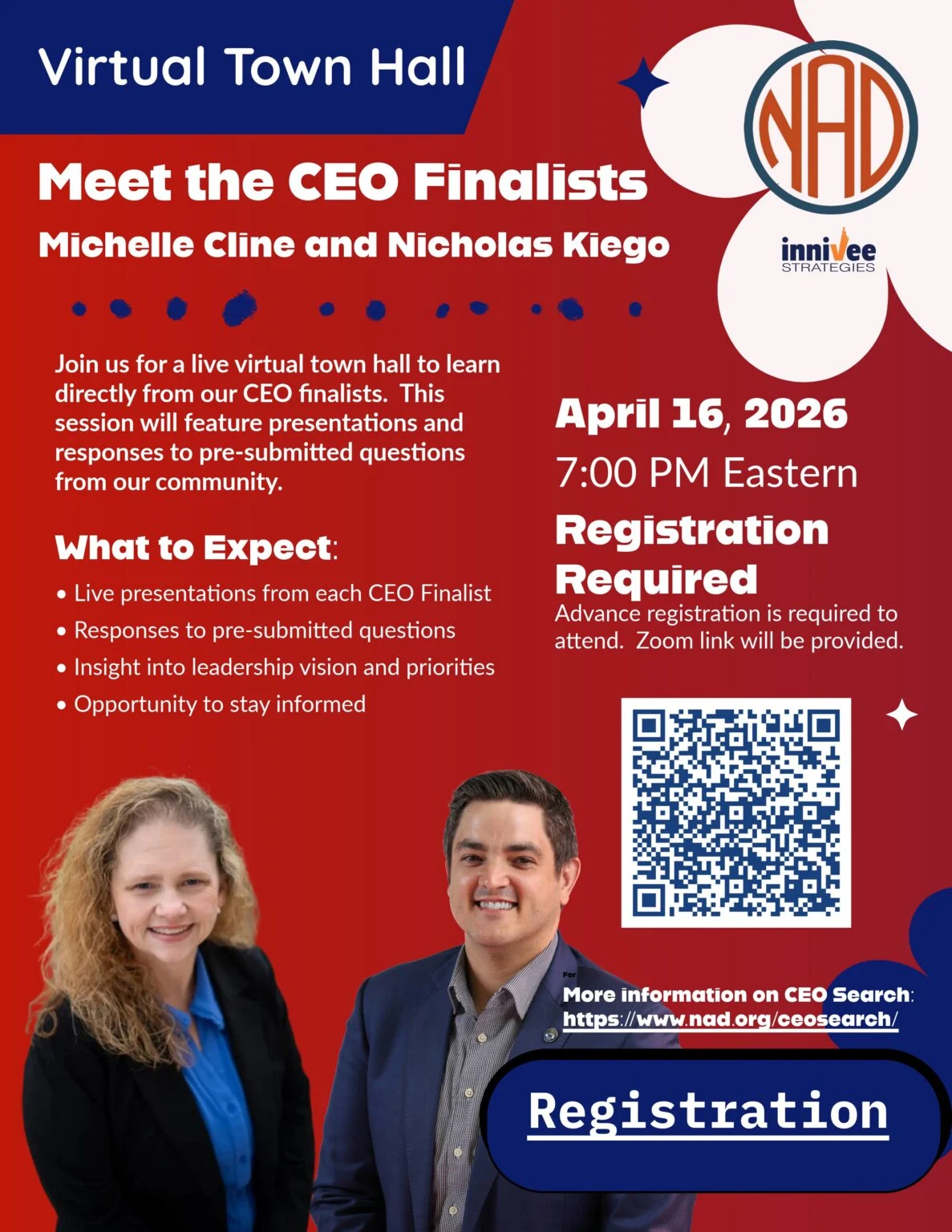
The selection of Michelle Cline and Nicholas Kiego as the two finalists follows an exhaustive vetting process conducted by an executive search committee, which reviewed dozens of applications from highly qualified professionals across the United States.
Michelle Cline brings a robust background in organizational management and advocacy. Her professional history is marked by a focus on sustainable growth and community engagement, qualities that the board identified as essential for the next phase of the organization’s evolution. Her approach has historically prioritized the amplification of diverse voices within the deaf community, ensuring that the NAD’s mission remains inclusive of those who have been historically marginalized.
Nicholas Kiego enters the final round of the search with a strong emphasis on policy-driven advocacy and external relations. His career has often intersected with national-level policy negotiations, providing him with a unique vantage point on how federal legislative action directly impacts the daily lives of deaf citizens. Supporters of his candidacy point to his ability to bridge the gap between grassroots activism and institutional policy-making as a key asset for the NAD’s lobbying efforts in Washington, D.C.
Chronology of the Selection Process
The search for the new CEO did not happen overnight. The board of directors established a search committee in late 2025, tasked with conducting an objective, nationwide assessment of potential candidates. The following timeline outlines the key stages of this transition:
- October 2025: The NAD Board of Directors formally announces the opening of the CEO search, outlining the core competencies and professional requirements for the role.
- December 2025 – January 2026: The search committee conducts a preliminary review of applicant dossiers, conducting interviews to narrow the field.
- February 2026: Semi-finalist interviews are held, during which candidates are evaluated on their vision for the NAD’s future and their ability to navigate complex stakeholder relationships.
- March 2026: The board conducts final-round interviews and deep-dive background evaluations, culminating in the selection of the two finalists.
- April 10, 2026: Public announcement of Michelle Cline and Nicholas Kiego as the official finalists.
- April 16, 2026: A virtual town hall is held, providing the community with a platform to view presentations from the finalists and hear their responses to pre-submitted inquiries.
The Virtual Town Hall: A New Standard for Transparency
The virtual town hall held on April 16, 2026, represented a deliberate effort by the NAD to involve its constituency in the final stages of the selection process. In an era where digital connectivity is paramount, the organization leveraged this platform to ensure that the selection of the next CEO was not solely an internal board decision, but a transparent process that invited public scrutiny and engagement.
During the event, both Cline and Kiego were asked to address a series of pre-submitted questions covering a broad range of topics. These included the organization’s stance on education reform, the protection of American Sign Language (ASL) rights, and the financial sustainability of the NAD’s various programs. By requiring both candidates to articulate their priorities in a public forum, the NAD ensured that the membership could evaluate how each individual aligns with the organization’s mission of “preserving, protecting, and promoting the civil, human, and linguistic rights of deaf and hard of hearing people.”
Fact-Based Analysis: Challenges Facing the Incoming CEO
Whoever assumes the role of CEO will inherit a complex set of challenges. The first is the maintenance of the NAD’s financial health in a volatile economic climate. As a 501(c)(3) organization, the NAD relies heavily on a mix of individual donations, foundation grants, and government-contracted work. Diversifying these revenue streams will be a primary concern for the incoming executive.
Secondly, the organization faces a shifting landscape in disability rights. While the Americans with Disabilities Act (ADA) has provided a strong legal foundation for decades, the enforcement of these rights in digital spaces—such as captioning on streaming platforms, video conferencing accessibility, and AI-generated sign language avatars—remains a contentious issue. The new CEO must be prepared to lead legal and lobbying efforts that adapt to these technological shifts.
Furthermore, the internal culture of the NAD is under constant scrutiny. The organization must remain responsive to the internal diversity of the deaf community, which includes variations in language use, cultural identity, and communication preferences. The next CEO will need to demonstrate a commitment to equity that satisfies a broad and diverse coalition of stakeholders.
Broader Impact and Implications
The selection of a new CEO is more than just an internal personnel change; it is a statement of intent for the future of the NAD. If the organization moves toward a leader focused on legislative advocacy, it may signal a more aggressive approach to federal policy. Conversely, if the focus leans toward community-building and grassroots empowerment, the organization may shift its resources toward local chapter development and regional advocacy.
The community’s response to the town hall and the subsequent dialogue on social media and at local meetings indicates a high level of engagement. Members of the deaf community have expressed their desire for a leader who is not only a capable administrator but also a visible and accessible figurehead. The transparency shown during the April 2026 process has set a benchmark for future leadership transitions within major non-profit organizations.
Looking Toward the Future
As the NAD approaches the final decision, the importance of the selection cannot be overstated. The organization is a steward of history and a guardian of the future for millions of deaf and hard-of-hearing Americans. By hosting the town hall and providing comprehensive information through their official channels, the NAD has demonstrated that it understands the weight of this responsibility.
The candidates themselves, Cline and Kiego, have acknowledged the unique position of the NAD. Their presentations focused heavily on the need for unity within the community, the importance of protecting ASL as a core linguistic right, and the necessity of maintaining the NAD’s reputation as the primary voice for the deaf in the United States.
The process is nearing its conclusion. With the community having had their say and the finalists having presented their visions, the board is now positioned to make a final, informed decision. The result of this search will dictate the trajectory of the National Association of the Deaf for the coming decade. As the organization transitions, the focus remains on the core principles that have guided it for over 140 years: advocacy, equality, and the unyielding pursuit of justice for all deaf and hard-of-hearing individuals.
For those looking to review the proceedings of the search or to stay updated on the final appointment, the NAD continues to provide documentation and resources at their official search portal. This commitment to keeping the public informed ensures that, regardless of the final outcome, the process remains grounded in the values of democratic participation and organizational integrity. The next CEO will be tasked with leading a robust, multi-faceted organization, and the evidence provided by this selection process suggests a thorough and meticulous approach to securing the best possible leadership for the years ahead.