Addressing the Unique Challenges of Usher Syndrome
Usher syndrome represents the leading genetic cause of combined deafness and blindness, a complex condition that profoundly impacts an individual’s ability to communicate, navigate their environment, and engage with the world. Typically, individuals with Usher syndrome are born with or develop hearing loss early in life, ranging from moderate to profound, often accompanied by balance issues. The more insidious aspect of the condition involves progressive vision loss due to retinitis pigmentosa (RP), which gradually narrows the field of vision and diminishes night vision, often leading to tunnel vision and eventually blindness. The onset and severity of these symptoms vary depending on the specific type of Usher syndrome. Type 1, for instance, is characterized by profound hearing loss at birth, severe balance problems, and vision loss beginning in early childhood. Type 2 involves moderate to severe hearing loss from birth, normal balance, and vision loss typically starting in the teenage years. Type 3 is less common, with progressive hearing loss and variable balance issues, and vision loss often developing later in life.
The cumulative effect of dual sensory impairment creates formidable barriers to education, employment, and social integration. Communication becomes a strenuous endeavor, safety is frequently compromised, and the risk of isolation increases significantly. For individuals navigating a world that increasingly relies on both visual and auditory cues, advanced hearing technology is not merely an enhancement; it is a critical tool for maintaining independence, fostering communication, and ensuring safety. High-fidelity hearing aids, especially those equipped with modern features such as advanced noise reduction, directional microphones, and connectivity options, become indispensable in helping individuals with Usher syndrome maximize their residual hearing, thereby compensating, in part, for their deteriorating vision.
A Collaborative Effort: The Genesis of the Starkey Cares Event
The genesis of this impactful event lies in a strategic partnership facilitated by Dr. Shanna Dewsnup, Au.D., Co-Founder of Happy Ears Hearing Center. Dr. Dewsnup’s unwavering advocacy for the Usher community and her collaborative spirit were instrumental in connecting individuals in need with Starkey’s resources. Her understanding of the specific auditory challenges faced by those with Usher syndrome, coupled with her professional network, enabled the seamless coordination required for such a specialized outreach program. This collaboration exemplifies how targeted partnerships between corporate entities, healthcare providers, and patient advocacy groups can bridge critical gaps in specialized care access.
The timing of the Starkey Cares clinic was particularly salient, coinciding with the opening day of the 2026 Usher Syndrome Coalition Conference in Minneapolis. The Usher Syndrome Coalition is a global non-profit organization dedicated to raising awareness, promoting research, and providing support and resources for individuals and families affected by Usher syndrome. Their annual conference serves as a vital gathering point for the community, offering educational sessions, research updates, networking opportunities, and a sense of shared experience. Hosting the hearing event concurrently with the conference ensured that a concentrated group of individuals from across the country, already gathered for support and information, could conveniently access life-changing hearing care. This synergistic approach maximized reach and impact, demonstrating a thoughtful consideration for the logistical challenges often faced by those traveling for specialized medical attention.
Starkey Cares, the company’s global social responsibility program, served as the operational arm for this initiative. Established with the foundational belief that everyone deserves access to the life-changing benefits of better hearing, Starkey Cares has a long-standing history of addressing hearing health disparities across diverse communities worldwide. From large-scale missions providing hearing care to underserved populations in developing countries to targeted initiatives supporting specific rare conditions, the program embodies Starkey’s corporate ethos of giving back. Through partnerships with healthcare professionals, customers, and other nonprofit organizations, Starkey Cares strategically deploys resources and expertise to expand access to advanced hearing technology, reflecting a commitment that extends beyond commercial interests. This particular event for the Usher community aligns perfectly with the program’s mission to help people connect, communicate, and live life to their fullest potential, irrespective of their unique health challenges.
On-Site Impact: A Day of Transformation at Starkey Headquarters
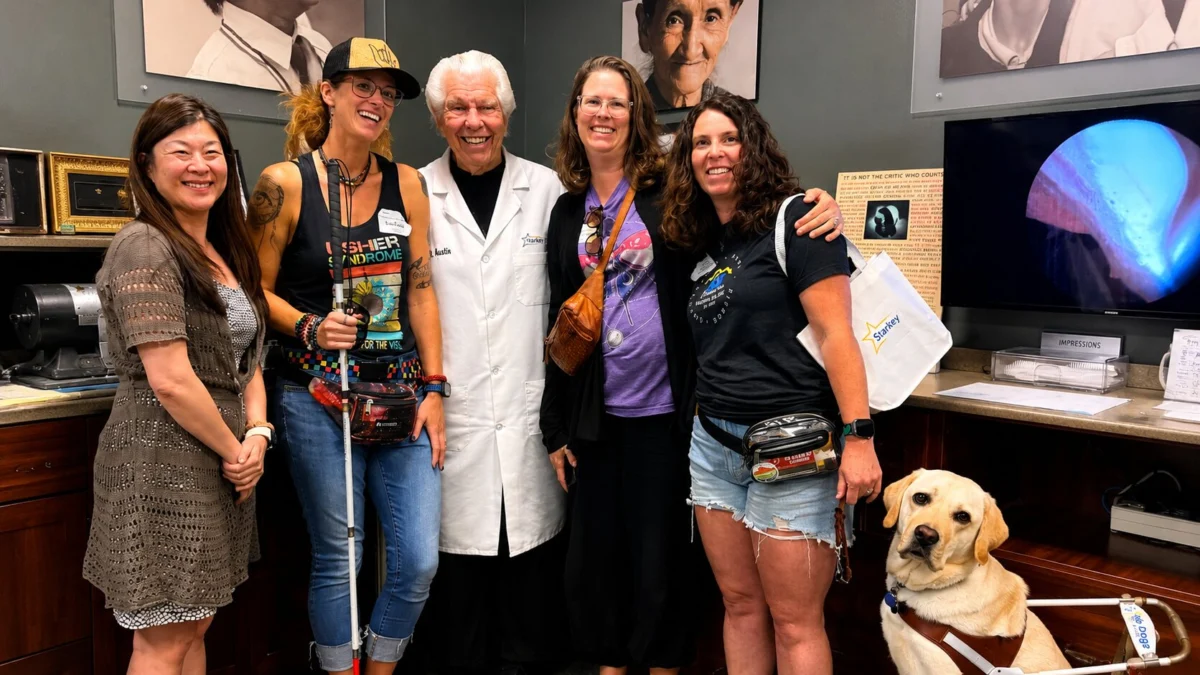
The event itself, held at Starkey’s state-of-the-art headquarters in Eden Prairie, Minnesota, was meticulously planned to provide a comprehensive and compassionate experience for each participant. Individuals traveling from various states across the nation were welcomed by a dedicated team of Starkey hearing care professionals and volunteers. The process began with thorough, personalized hearing evaluations conducted by licensed audiologists. These evaluations are crucial, especially for individuals with Usher syndrome, as their hearing profiles can be complex and may require nuanced assessment to determine the most effective amplification strategies.
Following the evaluations, each of the 20 qualified individuals received custom fittings for new hearing aids. The technology provided represented Starkey’s commitment to innovation, likely featuring AI-powered hearing aids known for their exceptional sound clarity, speech understanding in challenging environments, and advanced connectivity options. These devices are designed not only to amplify sound but also to intelligently process it, distinguishing speech from background noise, adapting to various listening environments, and even offering features like fall detection and activity tracking. For individuals with progressive vision loss, features such as direct streaming to smartphones, remote adjustments, and robust connectivity can be particularly beneficial, reducing reliance on visual cues for device interaction and enhancing overall accessibility. The personalized fitting process ensured that each device was optimally programmed and comfortable, maximizing its therapeutic benefits. The presence of volunteers further enriched the experience, providing logistical support, emotional comfort, and ensuring a smooth flow throughout the day, embodying the spirit of community and care central to the Starkey Cares program.
Voices from the Initiative: Perspectives on Partnership and Impact
Jenni Hargraves, Executive Director of Starkey Cares, articulated the core philosophy driving the initiative. "Starkey Cares exists to ensure that more people have access to the life-changing benefits of better hearing," Hargraves stated. "Whether we’re serving communities across the globe or supporting individuals with rare conditions like Usher syndrome, our mission remains the same: to help people connect, communicate and live life to its fullest. We’re proud to partner with Shanna Dewsnup and the Usher Syndrome Coalition to make a meaningful difference for this community." Her statement underscores the program’s expansive scope and its tailored approach to specific needs, highlighting the profound impact of improving sensory access for a population facing dual challenges.
From the perspective of Dr. Shanna Dewsnup, the collaboration was a testament to the power of collective action. While an explicit quote from Dr. Dewsnup was not provided, her inferred sentiments would undoubtedly emphasize the critical importance of such initiatives. She likely views this partnership as a direct answer to a pressing need within the Usher community, enabling individuals to overcome significant financial and logistical barriers to accessing essential hearing technology. Her advocacy work, rooted in a deep understanding of the daily struggles faced by those with Usher syndrome, positions her as a crucial bridge between advanced technological solutions and the individuals who need them most. The success of this event validates her efforts to connect and empower this often-underserved population.
Representatives from the Usher Syndrome Coalition, while not directly quoted in the original dispatch, would likely have expressed immense gratitude for Starkey’s proactive engagement. Such events provide tangible support to their members, reinforcing the Coalition’s mission to improve the lives of those affected by Usher syndrome. The provision of state-of-the-art hearing aids represents a significant step forward in ensuring that their community members can maintain active communication channels and enhance their personal safety, aspects that are foundational to navigating life with dual sensory loss. The Coalition would also likely highlight the increased awareness generated by such a high-profile event, potentially attracting more research funding and public understanding for Usher syndrome.
For the 20 recipients, the impact is immeasurable and deeply personal. While individual testimonials were not captured, the provision of new hearing aids undoubtedly brought a profound sense of relief and renewed connection. For someone living with progressive vision loss, improved hearing can dramatically enhance their ability to participate in conversations, hear important environmental cues for safety, and maintain a vital link to family and friends. This technology can alleviate feelings of isolation, restore confidence in social settings, and empower individuals to pursue educational and professional opportunities with greater ease. The ability to hear more clearly can also aid in interpreting visual information more effectively by reducing cognitive load, thereby indirectly supporting the use of residual vision.
The Broader Landscape of Hearing Healthcare and Social Responsibility
The Starkey Cares event for individuals with Usher syndrome is a powerful microcosm of a broader global challenge: untreated hearing loss. According to the World Health Organization (WHO), over 5% of the world’s population – or 430 million people – require rehabilitation for disabling hearing loss. This figure is projected to rise to over 700 million by 2050. Untreated hearing loss carries significant economic and social costs, including reduced educational attainment, lower employment rates, higher risks of cognitive decline, and increased social isolation. The economic burden alone, encompassing healthcare costs, productivity losses, and societal impacts, runs into hundreds of billions of dollars annually worldwide.
Access to hearing technology remains a significant barrier for many, particularly in underserved communities and for those with complex or rare conditions. The average cost of hearing aids, coupled with the expense of professional fittings and follow-up care, often places these essential devices out of reach for a substantial portion of the population. This is where corporate social responsibility programs like Starkey Cares play a pivotal role. By strategically allocating resources, expertise, and technology, companies can directly address these disparities, acting as catalysts for positive change in public health. This initiative also highlights the technological advancements in hearing aids themselves. Modern devices are sophisticated marvels of engineering, integrating artificial intelligence to adapt to diverse soundscapes, enhance speech clarity, and even offer health tracking capabilities, making them indispensable tools for comprehensive sensory support.
Looking Ahead: Sustaining Momentum for Sensory Health
The success of Starkey’s hearing event for the Usher syndrome community sets a precedent for future collaborations and underscores the critical importance of sustained efforts in sensory healthcare. Such targeted initiatives not only provide immediate, tangible benefits to recipients but also serve to raise awareness for rare conditions and the broader issue of hearing loss accessibility. The model of partnering with patient advocacy groups and leveraging professional networks, as demonstrated with Dr. Shanna Dewsnup and the Usher Syndrome Coalition, proves to be highly effective in reaching specific populations with acute needs.
For Starkey Cares, this event reinforces its position as a proactive leader in global hearing health philanthropy. The program’s ongoing commitment to expanding access to hearing technology for underserved populations around the world, while helping people stay connected to the moments and people that matter most, will continue to be a cornerstone of Starkey’s corporate identity. The hope is that this impactful initiative will inspire other corporations and organizations to engage in similar efforts, fostering a more inclusive world where advanced sensory technology is accessible to all who need it, regardless of their circumstances. The ultimate goal remains to empower individuals with the tools they need to live full, connected, and safe lives, fostering a society that values and supports sensory well-being for everyone.
About Starkey
Starkey is a leading global innovator in hearing technology and AI-powered hearing aids, headquartered in Eden Prairie, Minnesota. Since its founding by Bill Austin in 1967 and led today by Brandon Sawalich, Starkey has driven breakthroughs in unmatched sound clarity and machine learning and intelligent hearing technology. As the only American-owned hearing aid manufacturer, Starkey employs over 5,000 professionals across 29 facilities, delivering advanced hearing solutions to customers in 100+ markets worldwide. Explore our smart hearing devices and connected technologies at www.starkey.com.
Source: Starkey