The Seasonal Threat: Weathering and Ground Instability
While underground mining operations are inherently complex, the introduction of external environmental factors significantly complicates site stability. MSHA’s latest report highlights a correlation between seasonal weather transitions and an increased incidence of ground failures. As temperatures fluctuate and precipitation patterns shift, the resulting influx of moisture can act as a catalyst for ground instability, particularly in older sections of mines.
Geological weathering is a primary concern in subterranean environments that have been exposed to air and water over extended periods. Older workings, which are often characterized by increased "stand-up time"—the duration a tunnel can remain stable without artificial support—are particularly susceptible to degradation. When moisture levels rise, the structural integrity of the rock mass can diminish, leading to the loosening of roof bolts, the erosion of supporting strata, and the eventual collapse of the roof or back.

The current 2026 data indicates that these failures are not localized to one specific region but are a persistent threat across the industry. The human cost of these accidents remains a central focus for MSHA, as even a single roof fall has the potential to result in catastrophic injury or loss of life, regardless of the size of the operation.
Chronology and Data Trends: A Five-Year Perspective
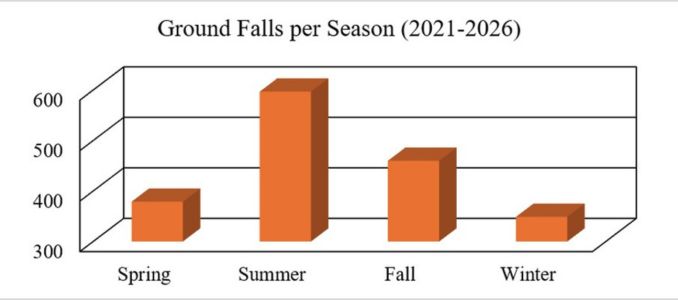
To understand the scope of the current crisis, it is essential to look at the historical data preceding the 2026 surge. Since 2021, MSHA has tracked ground fall statistics with heightened scrutiny. Historically, the periods between late summer and early autumn have proven to be volatile. The transition from high summer temperatures to cooling autumn air often involves increased humidity and groundwater shifts that infiltrate mine shafts and tunnels.

- 2021-2023 Period: The industry saw a gradual stabilization of ground fall incidents through rigorous enforcement of the Mine Improvement and New Emergency Response (MINER) Act. However, record-keeping from this period showed that seasonal peaks consistently occurred in the third quarter.
- 2024-2025 Period: Operators began reporting a higher frequency of "minor" ground sloughing, which often precedes larger collapses. MSHA analysts noted that increased production demands during these years may have led to shorter inspection windows, a factor that likely contributed to the current rise in incidents.
- 2026 Current Status: With 150 incidents reported by the end of July, the industry is currently tracking toward one of the highest annual rates of roof-fall accidents in the last decade. The fatality reported early this year serves as a stark reminder of the lethal potential of these geological hazards.
Root Causes of Failure: Inspections and Maintenance
MSHA’s investigation into recent incidents suggests that physical ground conditions are rarely the sole cause of a failure. Instead, the agency points to systemic failures in operational oversight. Specifically, the agency has identified three primary areas where mine safety protocols are frequently deficient:
- Inadequate Scaling Practices: Scaling—the process of removing loose rock from the roof or ribs—is a foundational safety task. When performed incorrectly or skipped entirely, it leaves hazardous, unstable rock hanging over the heads of miners. MSHA emphasizes that this must be done from a position of safety, yet reports suggest workers are occasionally pressured to scale beneath unsupported areas.
- Insufficient Supplemental Support: In older mine workings, primary roof bolting may no longer be adequate as the surrounding rock degrades. Operators are required to install supplemental support, such as cable bolts, steel arches, or heavy-duty mesh, to manage shifting loads. Failure to install these in a timely manner is a leading cause of roof collapse.
- Lax Pre-Shift Examinations: The law requires rigorous pre-shift and on-shift examinations. However, MSHA inspectors have noted that some examinations are becoming "check-the-box" exercises rather than thorough assessments of ground conditions. When supervisors fail to detect early warning signs—such as new cracks, "popping" noises, or slight shifts in roof strata—the window for preventative action closes.
Regulatory Guidance and Best Practices
In response to the current data, MSHA has reinforced its guidelines for mine operators. The agency stresses that ground control plans are not static documents; they must be treated as living frameworks that evolve alongside the mine’s geological and environmental changes.

Operators are mandated to review and, if necessary, amend their ground control plans whenever mining methods change or when unexpected ground conditions are encountered. This includes the management of water inflows. In regions where freeze-thaw cycles are common, drainage systems must be optimized to prevent water from pooling in, or infiltrating, the roof strata. Pumping accumulated water is not merely an operational necessity; it is a critical safety intervention.
For the miners on the ground, the agency emphasizes the importance of situational awareness. Training programs must prioritize the ability to recognize the subtle changes in ground conditions that precede a fall. Communication between shifts is equally vital; if a crew notices a change in the roof condition during the day shift, that information must be clearly communicated to the incoming crew, and corrective actions must be documented in the mine’s logbooks.

Broader Impact and Industry Implications
The implications of these safety failures extend beyond the immediate risk to human life. Frequent ground falls can lead to prolonged mine closures, massive equipment damage, and legal repercussions for operators found to be in violation of the Federal Mine Safety and Health Act of 1977. Furthermore, the insurance landscape for mining companies is increasingly tied to safety performance; a high rate of reportable accidents can lead to prohibitive increases in premiums and a loss of investor confidence.
Industry advocates, while acknowledging the risks, argue that the increased focus on production—driven by global demand for minerals—creates a difficult environment for implementing the extensive maintenance required for aging mines. However, labor organizations maintain that there is no production goal that justifies the risk of an preventable roof fall.
The MSHA’s 2026 warning is effectively a call to reset the safety culture. By shifting the focus from speed to stability, the mining industry must reconcile the necessity of resource extraction with the absolute requirement for worker protection. As the industry moves into the final months of the year, the focus remains on proactive inspection, the rigorous application of supplemental support, and an uncompromising commitment to the principle that every miner deserves to return home safely at the end of their shift.
The agency continues to offer technical assistance to operators struggling with complex ground conditions, suggesting that collaboration between federal inspectors and on-site engineers is the most effective path toward reducing the frequency of these hazardous events. Ultimately, the 150 incidents reported in the first half of 2026 represent a clear warning: the physical reality of the mine is changing, and the industry’s safety protocols must evolve to match it.