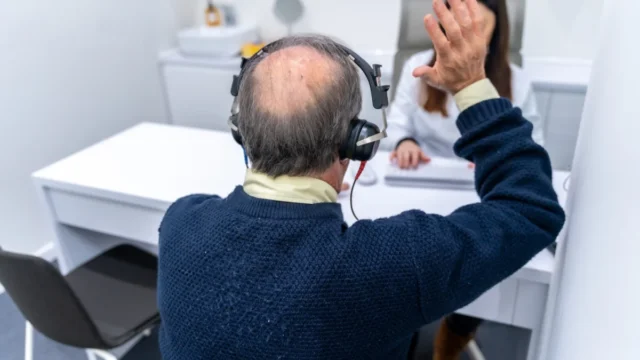

The questionnaire, comprising sixteen carefully crafted items, prompts users to consider their aspirations and potential challenges associated with cochlear implantation. By engaging with these questions, individuals can begin to articulate their hopes and concerns, paving the way for more informed discussions with their healthcare providers and a more grounded perspective on the rehabilitation journey. The insights gained from completing this questionnaire can serve as a valuable starting point for understanding what progress may look like and, crucially, what active steps can be taken to maximize the benefits of the implant.
Understanding the Cochlear Implant Process: A Framework for Expectations
Cochlear implants are sophisticated electronic devices that bypass damaged parts of the inner ear (cochlea) and directly stimulate the auditory nerve, offering a potential solution for individuals with severe to profound sensorineural hearing loss who do not benefit sufficiently from conventional hearing aids. The journey, from initial consultation and surgery to activation and ongoing rehabilitation, is a multifaceted one. It requires not only technological adaptation but also significant cognitive and behavioral adjustments.
The development of cochlear implant technology has been a gradual but impactful process, spanning several decades. Early iterations, emerging in the mid-20th century, laid the groundwork for the advanced multi-channel devices available today. These modern implants are designed to provide a more nuanced representation of sound, enabling a greater range of auditory perception. However, the effectiveness of a cochlear implant is not solely determined by the device itself. A critical component of successful outcomes lies in the individual’s commitment to the rehabilitation process, including auditory training and adaptation to new listening experiences.
Deconstructing Expectations: Key Questionnaire Themes and Their Significance
The sixteen-item questionnaire delves into various facets of the cochlear implant experience, aiming to align individual expectations with the realities of the technology and its rehabilitation. Each item serves as a prompt for thoughtful consideration:
-
"I will need to wear the external device all waking hours." This statement addresses the practical reality of device usage. For most recipients, consistent wear of the external sound processor is crucial for maximizing auditory input and facilitating brain adaptation to the new soundscape. Sporadic use can hinder progress and limit the overall benefit derived from the implant.
-
"I will take some time adjusting to listening with my cochlear implant." This statement acknowledges the neuroplasticity of the auditory system. The brain needs time to learn to interpret the electrical signals delivered by the implant as meaningful sound. This adjustment period is a normal and expected part of the process, varying in duration and intensity among individuals.
-
"I will need to participate in listening training." This highlights the active role of the recipient in their rehabilitation. Auditory training, often guided by audiologists and speech-language pathologists, is instrumental in developing listening skills, improving speech comprehension, and enhancing the overall ability to navigate the auditory world. This training can involve structured exercises, real-world listening practice, and the use of assistive listening devices.
-
"I will need support from others at home to develop listening." The importance of the social environment cannot be overstated. Family members and close contacts play a vital role in reinforcing listening skills, providing opportunities for practice, and offering encouragement throughout the rehabilitation journey. A supportive home environment can significantly accelerate progress and improve the recipient’s confidence.
-
"I will hear quiet sounds." This probes expectations regarding the perception of subtle auditory cues. While cochlear implants can significantly enhance the ability to hear a wide range of sounds, the perception of very faint or distant sounds may still be challenging, particularly in the initial stages. The brain’s ability to interpret these subtle cues develops over time with consistent listening and training.
-
"I will be able to locate where sounds come from." Sound localization, the ability to determine the origin of a sound, is a complex auditory skill. While cochlear implants can contribute to improved sound localization, especially with bilateral implantation, it may not always reach the same level of precision as in individuals with typical hearing. Factors such as the type of implant, the number of implants, and individual brain processing play a role.
-
"I will hear like others who have typical hearing." This statement addresses a common, though often unrealistic, expectation. While cochlear implants can provide a remarkable improvement in hearing ability and open up a world of sound, the auditory experience is typically different from that of a person with typical hearing. The goal is to achieve functional hearing and improved communication, rather than a perfect replication of natural hearing.
-
"I will understand what people say without having to lipread." This touches upon speech perception in quiet environments. For many cochlear implant recipients, the ability to understand speech without relying on visual cues significantly improves, allowing for more natural and fluid communication. However, the degree of reliance on lipreading can vary, and complete independence may not be achieved by all.
-
"I will be able to understand what people say without needing repetition." This expectation relates to the clarity and intelligibility of speech perception. As the auditory system adapts and listening skills develop, the need for repetition typically diminishes. However, in challenging listening situations or with unfamiliar speakers, some degree of repetition may still be beneficial.
-
"I will understand people when there is background noise." This is a crucial aspect of real-world listening. Background noise presents a significant challenge for individuals with hearing loss, and it remains a common area of difficulty for cochlear implant users. While improvements are often seen, understanding speech in noisy environments is an ongoing area of rehabilitation and can be influenced by factors such as the implant technology and individual processing abilities.
-
"I will follow a conversation with a group of people." Group conversations are inherently complex, involving multiple speakers and dynamic auditory environments. While cochlear implants can greatly enhance the ability to participate in group settings, following every nuance of a multi-person conversation can remain a challenge. Strategies such as focusing on one speaker at a time and utilizing assistive listening devices can be beneficial.
-
"I will be able to improve my speech skills if they are currently a concern." For individuals whose speech development has been impacted by hearing loss, cochlear implantation can provide the auditory feedback necessary to refine articulation, intonation, and overall speech clarity. This benefit is particularly pronounced in children who receive implants early in life.
-
"I will be able to improve my language skills if currently are a concern." Similar to speech development, auditory input is fundamental for language acquisition and development. Cochlear implants can provide access to the rich auditory information needed to expand vocabulary, improve grammatical understanding, and enhance overall language comprehension and expression.
-
"I will enjoy music." Music perception with a cochlear implant can be a rewarding experience, but it is often different from how individuals with typical hearing perceive music. While the ability to appreciate melodies, rhythms, and harmonies can improve significantly, the full richness and complexity of musical sound may not always be replicated. Enjoyment of music is a subjective experience that evolves with listening and practice.
-
"I will be able to use the telephone." Telephone communication relies heavily on clear speech transmission without visual cues. Cochlear implants can greatly enhance the ability to use the telephone, with many recipients achieving good to excellent results. The clarity of the telephone signal and the individual’s auditory processing skills are key factors.
-
"I will continue to wear a hearing device in the other ear, if available." For individuals with single-sided deafness or asymmetrical hearing loss, a contralateral hearing aid or a second cochlear implant (bilateral implantation) can offer significant advantages, including improved sound localization, better speech understanding in noise, and a more natural listening experience. This item prompts consideration of the benefits of binaural hearing.
The Significance of Setting Realistic Expectations
Research consistently demonstrates a strong correlation between realistic expectations and successful outcomes in cochlear implantation. When individuals have a clear understanding of what is achievable, the challenges involved, and the importance of their active participation, they are more likely to remain motivated throughout the rehabilitation process. Conversely, unrealistic expectations can lead to disappointment, frustration, and potentially lower adherence to rehabilitation programs.
A study published in the Journal of the American Academy of Audiology indicated that patients who reported higher pre-operative expectations for speech understanding were more likely to experience satisfaction with their cochlear implant at one year post-implantation, provided these expectations were met. This underscores the importance of a balanced approach, where hope is tempered with an understanding of the complexities of the auditory system and the demands of rehabilitation.
Background and Chronology of Cochlear Implant Development
The concept of stimulating the auditory nerve electrically dates back to the early 1950s. Early experiments involved single-channel devices, offering limited frequency resolution and basic sound awareness. Significant advancements occurred in the 1970s and 1980s with the development of multi-channel cochlear implants, which could stimulate different parts of the auditory nerve, providing a more complex representation of sound.
The 1990s saw further refinement in electrode design and signal processing strategies, leading to improved speech understanding in quiet environments. The 2000s brought about significant strides in digital signal processing, miniaturization of external components, and a growing understanding of the critical role of early implantation in children. Today, research continues to focus on enhancing performance in noisy environments, improving music perception, and developing more sophisticated implantable technologies.
The timeline for a cochlear implant journey typically involves:
- Initial Evaluation: Comprehensive audiological assessment, medical examination, and counseling.
- Surgery: Implantation of the internal device.
- Healing Period: Typically several weeks for the surgical site to heal.
- Activation: The external sound processor is fitted and switched on.
- Rehabilitation: Ongoing auditory training, speech therapy, and audiologist appointments. This phase can last for months or even years.
Expert Perspectives and Broader Impact
Dr. Anya Sharma, a leading audiologist specializing in cochlear implants, emphasizes the proactive nature of the expectations questionnaire. "It’s crucial for individuals and their families to engage with their aspirations and potential challenges before surgery," Dr. Sharma states. "This questionnaire acts as a valuable tool for initiating that conversation, ensuring that the patient is an informed and active participant in their journey. We often see that those who have a clear, yet realistic, picture of what cochlear implantation entails tend to navigate the rehabilitation phase with greater resilience and achieve more satisfying outcomes."
The implications of successful cochlear implantation extend far beyond improved hearing. For individuals who have experienced profound hearing loss, the ability to communicate effectively can lead to:
- Enhanced Social Engagement: Increased participation in social activities, stronger interpersonal relationships, and reduced feelings of isolation.
- Improved Educational and Employment Opportunities: Access to educational settings and a wider range of employment options.
- Greater Independence: The ability to navigate daily life with increased confidence and autonomy.
- Improved Quality of Life: A richer and more connected experience of the world through sound.
For children, early cochlear implantation and subsequent rehabilitation are particularly transformative, enabling them to develop spoken language and integrate into mainstream educational and social environments. Data from organizations like the National Institute on Deafness and Other Communication Disorders (NIDCD) consistently highlight the benefits of early intervention, with children implanted before the age of two showing significant advantages in speech and language development compared to those implanted later.
Conclusion
The cochlear implant journey is a profound and life-altering experience. By providing individuals and their families with a structured tool to explore their expectations, this questionnaire aims to foster a more informed, realistic, and ultimately, more successful path toward regaining the gift of hearing. The ongoing commitment to rehabilitation, coupled with a clear understanding of the potential and limitations of the technology, are the cornerstones of maximizing the transformative benefits of cochlear implantation.