

The subtle yet significant moments that can be missed due to hearing loss underscore the importance of proactive home adjustments. A conversation at the dinner table can become a fragmented experience, and the ringing of a phone or the alert of a smoke detector might go unnoticed. These are not isolated incidents but rather cumulative challenges that can impact independence, social engagement, and overall well-being. The insights provided by MED-EL, a company at the forefront of audiological innovation, offer a valuable roadmap for individuals and their families seeking to mitigate these daily hurdles.

Understanding the Acoustic Landscape of the Home
The design and materials of a home can significantly influence the clarity of sound. High ceilings, hard surfaces such as tile or hardwood floors, and large, unadorned windows can all contribute to acoustic issues. These architectural elements can create environments rich in echo and reverberation, phenomena that scatter sound waves and muddle speech. For individuals using hearing implants, this acoustic interference can make distinguishing words and following conversations exponentially more difficult. The energy required to process distorted or reverberant sound can lead to listening fatigue, impacting concentration and social participation.
Furthermore, the ability to detect important environmental sounds is paramount for safety and independence. A malfunctioning kitchen appliance, a crying baby, or a warning siren are all sounds that require timely recognition. In homes with poor acoustics, these sounds can be attenuated or distorted, increasing the risk of accidents or missed opportunities for intervention. MED-EL’s recommendations directly address these challenges by focusing on modifying the home’s auditory environment and integrating assistive technologies.
Five Pillars of a Hearing-Accessible Home
MED-EL’s approach centers on empowering individuals with hearing loss by equipping them with actionable strategies to enhance their home experience. These strategies encompass technological integration, strategic use of soft furnishings, optimized visual cues, specialized alert systems, and organized equipment management.

1. Direct Sound Streaming: Bridging the Auditory Gap
One of the most impactful advancements for hearing implant users is the ability to stream audio directly from electronic devices to their cochlear implant or other hearing implant audio processors. This technology bypasses the acoustic challenges of the environment, delivering clear, crisp sound directly to the user’s auditory pathway. MED-EL highlights accessories like AudioLink and AudioLink XT as crucial tools for this purpose. These devices function as versatile remote microphones and streaming hubs, allowing users to connect to smartphones, televisions, music players, and other audio sources.
The practical implications of direct streaming are profound. At a family dinner, a user can employ AudioLink as a remote microphone, placing it at the center of the table to capture the voices of multiple speakers. This overcomes the difficulty of isolating individual voices in a noisy room. Similarly, streaming audio from a television directly to the processor eliminates the need to rely on potentially distorted room sound or struggle to keep pace with dialogue. This not only enhances enjoyment of entertainment but also improves comprehension and reduces the cognitive load associated with listening. The ability to stream sound directly to an audio processor represents a significant leap forward in personalized audiological support, offering a more immersive and less fatiguing listening experience.
2. Softening the Soundscape: Minimizing Echo and Reverberation
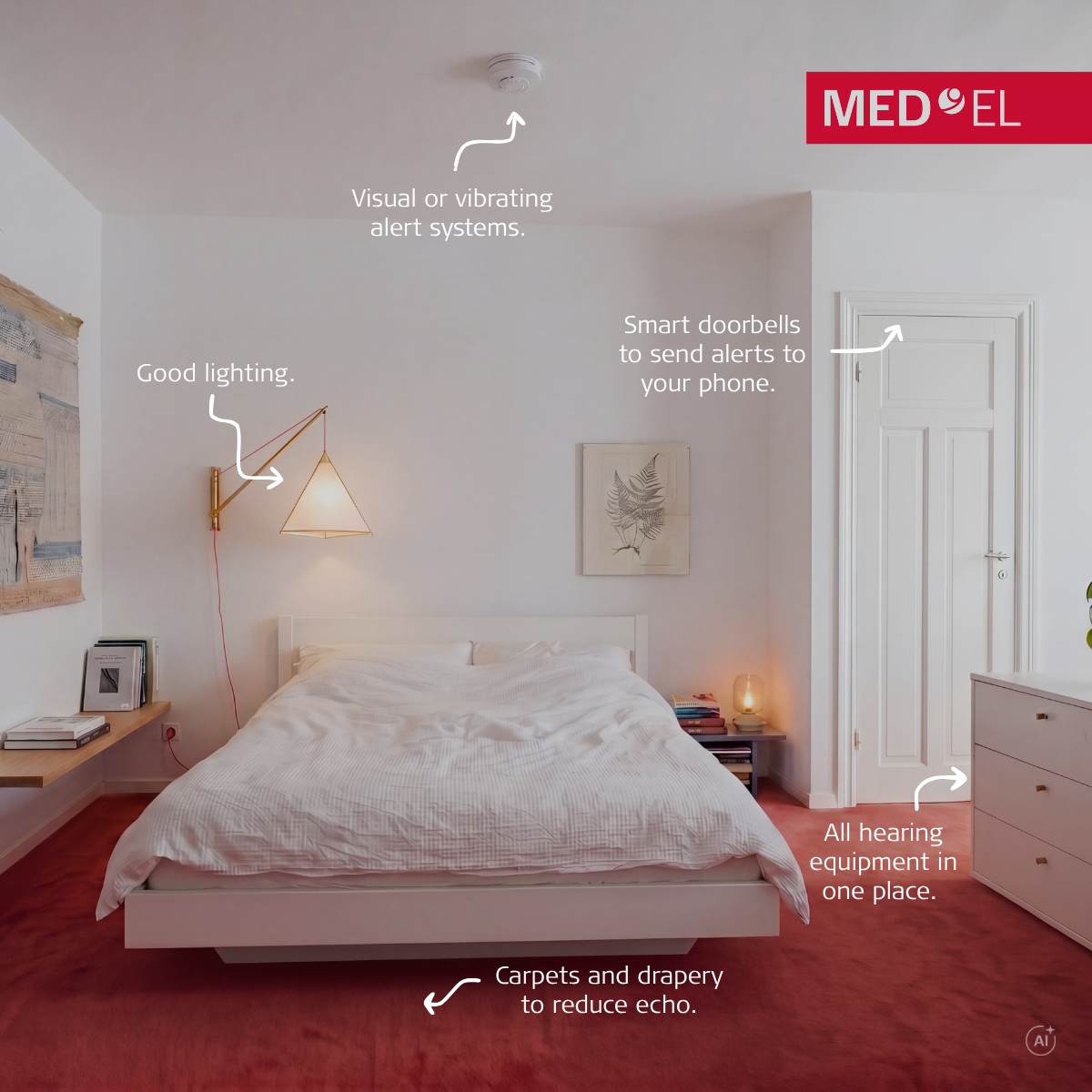
The physical attributes of a home play a critical role in its acoustic quality. Hard surfaces reflect sound, leading to the undesirable effects of echo and reverberation. To counteract this, MED-EL advocates for the strategic incorporation of sound-absorbing materials. Carpets, rugs, and heavy drapery are highly effective in reducing sound reflections. By introducing these soft furnishings, sound waves are absorbed rather than bounced around the room, leading to a significant reduction in echo.

This simple yet effective modification can dramatically improve the intelligibility of speech. Conversations become clearer, and the effort required to understand spoken words is lessened. For individuals who may also rely on lip-reading as a supplementary communication strategy, a quieter, less reverberant environment allows for greater focus on visual cues without the distraction of competing, distorted sounds. The cumulative effect of these changes contributes to a more comfortable and less cognitively demanding listening experience within the home.
3. Illuminating Communication: The Power of Good Lighting
Effective communication is a multi-sensory experience, and for individuals with hearing loss, visual cues are often indispensable. As noted by MED-EL, lip-reading, or speechreading, plays an integral role in comprehension. This skill allows individuals to glean crucial information from the movements of the lips, tongue, and jaw, as well as facial expressions and gestures. To facilitate effective speechreading, adequate and well-distributed lighting is paramount.
Shadows and uneven lighting can obscure facial features, making it difficult to discern subtle nuances in speech. MED-EL emphasizes the importance of ensuring that faces are evenly lit, avoiding situations where individuals are silhouetted or their faces are cast in shadow. This can be achieved through strategic placement of lamps, the use of ambient lighting, and ensuring that light sources are positioned to illuminate the speaker’s face directly. By optimizing lighting conditions, the home environment becomes more conducive to clear visual communication, complementing auditory input and fostering more fluid and engaging interactions.

4. Smart Alerts: Enhancing Safety and Situational Awareness
Beyond communication, home safety is a critical concern for individuals with hearing loss. The ability to detect important auditory alerts, such as smoke alarms, carbon monoxide detectors, doorbells, or even alarm clocks, is essential for maintaining independence and security. When these alerts are not heard, the risks can be significant. MED-EL addresses this by recommending the integration of visual or vibrating assistive alert systems.
These systems are designed to provide notifications that do not rely solely on sound. Visual alerts, such as flashing lights integrated with smoke detectors or doorbells, provide a clear visual cue. Vibrating alerts, often delivered through wearable devices like smartwatches or specialized pagers, offer a tactile notification that can be felt even when the individual is not wearing their audio processors or is in a deep sleep. The article specifically mentions smart doorbells that can send alerts directly to a smartphone, offering both visual and haptic feedback. These technologies are particularly vital for situations where the audio processor might be removed, such as during sleep or water-based activities. By implementing these smart alert systems, individuals can significantly enhance their safety and maintain a higher level of situational awareness within their homes.
5. Organized Equipment Management: Streamlining Daily Routines
The effective management of hearing technology is crucial for its optimal performance and the user’s convenience. MED-EL suggests creating a dedicated space for all hearing-related equipment. This centralizes essential items such as backup audio processors, drying systems, battery chargers, and cleaning supplies.
This organizational strategy offers several benefits. Firstly, it reduces the likelihood of misplacing critical components, a common concern for individuals managing complex electronic devices. Secondly, it ensures that backup equipment is readily accessible in case of device malfunction or loss. Thirdly, it simplifies the daily charging and maintenance routines, making it easier to keep devices powered and in optimal working condition. A well-organized system not only promotes efficiency but also provides a sense of security, knowing that all necessary tools for hearing are readily available and properly maintained.
The Broader Impact: Fostering Independence and Well-being
The strategies proposed by MED-EL extend beyond mere inconvenience mitigation; they are foundational to fostering greater independence, enhancing social engagement, and improving the overall quality of life for individuals with hearing loss. By transforming homes into more accessible environments, the cognitive load associated with listening is reduced, freeing up mental energy for other activities and interactions.
The ability to participate fully in conversations, to detect important safety alerts, and to manage daily routines with greater ease contributes significantly to a sense of autonomy and confidence. This is particularly relevant in the context of an aging population, where maintaining independence is a key health and well-being objective. According to the World Health Organization, an estimated 2.5 billion people worldwide will live with some degree of hearing loss by 2050, highlighting the growing need for accessible living environments and assistive technologies.

Furthermore, the emphasis on clear communication directly impacts social relationships. When individuals can engage more fully with family and friends, their sense of connection and belonging is strengthened. This can combat the isolation that can sometimes accompany hearing loss. The proactive approach advocated by MED-EL empowers individuals to take control of their environment, turning potential challenges into opportunities for enhanced living.
The insights shared by Natalie Teakle, a Speech and Language Therapist and Rehabilitation Manager at MED-EL, underscore the practical expertise informing these recommendations. Her role in providing global training and mentoring in the field of hearing loss and hearing implants lends significant weight to the proposed strategies. Her involvement ensures that the advice is grounded in both clinical understanding and real-world application.
In conclusion, the creation of a hearing-friendly home is an achievable goal through a combination of technological integration, environmental modifications, and organizational strategies. MED-EL’s five key recommendations provide a comprehensive framework for enhancing communication, comfort, and safety, ultimately contributing to a more inclusive and empowering living experience for individuals navigating the complexities of hearing loss. These practical steps demonstrate a commitment to not only advancing hearing technology but also to ensuring that individuals can fully engage with their world, starting within the sanctuary of their own homes.