Legal Advocacy and Landmark Settlement
A central pillar of the NAD’s recent activities involves the rigorous enforcement of communication access rights. Director of Legal Services Brittany Shrader, Esq., recently announced a significant settlement in a case involving the rights of a Deaf woman and her minor children. The litigation arose from a police interaction in which an officer failed to provide effective communication, instead relying on the woman’s 11-year-old twin daughters to act as interpreters.
The incident, which resulted in the mother’s arrest, highlights the persistent dangers of "child interpreting" in high-stakes environments. The legal action concluded with a $1.2 million settlement. Legal experts and advocates note that this outcome serves as a critical warning to law enforcement agencies nationwide: reliance on untrained minors to interpret for Deaf individuals during custodial interactions is a violation of federal law and civil rights protections. The NAD maintains that the only standard for effective communication in such settings is the utilization of professionally trained, qualified interpreters. This victory is viewed as a deterrent against similar civil rights abuses and reinforces the mandate that municipalities must integrate accessibility training into standard police protocols.
Educational Reform: The Blueprint on Excellence in Deaf Education
Parallel to its legal efforts, the NAD is prioritizing long-term systemic change through educational policy. Dr. Marla Hatrak, an Educational Policy Consultant for the organization, is spearheading the "Blueprint on Excellence in Deaf Education" (BEDE). This initiative aims to address chronic gaps in the national education system for Deaf and hard-of-hearing students.
The BEDE project is designed to create a cohesive framework for states and local school districts to improve outcomes, focusing on language acquisition, access to the general curriculum, and the preservation of Deaf culture within the classroom. Dr. Hatrak is scheduled to present a comprehensive update on this framework at the upcoming #NAD2026 Conference in San Francisco. The initiative is part of a broader push to standardize educational expectations, ensuring that geographic location does not dictate the quality of education a Deaf student receives.
58th Biennial Conference: Logistical Milestones
Preparations for the 58th biennial NAD conference, scheduled to take place this summer in San Francisco, are nearing a critical phase. Assistant to the Interim CEO Nancy Bloch reports that conference planning is ahead of schedule, with the dedicated hotel room block already reaching 60% capacity.
The conference serves as the organization’s primary forum for business meetings, legislative priority setting, and professional development. With a registration deadline of May 20, the NAD is emphasizing the necessity for early attendance confirmation. The event will host a variety of stakeholders, including educators, advocates, legal professionals, and policy makers, all converging to discuss the future of the Deaf community. The scale of the event—which includes exhibits, workshops, and business proceedings—requires significant coordination with local California organizations, whose contributions have been cited by Dr. Scoggins as essential to the event’s anticipated success.
Youth Empowerment and Leadership Development
A cornerstone of the NAD’s long-term strategy is the formal cultivation of the next generation of leadership through its Youth Programs. Directed by Claudia Giordano, these initiatives are designed to foster agency and professional skill-building among Deaf youth.
- Youth Leadership Camp (YLC): This flagship program will host 64 campers from across the United States. The curriculum emphasizes outdoor leadership, teamwork, and networking with national Deaf figures. The Pacific Northwest setting is intentionally utilized to facilitate team-building exercises that are often unavailable in traditional academic settings.
- Jr. NAD Pages Program: Targeted at students aged 13 to 17, this program provides a unique, immersive experience at the biennial conference. "Pages" are integrated into the operational side of the event, assisting with workshops and observing the Council of Representatives. This direct exposure to organizational governance is intended to demystify the political and administrative processes that define the Deaf community’s advocacy efforts.
- College Bowl: This academic competition remains a staple of the conference, where university teams compete in a test of knowledge regarding history, culture, and advocacy. By fostering a competitive yet collaborative environment, the College Bowl reinforces the intellectual contributions of Deaf students to the broader community.
Executive Transition and Organizational Stability
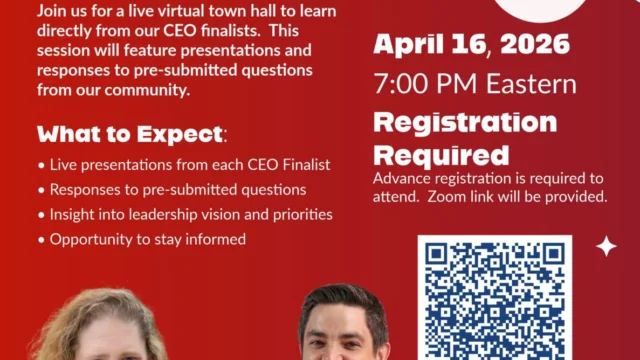
The organizational structure of the NAD is also undergoing a planned evolution. Dr. Bobbie Beth Scoggins, serving as Interim CEO, has focused her tenure on stabilizing internal operations while preparing the organization for a leadership change. Her responsibilities include supporting staff, coordinating with the Board of Directors, and facilitating a seamless transition to the incoming CEO, who is expected to assume the role shortly after the transition period concludes on July 31.
This transitional phase is critical for the continuity of the NAD’s ongoing legal and legislative projects. By maintaining a focus on the conference, the CEO search, and the empowerment of youth programs, the current administration aims to ensure that the organization remains robust and responsive to the evolving needs of the Deaf population.
Implications and Future Outlook
The work being performed by the NAD reflects a shift toward multi-faceted advocacy. By combining high-impact litigation with foundational educational policy and youth development, the organization is attempting to address both the immediate and systemic challenges facing the community.
The $1.2 million settlement regarding the police interaction serves as a stark reminder of the necessity for ongoing advocacy regarding communication access. Similarly, the focus on the BEDE initiative indicates that the NAD is moving toward a more proactive, policy-driven approach to educational equity. As the organization looks toward the 2026 conference, the emphasis remains on community mobilization. With room blocks filling rapidly and youth programs seeing high demand, the NAD appears to be in a position of organizational strength.
Ultimately, the combination of these efforts—legal victories, structural policy reform, and leadership development—serves to solidify the NAD’s role as the preeminent advocate for Deaf individuals in the United States. The upcoming transition in executive leadership will be a pivotal moment in the organization’s history, but current projections suggest that the groundwork laid by the present administration will provide a firm platform for future growth. The convergence of these activities in San Francisco this summer will serve as the primary indicator of the organization’s trajectory for the next two years.