The First Thirty Days: A Foundation of Transparency
Upon assuming the role of CEO, Kiego’s primary directive was to conduct a comprehensive audit of the organization’s health. His first month was characterized by intensive internal reviews rather than outward-facing public relations campaigns. Kiego prioritized direct engagement with key stakeholders, starting with the Chief Financial Officer. This decision underscores a shift in organizational culture toward fiscal responsibility and data-driven management.
During the interview, Kiego addressed the perception of the NAD as a sprawling, high-resource entity. He acknowledged that there is a stark discrepancy between the public’s idealized view of the organization and its operational reality. With a lean staff of only six full-time employees, the NAD has been operating under significant resource scarcity. Kiego’s assessment of the staff as “workhorses” who have maintained core advocacy functions despite limited administrative support highlights the heavy reliance on human capital over financial assets. By choosing to highlight the modest nature of the headquarters and the current limitations of the staff, Kiego is attempting to reset expectations and foster a culture of honesty that he believes is essential for the organization’s long-term sustainability.
Strategic Priorities and Early Wins
Kiego’s initial focus has been categorized by three primary objectives: financial stabilization, internal capacity building, and strengthening core program areas, specifically the Legal Advocacy Center, youth programming, and national policy initiatives. Despite the challenges, Kiego has already secured what he terms “fast wins” to improve the organization’s day-to-day efficiency.
Among these successes is the recruitment of a new IT systems administrator and webmaster. This move is critical, as the NAD’s digital infrastructure is a primary touchpoint for its membership and the broader public. Broken links and outdated systems have historically hindered the organization’s ability to communicate effectively. Furthermore, Kiego has collaborated with the Director of Youth Programs, Claudia, to onboard a volunteer grant writer specifically tasked with securing funding for youth-focused initiatives. This strategic delegation of resources is a deliberate attempt to expand the organization’s reach without the immediate need for increased overhead costs.
Financial Oversight and Organizational Sustainability
The financial health of the NAD remains the cornerstone of Kiego’s long-term strategy. In the non-profit sector, the ability to pivot and react to civil rights crises is entirely dependent on liquid capital and sustainable revenue streams. Kiego’s immersion in the organization’s budgetary documents—a process involving the CFO and external accountants—reflects an understanding that without financial stability, advocacy programs cannot be scaled or sustained.
Kiego has emphasized that the organization is currently in a phase where "doing more with less" is the operational reality. This necessitates a transition from a traditional top-down management approach to a collaborative model that invites community participation. By inviting members to contribute their time and expertise—particularly retired legal professionals and policy experts—Kiego is seeking to build a "shadow workforce" that can augment the output of the core staff.
Bridging the Generational Divide: The Role of Jr. NAD
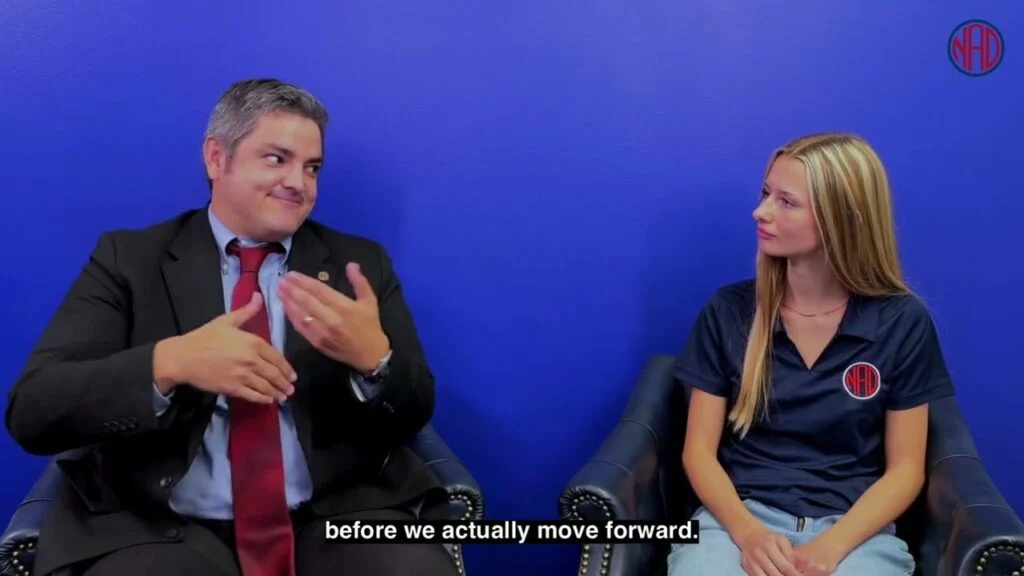
A significant portion of the dialogue focused on the integration of Deaf youth into the NAD’s broader mission. Ambassador Marisa Goff, representing the 2025–2027 term, highlighted a recurring sentiment among younger members: the feeling of being sidelined in favor of established, older demographics. Goff’s insights into the lack of visibility for Jr. NAD chapters at state and local events serve as a critical critique of the organization’s past engagement strategies.
Kiego agreed that the Youth program is the pipeline for the future of the organization. He noted that the most loyal and passionate advocates within the NAD often trace their engagement back to their formative years in youth programming. The challenge, however, lies in the changing medium of communication. While the legacy of the NAD is built on in-person gatherings and physical conferences, the current generation is predominantly digital-first.
The proposed solution is a hybrid model. Kiego envisions social media as a "window" into the organization—a digital preview that serves to entice younger generations to engage in the physical, in-person events that form the bedrock of Deaf culture. Goff suggested that the NAD leverage the existing networks of youth influencers and vloggers to bridge this gap, allowing the organization to meet the youth on their own terms rather than expecting them to navigate outdated institutional channels.
Implications for the Future
The candid nature of this interview signals a departure from the guarded communication styles often employed by large non-profits. By openly discussing the need for "grace and patience" from the community, Kiego is preparing stakeholders for a period of adjustment. He acknowledged that the process of restructuring the NAD may involve short-term regressions as systems are overhauled and processes are streamlined.
The implications of this strategy are twofold. First, it creates a feedback loop where the community is no longer a passive audience but an active participant in the organization’s survival. By explicitly asking for volunteer support for administrative tasks—such as membership inquiries and communications—Kiego is effectively crowdsourcing the organization’s operations. Second, this transparency serves as a diagnostic tool. If the community fails to provide the requested support, it may force the NAD to reassess its scope of work and potentially downsize or restructure its core programs to fit the available volunteer and financial capacity.
The Path Forward
The interview concluded with a commitment to continued dialogue. The relationship between the CEO and the Jr. NAD Ambassador serves as a blueprint for how the organization intends to incorporate diverse voices into its decision-making process. As Kiego continues his tenure, the success of his administration will likely be measured by his ability to translate this goodwill into tangible, measurable outcomes.
The NAD stands at a crossroads. Its historical role as a guardian of Deaf rights remains undisputed, but the methods by which it exercises that role are currently under revision. With a focus on fiscal transparency, staff support, and intergenerational outreach, Kiego is attempting to build an organization that is as modern and agile as the community it represents. The next few months will be critical, as the organization transitions from the diagnostic phase of the first 30 days into the implementation phase of its new strategic plan. For the members of the National Association of the Deaf, the message is clear: the era of "business as usual" has ended, and the work of rebuilding the organization’s foundations has begun. Through collaborative effort and sustained community support, the NAD aims to evolve into a more resilient, transparent, and inclusive advocacy force.