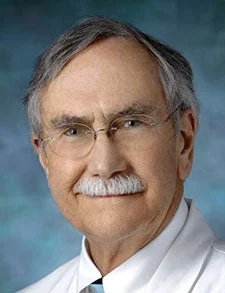
During the conference, a virtual meeting was convened with Dr. Charles W. Cummings, a towering figure in the field of OHNS. Dr. Cummings, a New England native, shared his perspective on the strategic efforts that led to otolaryngologists assuming a dominant role in head and neck surgery. This process, he noted, was significantly advanced by the 1998 merger of the Society of Head and Neck Surgeons with the American Society for Head and Neck Surgery, ultimately forming the American Head and Neck Society. This consolidation marked a pivotal moment in the formal recognition and advancement of the subspecialty.
A Defining Moment in Surgical Specialization
Dr. Cummings’ own journey into the field of OHNS provides a compelling narrative of foresight and conviction. After graduating from Deerfield Academy in 1953 and Dartmouth College in 1957, he pursued medical studies at the University of Virginia (UVA), graduating in 1961. Following an internship year at Dartmouth, he returned to UVA to commence a general surgical residency. This residency was interrupted by a commitment to the U.S. Air Force in 1963. During his initial surgical training at UVA, Dr. Cummings worked under the guidance of influential figures: Dr. G. Slaughter Fitz-Hugh, the esteemed chairman of the UVA OHNS department, and Dr. Jack Coleman, the founder of UVA’s plastic surgery division and a recognized national leader in head and neck surgery.
This formative period presented Dr. Cummings with a critical decision point. He found himself influenced by both Dr. Fitz-Hugh and Dr. Coleman, surgeons whose approaches and personalities were described as disparate as "oil and water." Despite the prevailing perception that otolaryngology was a "second-rate" surgical specialty at the time, Dr. Cummings was drawn to OHNS. His prescient belief was that "head and neck was ultimately going to come under control of the otolaryngologist." This conviction stemmed from his observations regarding the profound unmet needs of head and neck patients.
"Head and neck patients were the people who were in the greatest need," Dr. Cummings explained, recalling his early impressions. "Their menu of care had nothing of substance. There was no imaging. There was no chemotherapy. There was a tremendous amount of inadequate surgery, and there was no reconstruction. It was an open field if you knew what the potential was." Recognizing this void and the immense potential for advancement, he strategically chose to pursue otolaryngology training, anticipating its ascendance within the head and neck surgical landscape.

Forging a Legacy in Head and Neck Surgery
Dr. Cummings’ career trajectory validated his early vision. He went on to hold significant leadership positions, including serving as chairman of the Department of Otolaryngology at the University of Washington and subsequently at Johns Hopkins University. His influence extended across the professional landscape, as he directed, chaired, or presided over virtually every major OHNS organization. This extensive involvement underscores his central role in shaping the specialty.
The opportunity to engage with Dr. Cummings, even virtually from his hotel room overlooking the dazzling Las Vegas Strip, provided a unique window into the foundational efforts that have defined modern OHNS. The discussion aimed to glean insights into how contemporary otolaryngologists can build upon the pioneering work initiated by Dr. Cummings and his contemporaries approximately 60 years prior.
The Drive for Innovation and Specialization
A recurring theme in Dr. Cummings’ reflections was his profound appreciation for the opportunity to contribute to the expansion and development of OHNS as a distinct specialty. He articulated a deep sense of purpose, stating, "I think we’ve been given a tremendous opportunity to participate in this wonderful specialty, and to grow the specialty and expand it… the joy of creating something and contributing something, that’s pretty high up there." This sentiment highlights the intrinsic motivation that fueled the early pioneers of the field.
The establishment of OHNS as a recognized surgical subspecialty was not a passive evolution but an active pursuit. Data from the Association of American Medical Colleges (AAMC) indicates a significant increase in residency positions and board-certified physicians in Otolaryngology-Head and Neck Surgery over the past several decades, reflecting the growing recognition and demand for specialized care in this area. For instance, between 1990 and 2020, the number of active physicians in Otolaryngology-Head and Neck Surgery in the U.S. grew by approximately 60%, from roughly 7,000 to over 11,000. This growth correlates with the increasing complexity of surgical procedures and the demand for subspecialty expertise.
Navigating Future Challenges: Work-Life Balance and Knowledge Expansion
Looking ahead, Dr. Cummings expressed concerns about the contemporary challenges facing the specialty, particularly the impact of work-life balance on the potential for greatness within the field. He observed that "challenges of work–life balance, familial obligations, and other commitments outside of medicine have in many ways diminished some of the potential greatness in people in otolaryngology." While acknowledging the importance of personal well-being and familial responsibilities, Dr. Cummings cautioned against an excessive shift towards comfort, warning that "if the pendulum is allowed to swing too far toward the comfort mode, I think that [the specialty] is vulnerable."
His hope is that a dedicated core of individuals will continue to be "vitally interested in developing and contributing to [the OHNS specialty]." This perspective aligns with concepts like those articulated by Dr. Bob Rotella, PhD, in his book How Champions Think. Dr. Rotella identifies "exceptional individuals" as those who transcend general achievement and are singularly focused, dedicating a disproportionate amount of time to their work. Dr. Cummings underscored the critical need for such individuals to maintain the specialty’s progress and its established leadership within related subfields like facial plastic and reconstructive surgery (FPRS) and head and neck oncology.

"OHNS’ control over subspecialties such as facial plastic/reconstructive surgery (FPRS) and head and neck will not stay unless you have people in the turrets making sure that the people who are crossing the moat are not winning the battle, because they’re all going to try to win the battle. Because we did. That’s how we won [control over head and neck surgery]. We won because we did it more and better and got involved," Dr. Cummings stated, emphasizing the competitive nature of professional advancement and the necessity of sustained, dedicated effort.
Embracing the "Exploding Fund of Knowledge"
Another significant concern voiced by Dr. Cummings pertains to how OHNS will manage the "exploding fund of knowledge." He articulated a specific apprehension: "I do think we are at risk of not employing new technology, not understanding the presence of new technology." He recalled his personal experience performing the first deltopectoral flap at Massachusetts Eye and Ear after encountering the procedure in a thoracic surgery journal and meticulously practicing the technique on cadavers. This anecdote underscores his belief in the importance of continuous learning and cross-disciplinary exploration. "We cannot lose that curiosity and quest for peripheral knowledge. I think that is very critical, very important," he asserted.
This concern is particularly poignant in an era characterized by unprecedented access to information, a trend amplified by the increasing integration of artificial intelligence (AI) tools within OHNS. While AI promises to enhance diagnostic capabilities and personalize treatment plans, the sheer volume of information presents a paradox. The risk exists that clinicians may become narrowly focused on their immediate field, potentially neglecting the broader scientific landscape and limiting opportunities for innovation. As Dr. Cummings implies, merely "treading water" in terms of knowledge acquisition will impede forward momentum and the advancement of patient care.
Cross-Disciplinary Learning: A Pathway to Progress
The value of seeking knowledge beyond the immediate confines of one’s specialty was powerfully illustrated just two days after Dr. Cummings’ interview. At the AAFPRS annual meeting’s opening lecture, Dr. Oluyinka O. Olutoye, MD, PhD, chair of pediatric surgery at The Ohio State University, delivered a compelling address titled "When the Impossible Becomes Possible: Revisiting Yesterday’s Challenges Through the Lens of Modern Fetal Therapy." Dr. Olutoye challenged the audience to leverage insights gained from advancements in fetal scarring to improve scar outcomes in facial plastic and reconstructive surgery patients. This presentation served as a tangible example of how cross-specialty learning can unlock new avenues for clinical progress.
Conclusion: Honoring the Past, Shaping the Future
The legacy of Dr. Charles W. Cummings and his contemporaries is inextricably linked to a period where otolaryngologists actively innovated to safeguard and elevate a nascent specialty. While the immediate pressures may differ today, Dr. Cummings’ wisdom serves as a crucial reminder for current and future practitioners. His emphasis on dedication, continuous learning, and the pursuit of knowledge beyond disciplinary boundaries remains paramount. By studying the past, understanding the foundational efforts that shaped OHNS, and embracing a proactive approach to innovation, the specialty can continue to advance patient care and solidify its position as a leader in head and neck surgery for generations to come. The development of OHNS is a testament to the vision and hard work of individuals like Dr. Cummings, and their contributions continue to inform and inspire the field.