The Search Process and Institutional Context
The selection committee prioritized candidates with deep experience in organizational leadership, fiscal stewardship, and a nuanced understanding of American Sign Language (ASL) and Deaf culture. The narrowing of the field to Michelle Cline and Nicholas Kiego follows a rigorous multi-stage interview process that included initial screenings, psychological and competency assessments, and multiple rounds of dialogue with the board.
Profile of the Candidates
Michelle Cline enters the final round with a robust portfolio of leadership experience. Her career trajectory suggests a focus on institutional infrastructure and long-term organizational sustainability. Observers of the selection process have noted that her background aligns with the NAD’s requirement for a steady hand capable of navigating the complex bureaucratic environments of Washington, D.C., where the NAD often engages in intensive lobbying efforts regarding disability rights legislation.
Nicholas Kiego, conversely, brings a distinct set of experiences that emphasize community-led advocacy and digital accessibility. Kiego’s professional background often highlights the integration of modern communication technologies within the deaf community, a focus that is increasingly relevant as the NAD seeks to modernize its outreach efforts. By presenting these two distinct leadership profiles, the NAD board has effectively offered the membership a choice between two potential strategic paths: one prioritizing institutional consolidation and legislative tradition, and the other favoring innovation and adaptive, tech-forward advocacy.
The Virtual Town Hall: Bridging the Communication Gap
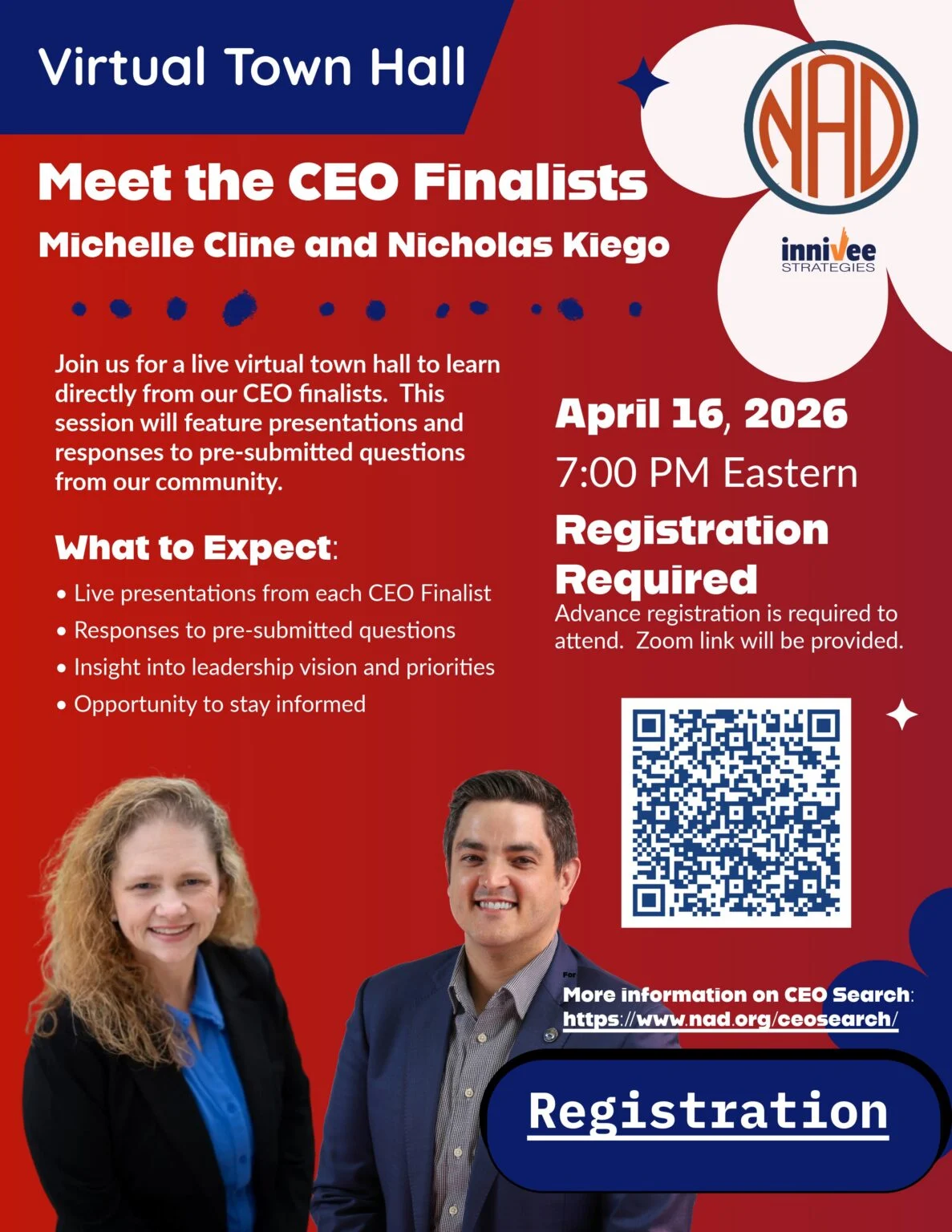
To ensure transparency and facilitate a sense of democratic inclusion, the NAD hosted a virtual town hall event, recorded for public review. This forum served as the primary mechanism for the finalists to articulate their visions directly to the stakeholders they intend to represent. The structure of the town hall was designed to move beyond the formality of a standard job interview, allowing for nuanced responses to pre-submitted questions from the community.
These questions covered a wide spectrum of concerns, ranging from the protection of residential schools for the deaf to the expansion of mental health services and the mitigation of systemic barriers in employment. For the NAD, the importance of this forum cannot be overstated. By inviting the community to witness these presentations, the organization effectively demystified a traditionally opaque corporate governance process. This level of accessibility is consistent with the NAD’s core mission of fostering a transparent, community-driven advocacy network.
Chronology of the Search
The journey toward this final selection has been characterized by careful, deliberative progress. The timeline of the search, as established by internal NAD announcements, unfolded as follows:
- Late 2025: The Board of Directors formally initiated the search process, establishing an executive search committee and outlining the core competencies required for the next CEO.
- January 2026: The call for applications was disseminated, attracting a diverse pool of professionals from the fields of education, non-profit management, and legal advocacy.
- February 2026: The search committee conducted an initial review of applicants, narrowing the field based on experience, leadership philosophy, and alignment with the NAD’s mission.
- March 2026: In-person and virtual interviews were conducted, focusing on the candidates’ strategic goals and their potential to address the organization’s most pressing institutional challenges.
- April 2026: The NAD announced the two finalists, Michelle Cline and Nicholas Kiego, and scheduled the virtual town hall to gather community feedback.
Data and Strategic Implications
The NAD’s current search occurs at a time when the deaf community faces significant economic and social pressures. Recent data indicates that individuals with disabilities, including those who are deaf or hard of hearing, continue to face unemployment rates significantly higher than the national average. Furthermore, the rapid growth of AI-driven captioning and telecommunications relay services (TRS) has introduced new opportunities, but also new risks regarding the quality and accuracy of communication access.
The incoming CEO will be tasked with managing an annual operating budget that supports not only advocacy but also the production of educational resources, the organization of national conferences, and the maintenance of a complex legal department. According to historical financial reports, the NAD relies on a mix of individual donations, grants, and programmatic revenue. A leader who can secure long-term federal funding while simultaneously diversifying the organization’s donor base will be essential for the NAD to remain a viable entity over the next decade.
The Role of Advocacy in the Modern Era
The incoming CEO will inherit an organization that acts as a sentinel for civil rights. The landscape of the mid-2020s is defined by a push for greater intersectional advocacy—ensuring that the needs of deaf individuals from marginalized backgrounds, including those who are BIPOC or have multiple disabilities, are integrated into the broader fight for equality.
Statements from the board suggest that the final selection will be based not just on the candidates’ resumes, but on their ability to act as a unifying figure. In an era where digital communication allows for rapid dissemination of information and heightened scrutiny of leadership, the next CEO must possess the emotional intelligence to navigate internal disagreements while maintaining a unified front in the face of external legislative opposition.
Analysis: The Path Forward
The selection of a new CEO is a decisive moment for the NAD’s institutional health. If the organization chooses a candidate who prioritizes traditional lobbying, the focus will likely remain on maintaining the integrity of the ADA and strengthening existing educational protections. If, however, the organization leans toward a more disruptive, technology-centered approach, we may see a significant shift in how the NAD interacts with the private sector, particularly regarding the development of accessible software and hardware.
Regardless of the final choice, the process itself has served to re-engage a membership that is increasingly vocal about its expectations. By documenting the finalists’ responses and hosting public forums, the NAD has set a precedent for future executive transitions. The community’s feedback from the April 2026 town hall will undoubtedly inform the final deliberation of the board, serving as the final piece of evidence in a process that has prioritized both professionalism and public trust.
As the NAD moves toward a final decision, the focus remains on the continuity of its mission: the preservation and promotion of the rights of deaf and hard-of-hearing Americans. With the conclusion of the search imminent, the organization stands at the precipice of a new era, prepared to address the complex socio-political challenges of the late 2020s under the guidance of its next executive leader. The transition period, expected to follow the announcement, will be a critical phase during which the new CEO will begin the work of aligning their vision with the operational realities of one of the nation’s most enduring civil rights organizations.