Organized as a collaborative effort involving various government departments and arm’s length bodies, the event represents a unified front in the UK’s ongoing mission to ensure that public services are usable by everyone, regardless of their physical or cognitive abilities. The central theme for 2026 is "Designing, Developing, and Delivering Accessible Digital Services." This focus aligns directly with the international GAAD theme for the year, emphasizing a holistic approach to the lifecycle of digital products—from the initial conceptual sketches to the final delivery of live services to the citizenry.
The Strategic Context of Digital Accessibility in 2026
The timing of Digital Accessibility Week 2026 comes at a critical juncture for the UK public sector. Since the implementation of the Public Sector Bodies (Websites and Mobile Applications) (No. 2) Accessibility Regulations 2018, there has been a legal mandate for all public sector websites and apps to meet the Web Content Accessibility Guidelines (WCAG) 2.1 AA standard. However, as digital landscapes evolve, so do the standards. The 2026 event serves as a vital bridge for civil servants to transition from existing frameworks to the more modern WCAG 2.2 requirements and the upcoming, highly anticipated WCAG 3.0 standards.
Data from the Office for National Statistics (ONS) continues to highlight the urgency of these initiatives. With approximately 16 million people in the UK reported to have a disability—representing nearly 24% of the population—the "digital divide" remains a pressing socioeconomic concern. Furthermore, research into the "Purple Pound"—the spending power of disabled people and their families—suggests that inaccessible digital interfaces lead to significant economic exclusion, costing businesses and public services billions in lost engagement and efficiency. Digital Accessibility Week is designed to mitigate these risks by upskilling the workforce responsible for the nation’s digital infrastructure.
Chronology of Events: A Four-Day Intensive Program
The 2026 schedule is designed to cater to a broad spectrum of expertise, ranging from entry-level administrative staff to highly specialized software engineers and user researchers. The program is structured to provide foundational knowledge early in the week, progressing toward specialized applications and future-looking regulatory discussions.
Monday, May 18: Foundations and Future Frameworks
The week opens with an "Introduction to Accessibility" hosted by the Home Office. This session is designed as a non-technical primer, ensuring that all public sector employees understand the moral and legal imperatives of inclusion. Following this, the Department for Work and Pensions (DWP) will provide a technical overview of assistive software, including screen readers, screen magnifiers, and voice activation tools. This session is particularly critical, as it allows developers to see firsthand how their code is interpreted by users with visual or motor impairments.
The afternoon session, led by the Government Digital Service (GDS), will tackle "WCAG 3 and what it means for you." As the successor to the current WCAG 2.x series, WCAG 3 (often referred to as "Silver") represents a fundamental shift in how accessibility is measured, moving toward a more flexible, outcomes-based scoring system. This session is expected to be one of the most highly attended, as it outlines the government’s roadmap for compliance over the next decade.
Tuesday, May 19: Inclusive Design and Cognitive Accessibility
Tuesday’s agenda shifts the focus toward the "Designing" aspect of the yearly theme. HM Revenue and Customs (HMRC) will lead a groundbreaking session on "Designing with autistic people," highlighting how cognitive accessibility benefits the entire user base. Principles such as reducing "cognitive load," avoiding ambiguous language, and providing consistent navigation are not just beneficial for neurodivergent users but improve the user experience for everyone.
The Ministry of Justice (MoJ) will explore the intersection of accessibility and innovation. Their session, "From niche to necessity," argues that designing for extreme use cases often leads to better products for the mainstream—a concept known as the "curb-cut effect." Later in the day, a joint session between HMRC and Ofcom will present new research into digital media literacy and the social factors that contribute to digital exclusion, providing a data-driven look at how access and confidence vary across different demographics.
Wednesday, May 20: Specialized Applications and Interactive Learning
Wednesday features a diverse array of sessions, including a unique look at "Accessibility in gaming" by the Department for Environment, Food & Rural Affairs (Defra). By examining how the video game industry handles complex input challenges, digital service designers can gain insights into more engaging and flexible UI patterns.
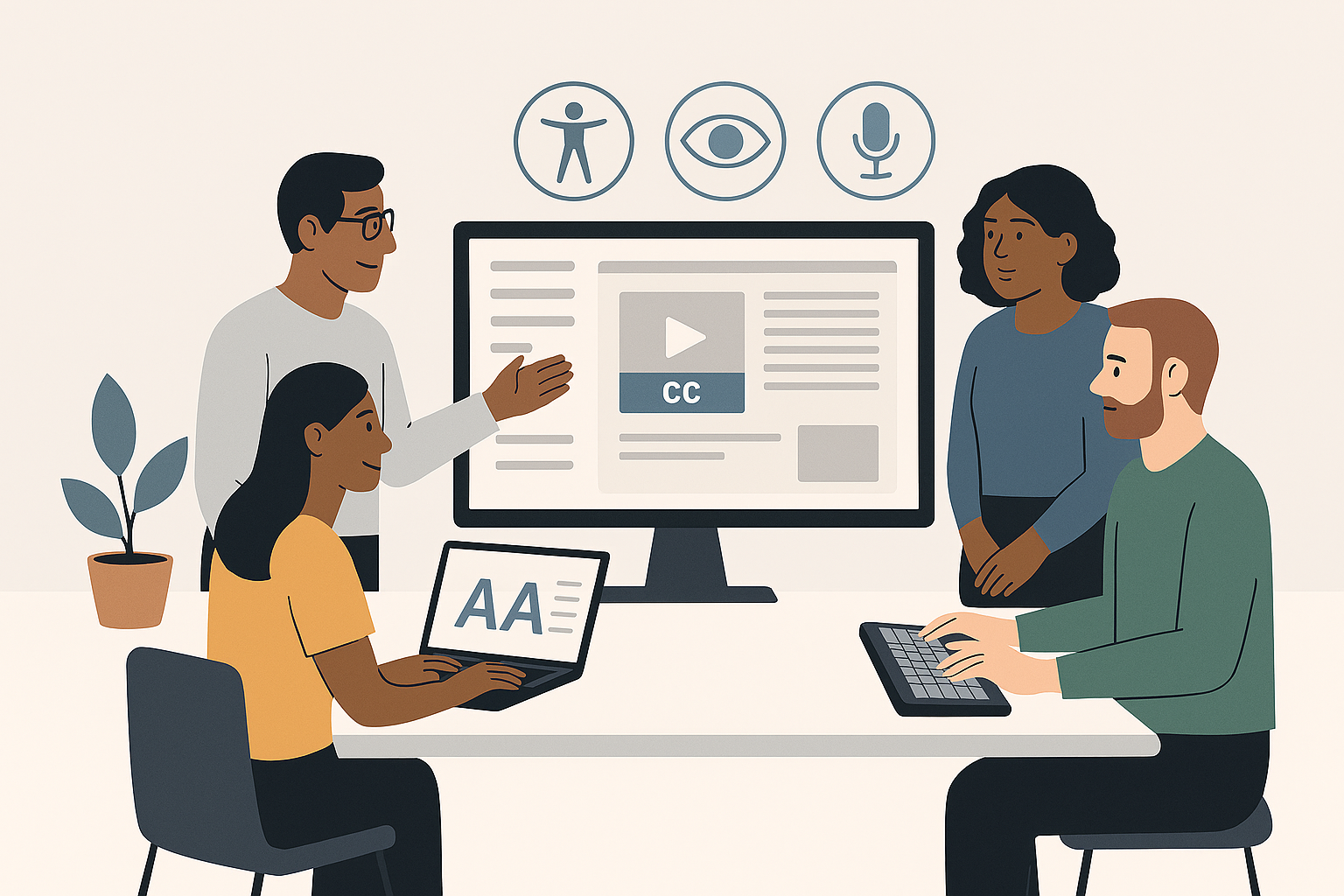
Practical skills are also emphasized, with Companies House hosting an interactive workshop on "keyboard navigation." This session requires participants to navigate digital services without a mouse, simulating the experience of users with motor disabilities. Additionally, the DWP will present a comparative analysis of "Common WCAG fails," using data from the WebAIM Million report—an annual accessibility audit of the top one million homepages—to show where UK government services frequently fall short and how to rectify those errors.
Thursday, May 21: Global Accessibility Awareness Day (GAAD)
The final day of the event coincides with GAAD and focuses on institutionalizing accessibility. The Department for Education (DfE) and the Student Loans Company (SLC) will demystify the role of the Accessibility Assessor in service assessments. This is a crucial session for product managers who must pass the "Service Standard" before their digital services can go live.
The week concludes with a session on the professionalization of the field: "The One Where I Become an Accessibility Specialist." This presentation will detail the experiences of those undergoing the Digital Accessibility Specialist apprenticeship, reflecting the government’s commitment to building a sustainable pipeline of talent in this niche but essential field.
Supporting Data: The Impact of Inaccessible Services
The necessity of this week-long focus is underscored by recent audits of public sector digital estates. While the 2018 regulations significantly improved compliance, a 2024 review indicated that nearly 40% of public sector homepages still contained "low-hanging fruit" errors, such as low color contrast, missing alternative text for images, and empty links. These errors are often the result of a lack of awareness rather than a lack of intent, which is exactly what Digital Accessibility Week aims to address.
Furthermore, the shift toward "Digital by Default" for services like Universal Credit, passport renewals, and tax self-assessment means that if a service is not accessible, it is effectively non-existent for a significant portion of the population. According to data from Scope, a leading disability equality charity, disabled people are twice as likely to be digitally excluded than non-disabled people. By training civil servants to "design for the edges," the UK government seeks to close this gap.
Broader Implications and Official Objectives
The cross-government nature of Digital Accessibility Week 2026 suggests a maturing of the digital culture within the UK Civil Service. It is no longer seen as a "tick-box" exercise for a small group of specialists but as a core competency for all public sector roles.
"Accessibility is not a feature; it is a fundamental right," a spokesperson for the Government Digital Service noted in a briefing regarding the event. "By bringing together the collective expertise of departments like the DWP, HMRC, and the MoJ, we are creating a community of practice that can solve complex problems at scale. Our goal is for accessibility to be invisible—built into the fabric of every service from day one."
The implications of this event extend beyond the public sector. As one of the largest employers and service providers in the country, the UK government’s adherence to high accessibility standards sets a benchmark for the private sector. The methodologies shared during this week—such as inclusive user research and automated testing protocols—often trickle down to private industry, fostering a more inclusive digital economy nationwide.
Participation and Engagement
Digital Accessibility Week 2026 is open to all UK public sector workers. Organizers have stressed that participants do not need to be technical specialists to benefit. The sessions are hosted primarily on Microsoft Teams and Eventbrite, with a strict requirement for registration using official work email addresses to ensure a secure and focused environment for professional development.
As the event approaches, the live timetable continues to be updated with new sessions, reflecting the dynamic and rapidly evolving nature of the field. While not all sessions will be recorded due to departmental security and privacy policies, the wealth of knowledge shared is expected to inform government digital strategy for years to come. By the time Global Accessibility Awareness Day concludes on May 21, the UK public sector aims to be better equipped to deliver on its promise of a digital world that truly works for everyone.