The intersection of seasonal weather patterns and structural integrity in deep-earth excavations presents a complex risk profile. As temperatures shift and moisture levels fluctuate, the geological stability of underground mine workings often diminishes. MSHA’s latest bulletin serves as a stark reminder that ground falls remain a perennial hazard—one of the most frequent and lethal categories of accidents in the mining sector—and that the burden of mitigation lies squarely on the shoulders of site management and the implementation of robust, site-specific safety plans.
Chronology and Statistical Trends of 2026
The reported 150 incidents recorded through July 2026 represent a continued challenge for the mining industry’s safety record. While the industry has made significant strides in mechanical automation and real-time monitoring over the last decade, the fundamental challenge of managing rock mass stability persists. The data shows a concentration of risk in older, legacy sections of mines where structural weathering has had years to compromise the integrity of the rock strata.

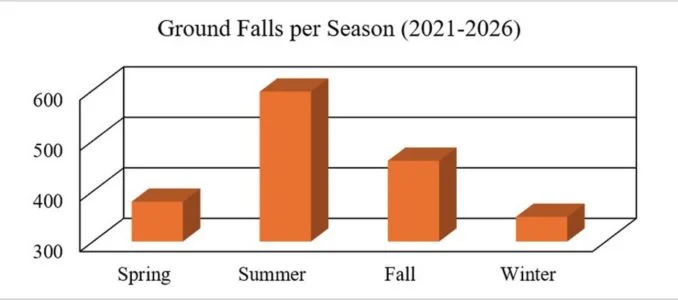
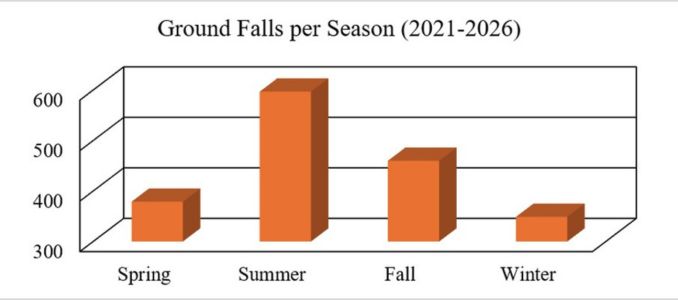
Historically, MSHA reports show that ground fall hazards are rarely sudden, inexplicable events. Instead, they are often the culmination of long-term environmental exposure. The current 2026 data suggests that operators may be underestimating the "stand-up time" of older workings. As moisture infiltrates fractured rock, the resulting expansion and contraction—particularly in freeze-thaw cycles—can lead to the gradual degradation of ceiling supports and rock bolts. The agency’s focus on the first seven months of the year highlights a critical window where seasonal transitions often exacerbate these latent geological vulnerabilities.
The Science of Seasonal Instability
The link between seasonal moisture and ground failure is well-documented in geotechnical engineering. When seasonal weather shifts occur, the influx of groundwater into mine workings can lead to increased pore water pressure. This pressure acts as a lubricant along existing geological discontinuities, such as joints and faults, effectively reducing the shear strength of the rock mass.

In underground mines, the stability of the roof or "back" is reliant upon the structural integrity of the immediate strata and the effectiveness of secondary support systems. When these systems are subjected to the dual stresses of geological pressure and environmental weathering, the risk of failure increases exponentially. MSHA notes that "stand-up time"—the duration a roof can remain unsupported or minimally supported before failure—is drastically reduced when moisture enters the structural fabric of the mine. This is why the agency emphasizes that even sections of a mine that have been stable for years cannot be considered permanently safe without ongoing, systematic assessment.
Regulatory Mandates and Operational Best Practices
To combat the rising frequency of these accidents, MSHA is reiterating its expectation that every mine operator conduct a comprehensive audit of their Roof Control Plan. These plans are not merely regulatory filings; they are the primary defense against catastrophic structural failure. The agency specifies that these plans must be dynamic, requiring formal review and adjustment whenever mining methods change or when environmental indicators—such as increased water inflow or observed roof sagging—suggest that the current support strategy is no longer adequate.

The agency’s recommended roadmap for operators includes three critical pillars of safety:
- Systematic Inspection Cycles: Pre-shift and on-shift examinations must move beyond perfunctory status checks. Supervisors are tasked with identifying subtle precursors to failure, such as cracking, "drummy" sounding rock, or shifting support plates.
- Water Management Infrastructure: Preventing the infiltration of water is the first line of defense. This involves proactive drainage, the strategic diversion of inflows, and the robust maintenance of pumping systems. If water cannot be contained, the structural integrity of that zone must be re-evaluated as if it were a new excavation.
- Advanced Scaling and Support: Scaling—the act of removing loose rock—remains a high-risk activity. MSHA mandates that this work be performed from a safe, supported position using mechanical scalers or long-handled bars, explicitly prohibiting workers from entering areas beneath unsupported roofs to perform maintenance.
The Human Element: Training and Communication
Technical solutions are only effective when paired with a culture of vigilance. MSHA highlights that the primary responsibility for safety extends to the front-line workers. Miners and contractors, who spend the most time in active workings, are the "eyes and ears" of the mine. The agency stresses that training programs must be refreshed to ensure that all personnel are capable of recognizing the warning signs of ground instability.

Effective communication between shifts is equally vital. If a morning shift notices a change in ground conditions or identifies a potential hazard, that information must be transmitted to the incoming shift with absolute clarity. The practice of "passing the torch" in safety terms can prevent the normalization of deviance, where workers become accustomed to minor signs of instability and stop reporting them, eventually leading to a major failure.
Implications for the Mining Industry
The persistence of ground fall accidents in 2026 suggests that the industry faces a systemic challenge. As ore grades decline and mines push into more complex, deeper, or older geological formations, the stress on ground control systems will only increase. Analysts suggest that the future of mining safety will rely on the integration of smart-sensor technology. Predictive maintenance, involving the use of micro-seismic monitoring and fiber-optic strain gauges, could allow operators to detect roof movement long before it becomes visible to the human eye.

However, until such technologies are universally deployed, the industry must rely on the rigorous application of fundamental safety principles. The economic implications of failing to do so are severe. Beyond the tragic human cost—which remains the primary concern for regulators and families—a single major ground fall incident can lead to the indefinite closure of a mine, costly litigation, and substantial regulatory penalties.
Moving Forward: A Proactive Stance
As the industry moves through the remainder of 2026, the MSHA advisory serves as a call to action. The agency is expected to increase the frequency of its spot inspections in regions identified as high-risk for ground instability. Mine operators are advised to take a proactive stance by:

- Conducting Internal Audits: Reviewing all ground control records and verifying that secondary supports are correctly installed and maintained.
- Updating Mapping and Signage: Ensuring that all maps are current and that any area identified as a hazard is clearly marked, bermed, or sealed to prevent unauthorized access.
- Empowering the Workforce: Encouraging a "stop-work" culture where any miner who identifies a potential ground hazard has the authority and the mandate to halt operations until the area is secured.
The goal for the industry is clear: the elimination of ground fall fatalities. While the inherent risks of working underground can never be entirely eradicated, the systematic application of engineering rigor, environmental management, and comprehensive training can significantly narrow the margin for error. As the 2026 data shows, the path to a safer mining environment is paved with the constant, disciplined adherence to established safety standards, especially when the environment itself begins to change. The mining sector is now at a crossroads where the integration of traditional safety protocols with advanced risk awareness will determine the industry’s success in protecting its most valuable asset: its workforce.