
The study, spearheaded by Mark Albers, MD, PhD, of the Laboratory of Olfactory Neurotranslation and the McCance Center for Brain Health at Massachusetts General Hospital, marks a pivotal step toward making neurodegenerative screening both accessible and cost-effective. As the medical community seeks ways to identify Alzheimer’s disease and related dementias years before the onset of debilitating memory loss, these findings offer a non-invasive pathway to early intervention.
The Mechanics of the Olfactory Assessment
The research focused on the Aromha Brain Health Test, a diagnostic tool developed to measure three distinct facets of olfactory function: odor identification, odor discrimination, and odor memory. Unlike traditional clinical exams that may require expensive imaging or invasive lumbar punctures, this test utilizes a simple card-based system. Participants sniff specific odorants and are asked to identify the scent, distinguish it from others, and recall it after a set interval.
The study’s methodology was designed to test the viability of the tool across diverse populations and environments. The team recruited both English and Spanish-speaking participants, including those with subjective cognitive complaints—individuals who feel their memory is failing despite normal test scores—and those diagnosed with mild cognitive impairment (MCI). These groups were compared against two control groups: individuals with no sense of smell (anosmia) and cognitively normal adults.
One of the most significant findings was the consistency of the results regardless of the setting. Participants performed the test with the same level of accuracy whether they were at home alone or being observed by a research assistant. Furthermore, the results remained consistent across different languages, suggesting that the biological link between olfaction and cognition transcends linguistic and cultural barriers.
A Chronology of Olfactory Research in Neurology
The link between the sense of smell and brain health is not a new concept in neurology, but it has gained significant momentum over the last two decades. The chronology of this field reveals a steady progression from anecdotal evidence to rigorous clinical validation:
- The 1980s and 90s: Early clinical observations noted that patients with Parkinson’s disease and Alzheimer’s disease often reported a loss of smell (hyposmia) years before motor or memory symptoms appeared.
- The Early 2000s: Pathological studies began to show that the olfactory bulb and the entorhinal cortex—areas of the brain responsible for processing smell—are among the first regions to accumulate tau proteins and amyloid-beta plaques, the hallmarks of Alzheimer’s.
- 2010–2020: Research shifted toward quantifying this loss. Studies like the Mayo Clinic Study of Aging demonstrated that those with the poorest sense of smell were 2.2 times more likely to develop MCI.
- 2020–Present: The focus has moved to "translation"—taking these findings out of the lab and into the hands of the public. The Mass General Brigham study represents the cutting edge of this phase, moving toward validated, at-home screening tools.
Dr. Albers’ work with the Laboratory of Olfactory Neurotranslation has been central to this timeline, aiming to turn the olfactory system into a "canary in the coal mine" for the aging brain.
Supporting Data: Age, Scent, and Cognitive Decline
The data gathered in the Scientific Reports study provides a clear statistical picture of how olfactory senses erode in tandem with cognitive health. The research team noted that while odor identification and memory naturally decline with age in all humans, the rate and depth of this decline are significantly accelerated in those with MCI.
Key data points from the study include:
- Discrimination Deficits: Older adults with MCI showed a statistically significant inability to distinguish between two similar scents compared to the cognitively normal control group.
- Identification Accuracy: The ability to correctly name a scent (e.g., "lemon" vs. "gasoline") was a strong predictor of cognitive status.
- Consistency Across Observation Models: There was no statistically significant difference in scores between participants who were proctored and those who self-administered the test at home, validating the tool’s utility for remote healthcare.
The inclusion of Spanish speakers was particularly vital. Data showed that the Aromha test performed with equal sensitivity in both English and Spanish cohorts, addressing a major gap in neurodegenerative research, which has historically been criticized for a lack of linguistic and ethnic diversity.
The Biological Link: Why the Nose?
To understand why a smell test is effective, one must look at the anatomy of the human brain. The olfactory nerves provide a direct physical pathway from the external environment to the limbic system, which governs emotion and memory. Specifically, the olfactory bulb sends signals directly to the hippocampus and the amygdala.
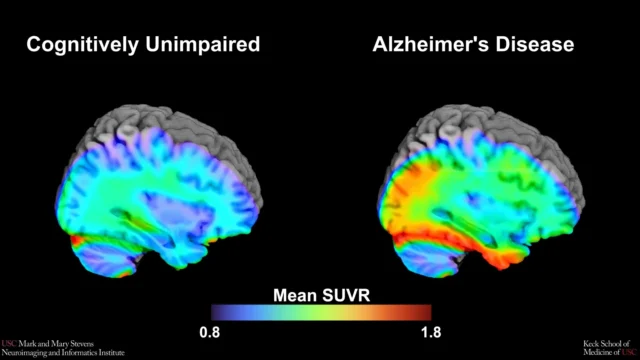
In the earliest "silent" stages of Alzheimer’s disease, neurofibrillary tangles often form in the olfactory nucleus before they spread to the regions responsible for high-level language and logic. By the time a patient begins to forget names or get lost in familiar places, significant damage has often already occurred. Olfactory testing targets the "pre-symptomatic" phase, offering a window of opportunity for lifestyle changes or pharmacological interventions that could slow the disease’s progression.
Official Responses and Clinical Implications
The development of the Aromha Brain Health Test has drawn interest from various sectors of the medical community. While not yet a replacement for a full neuropsychological workup, experts suggest it could serve as a "first-tier" screen.
"Our goal has been to develop and validate a cost-effective, non-invasive test that can be performed at home," stated Dr. Mark Albers. He emphasized that early detection is the "holy grail" of Alzheimer’s research. "Early detection of cognitive impairment could help us identify people who are at risk of Alzheimer’s disease and intervene years before memory symptoms begin."
The broader medical community has reacted with cautious optimism. Neurologists not involved in the study have noted that the "at-home" aspect is a game-changer. Currently, many patients avoid cognitive screening due to the "white coat syndrome" or the high costs associated with clinical visits. A mail-in or pharmacy-bought smell test could democratize access to brain health monitoring.
However, the authors also acknowledge the need for longitudinal data. Future studies will need to follow participants over several years to determine if a low score on the olfactory test can accurately predict the exact timeline of transition from normal cognition to clinical dementia.
Broader Impact: The Future of Preventative Neurology
The implications of this research extend beyond Alzheimer’s disease. Olfactory dysfunction is also a primary early indicator of Parkinson’s disease, chronic traumatic encephalopathy (CTE) often seen in athletes, and complications from traumatic brain injury (TBI).
As the global population ages, the economic burden of neurodegenerative diseases is expected to skyrocket. According to the Alzheimer’s Association, the total cost of care for people with Alzheimer’s and other dementias in the U.S. is projected to reach $345 billion in 2023. By providing a low-cost screening tool, the Aromha test could potentially save billions in healthcare costs by allowing for earlier management and enrollment in clinical trials for new disease-modifying therapies, such as the recently FDA-approved monoclonal antibodies.
Disclosure and Funding Transparency
In the interest of journalistic transparency, it is noted that the study authors have disclosed financial ties to the technology. Dr. Mark Albers and Alefiya Dhilla Albers have a financial interest in Aromha, Inc., the company developing these scent-based screens. Sean Reineke, another co-author, serves as the CEO of Aromha, Inc. The interests were reviewed and managed by Massachusetts General Hospital and Mass General Brigham in accordance with their conflict of interest policies. The research was supported by the National Institutes of Health (NIH), reflecting the federal government’s commitment to finding innovative solutions for the growing dementia crisis.
Conclusion
The Mass General Brigham study reinforces a growing consensus in the scientific community: the olfactory system is a vital, yet underutilized, diagnostic resource. By moving these tests from the laboratory to the living room, researchers are opening a new frontier in preventative neurology. As the tool undergoes further longitudinal validation, it may soon become as common as a blood pressure cuff or a glucose monitor in the homes of older adults, providing an early warning system for the brain’s most complex challenges.