
The Disconnect Between Perception and Enforcement
For decades, the standard response to LOTO non-compliance in industrial settings was the procurement of more locks or the installation of more standardized lockout stations. However, fiscal year 2025 data suggests that this hardware-centric approach is no longer sufficient to satisfy federal inspectors. With nearly $21.9 million in penalties tied to 2,636 individual inspections, the data reveals that employers are rarely penalized for a lack of equipment. Instead, the citations focus on the “evidence gap”—the space between having a safety program and being able to demonstrate, via auditable documentation, that the program is functional, current, and actively monitored.
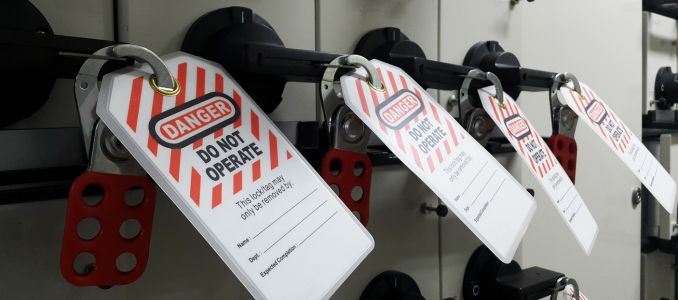
This distinction is vital for safety managers. A site might possess high-quality, industry-compliant lockout hardware at every isolation point, yet still be found in violation of 29 CFR 1910.147 if they cannot produce a verified, site-specific energy control procedure for every piece of machinery or provide dated, signed documentation of employee training and annual procedural audits.
Statistical Breakdown: The Anatomy of a Violation
The fiscal year 2025 data provides a clear hierarchy of non-compliance. When examining the 4,771 total violations, a specific trio of requirements accounted for 71.5% of all citations. These figures offer a roadmap of where OSHA inspectors are focusing their efforts during site visits.
The most frequently cited requirement was 1910.147(c)(4)(i), which mandates that employers develop, document, and utilize energy-control procedures. This regulation was cited 1,066 times. The second most common failure involved the mandate to inspect each procedure at least once annually, which resulted in 725 citations. The third most common issue was the fundamental requirement to maintain an energy-control program, totaling 525 citations.

When aggregated, the categories of energy-control procedures (1,491 violations), training (1,000 violations), and periodic inspections (920 violations) demonstrate that OSHA is prioritizing the “paper trail” of safety. This is not to suggest that hardware is irrelevant, but rather that in the hierarchy of regulatory risk, the absence of a written, updated, and audited process is viewed by inspectors as a higher risk factor than a missing padlock.
Chronology of the LOTO Regulatory Landscape
The current emphasis on administrative evidence is the culmination of decades of regulatory evolution regarding hazardous energy control.
- 1989: OSHA formally promulgated the Control of Hazardous Energy standard (29 CFR 1910.147) to address the thousands of injuries and hundreds of fatalities occurring annually due to the unexpected energization of machines during maintenance.
- 2000s: Enforcement during this period primarily focused on the physical implementation of lockout stations and the distribution of keyed-alike or unique padlocks to authorized employees.
- 2015-2020: As safety management systems (SMS) became more prevalent, OSHA’s focus began to drift toward the “programmatic” aspects of safety. The agency began requesting evidence of competency-based training rather than simple attendance sheets.
- 2025: The current data highlights the maturity of this trend. Inspectors now utilize digital tools and advanced document verification protocols, allowing them to identify procedural gaps that might have gone unnoticed during manual audits in previous decades.
Implications of the Evidence Gap
The financial impact of these citations is significant, but the operational impact is perhaps more severe. A citation for a missing procedure often triggers a more comprehensive site inspection. When an inspector finds that a procedure is absent, they are statistically likely to look for the training records of the operators who would have used that machine. If those records are also missing or outdated, the inspection expands, often resulting in "repeat" or "willful" violation classifications, which carry significantly higher penalty caps.

Furthermore, the data includes both federal OSHA inspections and those conducted by the 27 states with OSHA-approved State Plans. While the federal “Top 10” list—which consistently ranks lockout/tagout near the top—typically reflects federal data only, the inclusion of state-level data effectively doubles the scope of the problem. This suggests that the “evidence gap” is a universal challenge, crossing industry lines and geographic boundaries.
Industry Reactions and Expert Analysis
Safety professionals and industry analysts have noted that this data forces a re-evaluation of safety budgets. Traditionally, budget allocations for LOTO were directed toward capital expenditures (CAPEX) for locks, signs, and labels. The 2025 data suggests a need to shift these funds toward operational expenditures (OPEX), specifically software solutions for document management, training record automation, and periodic audit scheduling.
"The challenge is no longer about equipment procurement," noted one industry consultant familiar with the OSHA data trends. "It is about the management of information. If a company cannot pull a report in five minutes demonstrating that their procedures were reviewed in the last 12 months and that the specific employee on that machine was trained within the last year, they are operating with a significant compliance liability."

The Future of Compliance: Beyond Hardware
The shift toward administrative verification is likely to intensify. As OSHA moves toward more data-driven inspection scheduling, companies that maintain digital, audit-ready compliance logs will be at a distinct advantage. The “evidence gap” is effectively a gap in safety culture. When procedures are written and reviewed regularly, it implies that the organization is actively thinking about the risks associated with every piece of equipment. When that paperwork is missing, the implication is that the equipment—and the workers who service it—are being managed in a reactive, rather than proactive, manner.
For safety officers, the takeaway from the 2025 data is clear: audit your procedures, verify your training, and document your periodic inspections. The hardware is the final step in the lockout process; the paperwork is the foundation that ensures that final step is taken correctly, every time, by every employee.
Conclusion
The 4,771 violations reported in 2025 serve as a definitive wake-up call for industrial operations. By moving the focus from the physical lock to the written, auditable process, OSHA has clarified its expectations for the modern workplace. Employers who continue to treat lockout/tagout as a hardware procurement issue will remain vulnerable to citations and the associated financial and operational penalties. Conversely, those who treat their safety program as a living, documented, and audited system will find themselves not only in better standing with regulators but, more importantly, safer in their daily operations. The evidence gap is a bridgeable chasm, but it requires a commitment to administrative excellence that matches the physical rigor of the lockout process itself. Moving forward, the most effective tool in any safety professional’s kit will not be a padlock, but a clear, verifiable record of compliance.