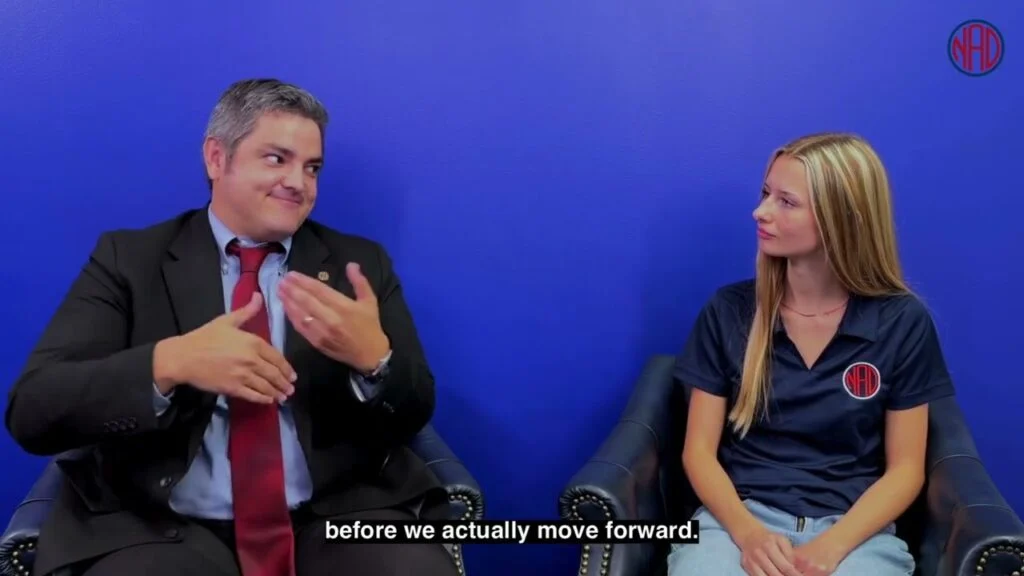
The First 30 Days: A Mandate for Transparency
In an era where institutional trust is increasingly linked to transparency, Kiego’s initial month has been defined by a commitment to unveiling the operational realities of the NAD. Upon assuming the position, Kiego conducted a deep-dive analysis into the organization’s structural foundation. His findings were candid: the NAD, an organization with a national mandate, operates with a surprisingly lean infrastructure.
Kiego noted that the national headquarters, located in Silver Spring, occupies a modest footprint—significantly smaller than many members of the public might assume given the organization’s historical influence. Furthermore, the staffing level is remarkably lean, consisting of only six full-time employees. Kiego emphasized that these individuals have acted as "workhorses," maintaining the organization’s essential functions—including legal advocacy, policy initiatives, and youth programs—under challenging conditions and limited resources for several years.
By choosing to disclose these operational limitations early in his tenure, Kiego aims to establish a baseline of reality rather than projecting an image of unblemished, resource-rich stability. This strategy is designed to foster a more authentic relationship with the community, encouraging stakeholders to view the organization as a collaborative project that requires active, collective support.
Strategic Priorities and Immediate Operational Wins
Kiego’s primary focus during his first month has been the stabilization of the organization’s financial and logistical operations. Acknowledging that the NAD’s ability to fulfill its mission is intrinsically linked to its financial health, Kiego prioritized meetings with the Chief Financial Officer (CFO) and the accounting team to secure a granular understanding of the budget and long-term fiscal liabilities.
Early in his tenure, Kiego identified three key operational "wins" that serve as a blueprint for his initial strategy:
- Infrastructure Upgrades: The successful recruitment of a new webmaster and IT systems administrator to address persistent technical issues on the NAD website, which has long been a primary interface for public engagement.
- Resource Expansion: A partnership with the Youth Programs Director, Claudia, to onboard a volunteer grant writer specifically tasked with securing funding for youth-oriented initiatives, a sector Kiego identifies as a high-growth area.
- Financial Literacy: A comprehensive review of business operations and fiscal reporting, aimed at providing the CEO with the data necessary to make informed decisions regarding future resource allocation.
The Role of Youth in the Future of the NAD
The conversation between Kiego and Goff highlighted a critical tension within the organization: the need to bridge the gap between traditional organizational structures and the digital, hyper-connected reality of the current generation of Deaf youth.
Ambassador Goff pointed out that many young members of the Deaf community often feel disconnected from the NAD, perceiving the organization as an inaccessible entity. She noted that while youth engagement was high at specific conferences, there is a lack of sustained, year-round involvement through local and state chapters. Kiego agreed, noting that the "pipeline" for future leadership begins with the Youth program.
To address this, Kiego proposed a "window and house" metaphor for the organization’s digital strategy. He suggests that social media should function as a digital window, offering a glimpse into the vibrant culture and advocacy work of the NAD, while the organization’s in-person events, conferences, and grassroots gatherings remain the "house" where the substantive work and community building occur. Both parties discussed the necessity of utilizing the platforms where youth currently congregate—Instagram, vlogs, and niche digital networks—to lower the barrier to entry and facilitate meaningful collaboration.
The Call for Community Support and Volunteerism
Given the current constraints on hiring and paid positions, Kiego’s strategy for the next several months relies heavily on the mobilization of the community’s expertise. He explicitly called for volunteers with specialized skills to bolster the organization’s capacity:
- Legal Support: Retired attorneys and legal professionals are encouraged to assist with intake processes for prospective clients seeking legal advocacy.
- Communications: As the organization currently lacks a dedicated communications team, volunteer support is required to manage media, public outreach, and community engagement.
- Grant Writing: Expanding the pool of volunteers capable of identifying and securing funding remains a top-tier priority.
Kiego admitted that his current workload includes tasks as granular as responding to member emails regarding membership status—a direct consequence of the current staffing deficit. He signaled that this is not a sustainable long-term model and that his goal is to formalize these volunteer pipelines to allow the professional staff to focus on high-impact policy work and advocacy.
Analytical Outlook: Challenges and Trajectories
The challenges facing the NAD are representative of many legacy non-profit organizations: the need to modernize infrastructure while maintaining a consistent, high-impact advocacy presence on a shrinking budget. Kiego’s approach to these challenges is one of "radical honesty." By acknowledging that the organization may need to take steps backward in order to restructure for future growth, he is setting a clear expectation for the community.
The success of this strategy will likely depend on the organization’s ability to convert public goodwill into actionable volunteer support. Historically, the NAD has been a beacon for Deaf civil rights, but its influence in the 21st century will depend on its ability to evolve from a top-down structure to a more decentralized, community-powered model.
As Kiego moves into his second and third months, the focus will remain on stabilizing the core programs: the Legal Advocacy Center, the Youth program, and federal policy advocacy. For the Deaf community, the coming year will be a litmus test for the NAD’s ability to translate its newly stated transparency into measurable outcomes. Kiego’s emphasis on "grace and patience" suggests that he understands the difficulty of this pivot, while his ongoing dialogue with youth representatives like Goff indicates a recognition that the organization’s long-term survival is tied to its relevance to the next generation.
In conclusion, the partnership between Kiego and the youth ambassadors represents a deliberate attempt to refresh the organizational culture. By prioritizing the visibility of the "behind the scenes" operations, the NAD is inviting its members into the process of building a more robust and sustainable future. The trajectory of the organization, as outlined in this recent exchange, is clearly moving toward a model defined by lean operations, community-driven resource acquisition, and a renewed emphasis on digital and local engagement.