Context and Strategic Origins of the Manual
The DfE Accessibility and Inclusive Design Manual serves as a foundational document for the department’s digital transformation strategy. In the UK, public sector bodies are legally mandated to ensure their websites and mobile applications are accessible to all users, including those with visual, auditory, motor, or cognitive impairments. These requirements are codified under the Public Sector Bodies (Websites and Mobile Applications) (No. 2) Accessibility Regulations 2018. While the Government Digital Service (GDS) provides overarching guidance for all departments, the DfE recognized a need for a specialized manual tailored to the specific challenges of educational services, which often involve complex data visualizations, interactive learning tools, and diverse user demographics ranging from primary school students to senior administrative officials.
Upon its initial release in September 2024, the manual received generally positive feedback. Internal data indicated high engagement levels, with design, product, and delivery teams frequently accessing the content. Despite this initial success, the DfE’s internal digital teams remained committed to the principle of "iterative improvement," a core tenet of the GDS Service Standard. This commitment prompted a secondary phase of deep-dive user research aimed at understanding how the manual was being utilized in real-world project environments.
Chronology of Development and Iteration
The journey from the manual’s inception to its current 2025 iteration followed a structured timeline of research, development, and deployment.
- September 2024: Initial Launch. The DfE published the first version of the Accessibility and Inclusive Design Manual. It was intended to consolidate various internal guidance documents into a single, authoritative source.
- Late 2024 – Early 2025: User Research Phase. The department conducted qualitative research involving designers, product managers, and delivery leads. This phase focused on identifying friction points in the information architecture and assessing the practical utility of the guidance provided.
- Spring 2025: Content Reorganization. Based on research findings, the DfE began a radical restructuring of the manual’s "Knowledge Hub" and tools guidance.
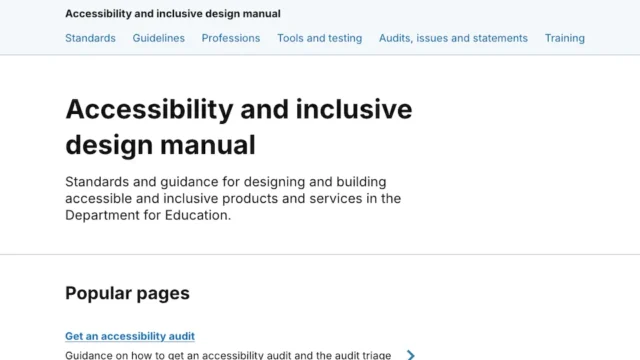
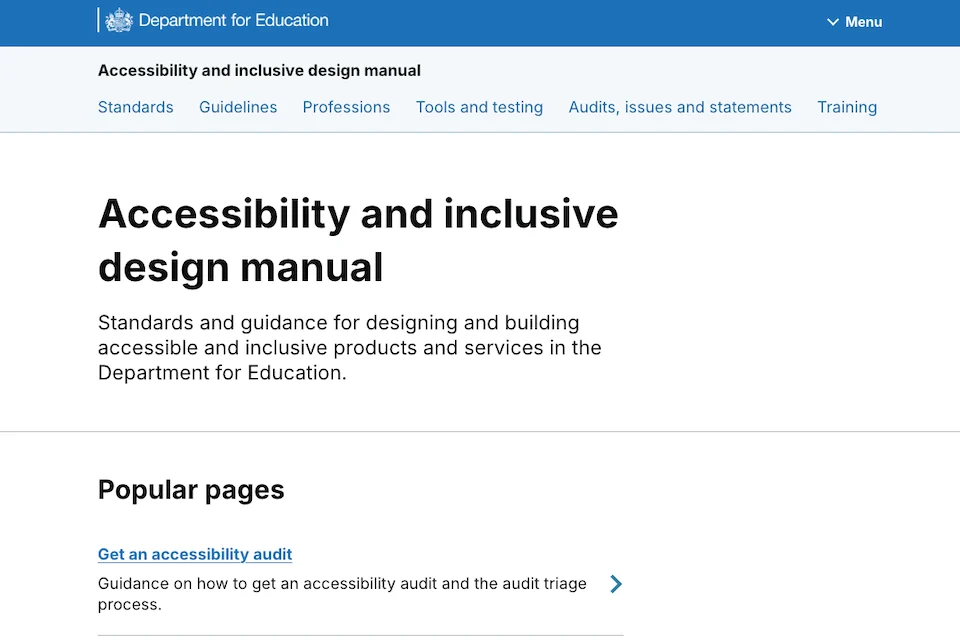
- July 21, 2025: Deployment of Updated Manual. The revised manual was officially launched, featuring a simplified homepage, reorganized navigation, and person-centered tool guidance.
- September 2025: Public Reporting. The DfE published a summary of the changes, detailing the rationale behind the updates and the data-driven approach used to refine the resource.
Research Findings and the Shift to User-Centricity
The research phase conducted in early 2025 focused on three primary pillars: discoverability of information, the relevance of technical tools, and the overall cognitive load of the manual’s interface. Analysts found that while the content itself was highly regarded for its accuracy and depth, the structure often hindered the efficiency of those attempting to apply it under tight project deadlines.
A significant finding was the failure of the "Knowledge Hub" section. Although intended to be a comprehensive library of resources, users reported that it felt "cluttered" and was perceived as a "dumping ground" for miscellaneous information. This led to a "paradox of choice," where the abundance of information made it difficult for designers and developers to find the specific guidance relevant to their current task.
Furthermore, the research highlighted a disconnect between the technical descriptions of accessibility tools and the practical needs of the workforce. Users were less interested in a static list of software and more concerned with understanding which tools were appropriate for specific stages of the development lifecycle—such as automated testing versus manual screen reader audits.
Key Structural and Functional Overhauls
In response to these findings, the DfE implemented several transformative changes to the manual’s structure and content strategy.
Reorganization of the Knowledge Hub
The "Knowledge Hub" was entirely dismantled. Instead of sequestering valuable information in a separate, disconnected section, the DfE moved the content into parts of the manual that better align with the natural user journey. This reorganization was based on mental models of how professionals search for information: by task, by role, or by specific accessibility challenge. For example, guidance on color contrast was moved directly into the design section, while technical implementation details for ARIA (Accessible Rich Internet Applications) labels were integrated into the development guidance. This "contextual integration" ensures that users encounter relevant information at the moment they need it, rather than having to seek it out in a generic repository.
Human-Centered Tools Guidance
The tools section underwent a paradigm shift. Previously, this section focused heavily on the technical aspects of tools—listing what they were and how to install them. The updated manual reframes this guidance to focus on the "why" and "when." The new guidance addresses specific user needs, such as:
- Which tools are most effective for identifying "low-hanging fruit" during initial development.
- Which tools are required for official compliance audits.
- How to interpret tool outputs to make meaningful improvements to the user experience.
By shifting the focus from the tool itself to the person using the tool, the DfE has made the manual a more practical instrument for delivery teams.
Homepage Simplification and UX Improvements
The original homepage was identified as a major barrier to entry. Characterized by an excess of icons, images, and an extensive "long scroll" format, it contributed to high bounce rates and user frustration. The navigation menu was also criticized for lacking clarity.
The redesign involved:
- Reducing Visual Noise: Removing unnecessary imagery and icons to lower the cognitive load.
- Streamlining Navigation: Implementing a clearer, more intuitive top-level navigation bar.
- Prioritizing Search and Direct Access: Ensuring that the most frequently used resources are accessible with fewer clicks.
Supporting Data and Accessibility Implications
The necessity of these updates is underscored by broader data regarding digital accessibility in the UK. According to the Family Resources Survey, approximately 16 million people in the UK reported having a disability in the 2022/23 period, representing roughly 24% of the population. For the Department for Education, ensuring accessibility is not just a legal requirement but a critical factor in providing equitable access to education and employment services.
Analysis of the updated manual suggests that the DfE is moving toward a "born-accessible" approach to digital service design. By making the manual easier to use for delivery teams, the department reduces the likelihood of accessibility being treated as a "bolt-on" at the end of a project. Statistics from the GDS have previously shown that addressing accessibility issues at the design stage is significantly more cost-effective than attempting to remediate a live service.
Official Responses and Professional Analysis
While the DfE has focused on internal improvements, the manual’s public availability has drawn attention from the wider accessibility community. Experts in the field of inclusive design have noted that the DfE’s willingness to admit that their original "Knowledge Hub" was ineffective is a rare and welcome example of transparency in government.
"The restructuring of the DfE manual represents a sophisticated understanding of information architecture," noted one digital accessibility consultant. "By moving away from a ‘repository’ model to a ‘workflow’ model, the DfE is acknowledging that accessibility is a process, not a destination. This sets a high bar for other government departments to follow."
The DfE has emphasized that while the manual was created specifically for its own teams, it remains an open-source resource. This aligns with the "Government as a Platform" philosophy, where the tools and guidance developed by one department can benefit the entire public sector and the private companies that support it.
Broader Impact on Public Sector Digital Standards
The updates to the DfE Accessibility and Inclusive Design Manual are expected to have a ripple effect across the UK government. As departments continue to update their services to meet WCAG 2.2 standards—the latest version of the guidelines which includes new criteria for mobile accessibility and cognitive impairments—the DfE’s manual provides a blueprint for how to communicate these complex requirements to a non-expert audience.
The implications of this manual extend beyond the technical. It represents a cultural shift within the DfE toward valuing the "inclusive" part of "inclusive design." By focusing on people’s needs rather than just technical checklists, the manual encourages civil servants to think about the diverse ways in which citizens interact with the state. Whether it is a teacher applying for a grant, a student checking their exam results, or a parent seeking childcare support, the manual ensures that these interactions are seamless, regardless of the user’s abilities.
In conclusion, the July 2025 update of the DfE Accessibility and Inclusive Design Manual marks a significant milestone in the evolution of accessible government. By leveraging user research to simplify navigation, reorganize content, and refocus technical guidance on human needs, the DfE has created a robust, scalable, and highly functional resource. This iterative approach ensures that the department remains at the forefront of digital inclusion, providing a model for how public institutions can successfully navigate the complexities of modern digital accessibility.