The Chronology of a Constitutional Conflict
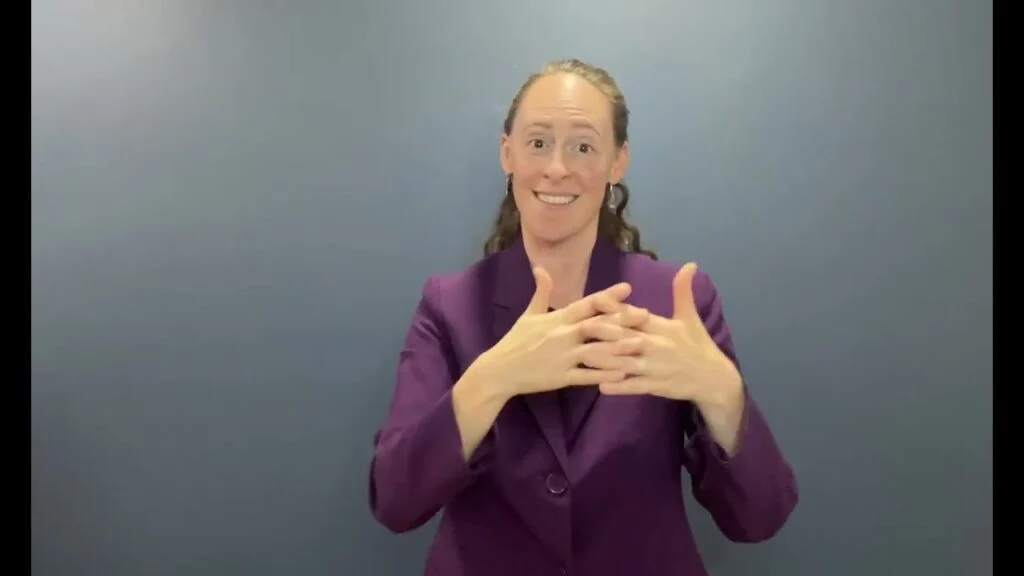
The current dispute finds its origins in the early months of 2025. In January of that year, the White House abruptly discontinued the practice of providing live, on-camera ASL interpretation for official press briefings—a service that had become a standard fixture of executive transparency following the COVID-19 pandemic. The removal of these interpreters was met with immediate backlash from accessibility advocates, who argued that the lack of direct visual communication effectively disenfranchised a significant portion of the electorate by denying them real-time access to critical information regarding national security, health policy, and legislative priorities.
On May 28, 2025, the NAD and Derrick Ford filed a formal lawsuit, asserting that the exclusion of ASL interpreters violated the fundamental principle of equal access to government information. The litigation moved through the judicial system with significant speed, culminating in a pivotal ruling in November 2025. Judge Amir Ali, presiding over the case, issued a decisive order requiring the White House to immediately reinstate ASL interpretation for all publicly announced briefings conducted by the President or the White House Press Secretary.
Judge Ali’s decision was grounded in the precedent established by the 2020 landmark ruling in National Association of the Deaf v. Trump. In that case, the court determined that the federal government had an affirmative obligation to provide effective communication during public briefings, particularly during national emergencies. By failing to provide ASL interpreters, the administration was accused of failing to meet the standards set by the Rehabilitation Act of 1973, which prohibits discrimination against individuals with disabilities in programs conducted by federal executive agencies. Rather than complying with the November 2025 mandate, the White House filed an appeal, leading to the upcoming hearing on October 6, 2026.
The Legal Stakes: Defining Accessibility in the Executive Branch
At the heart of the appellate hearing is the question of whether executive communications constitute a "program or activity" under Section 504 of the Rehabilitation Act, and if so, what level of accommodation is required to ensure that access is "meaningful."
The White House, in its filings, has suggested that modern technology, such as closed captioning or alternative digital delivery methods, constitutes a sufficient substitute for live ASL interpretation. Advocates for the Deaf community, however, maintain that for native ASL users, written English—often delivered via automated captioning—is not a functional equivalent. Automated captioning services, while improved by artificial intelligence, frequently suffer from latency, inaccuracies, and a failure to capture the nuance, tone, and cultural context of a live briefing.
Legal scholars observing the case note that the D.C. Circuit’s ruling will have ramifications far beyond the White House press room. A decision favoring the NAD could set a binding precedent for all federal agencies, forcing a standardized approach to accessibility that moves beyond mere technical compliance and toward authentic, linguistic equity. Conversely, a ruling in favor of the government could embolden other executive bodies to roll back existing accommodations under the guise of fiscal or logistical efficiency.
Impact on the Deaf and Hard-of-Hearing Community
According to the National Institute on Deafness and Other Communication Disorders (NIDCD), approximately 15% of American adults report some trouble hearing. For millions of these individuals, ASL is not merely a preference but a primary language. The absence of an interpreter during a presidential briefing creates a "knowledge gap" that can have tangible, real-world consequences, ranging from misunderstanding emergency public health directives to losing out on critical information about economic shifts.
Nicholas Kiego, Chief Executive Officer of the NAD, has framed the issue as one of fundamental democratic participation. "This case is about whether Deaf and hard of hearing Americans can receive information from the White House at the same time as everyone else," Kiego stated. "As this case moves to the U.S. Court of Appeals for the D.C. Circuit, the NAD will continue to vigorously defend the right of Deaf and hard of hearing Americans to equal access to White House communications."
The frustration felt by the community is compounded by the fact that the White House had previously demonstrated that it is logistically capable of providing this service. The implementation of ASL interpretation during the 2020 pandemic briefings proved that the barrier to entry was not a lack of resources, but a shift in policy priorities.
The Role of the NAD Law and Advocacy Center
The litigation is being spearheaded by the NAD’s Law and Advocacy Center (LAC), an organization with a long history of litigating civil rights cases for the Deaf. Since its inception, the LAC has focused on systemic discrimination, utilizing impact litigation to force institutional changes that individual advocacy cannot achieve alone.
The LAC’s involvement underscores the strategic nature of this lawsuit. By targeting the White House, the NAD is aiming to force the federal government to adhere to the highest standards of accessibility, effectively setting a "gold standard" for all public entities. The cost of such litigation is substantial, and the organization continues to rely heavily on membership dues and private donations to sustain its efforts. The outcome of the October 6 hearing will determine if the organization’s long-term legal strategy continues to yield victories for linguistic civil rights or if the momentum gained in 2020 will be stalled by the appellate process.
Public Interest and Courthouse Access
The hearing, scheduled for 2:00 P.M. on October 6, 2026, is open to the public. Given the high profile of the case and the interest from disability rights groups, civil liberties organizations, and the general public, the D.C. Circuit is expected to see a significant turnout.
Court officials have issued a reminder that all attendees must undergo standard security screenings, and those planning to attend are encouraged to arrive well in advance to ensure they are seated before the proceedings begin. The NAD has encouraged allies and members of the Deaf community to attend, viewing the public presence as a show of solidarity for the principles of transparency and equality.
Looking Toward the Future
Regardless of the outcome in the D.C. Circuit, the legal battle is widely expected to be appealed further, potentially reaching the Supreme Court of the United States. If the appellate court upholds Judge Ali’s order, the White House will be forced to maintain ASL services indefinitely. If the order is overturned, the burden of proof will shift back to the plaintiffs, who would then be tasked with finding new legal avenues to force the federal government to acknowledge ASL as a necessary tool for democratic inclusion.
The case serves as a stark reminder that civil rights, even when established through judicial precedent, are subject to the fluctuating priorities of those in power. As the date of the hearing approaches, the nation watches to see whether the judiciary will reaffirm the necessity of ASL as a primary mode of communication in the public square, or if it will grant the executive branch the latitude to prioritize convenience over constitutional equity. For the NAD and the millions they represent, the hearing is not just a procedural formality; it is a vital step toward ensuring that the doors of government remain open to all citizens, regardless of their mode of communication.