The Persistent Challenge: Navigating the "Cocktail Party Problem"
For decades, the "cocktail party problem"—the human auditory system’s ability to focus on a single speaker in a noisy environment—has remained a formidable hurdle for hearing aid technology. While healthy hearing effortlessly filters extraneous sounds, individuals with hearing loss often find this task exhausting, if not impossible. The consequences extend beyond mere inconvenience, contributing to social isolation, communication breakdowns, and even accelerating cognitive decline. According to the World Health Organization (WHO), over 430 million people globally require rehabilitation for disabling hearing loss, a number projected to rise significantly. In the United States, data from the National Institute on Deafness and Other Communication Disorders (NIDCD) indicates that approximately 15% of American adults (37.5 million) aged 18 and over report some trouble hearing. The inability to participate fully in conversations due to background noise is a primary complaint among hearing aid users, leading many to withdraw from social situations and impacting their overall quality of life.
Traditional hearing aids have made incremental progress through features like directional microphones, which can offer an improvement of approximately 3 decibels (dB) in the signal-to-noise ratio (SNR) by focusing on sounds coming from the front. However, these improvements often fall short in dynamic, multi-talker environments where noise sources are varied and unpredictable. The industry, despite incorporating "AI" into marketing narratives, has largely been perceived as stagnant in delivering truly transformative solutions for speech intelligibility in noise, leaving a significant unmet need for millions.
Fortell’s Technological Leap: Source Separation and Spatial AI
Fortell’s co-founders, Matt de Jonge and Cole Morris, recognized this stagnation and embarked on a mission to engineer a fundamental change. De Jonge, now Fortell’s CEO, was personally motivated by witnessing his grandparents’ gradual withdrawal from conversations despite using expensive hearing aids. This "painful memory," as he describes it, fueled an "obsession" to make hearing aids genuinely more effective. Morris, with a background in macroeconomics and health economics from Oscar Health Insurance, was drawn to the clear line between improved technology and better health outcomes, citing the broad societal impacts of unaddressed hearing loss, including increased risks of falls, lost income, depression, and cognitive decline.
Their combined expertise, particularly in real-time AI algorithms and custom chip development from their previous roles at companies like Bridgewater Associates and Butterfly Network, provided the "narrow glimmer of possibility" needed to tackle what was previously considered intractable. Fortell’s core innovation lies in its application of source separation, an AI technique that processes incoming audio in real-time, segmenting it into "important" and "unimportant" channels. This allows audiologists to then "remix" these channels, presenting the wearer with a preferential, easier signal-to-noise ratio, effectively creating an experience akin to conversing in quiet.
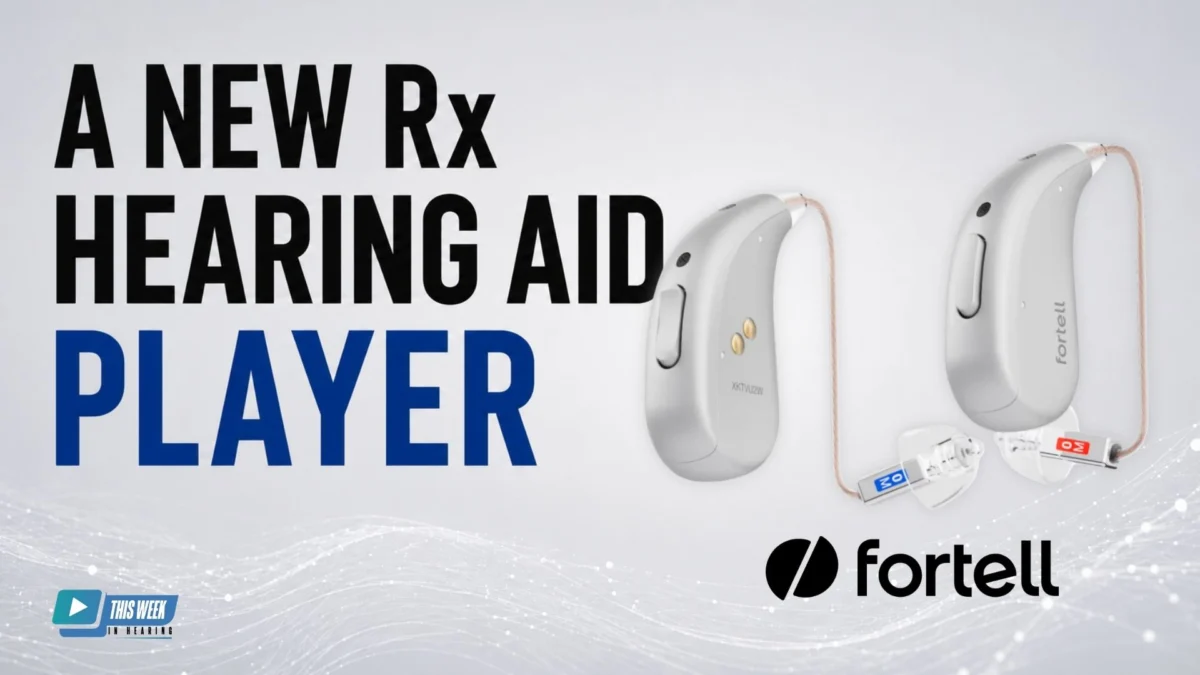
Further enhancing this capability is Spatial AI, which interprets sound not merely by its content but crucially by its origin in space. This advanced spatial understanding empowers Fortell’s devices to identify and prioritize target speakers while significantly attenuating competing voices from other directions. The flagship feature leveraging this technology is the Front Voices mode. Designed for the noisiest environments, this mode aggressively prioritizes speakers directly in front of the wearer, suppressing distracting chatter from the sides and rear. This contrasts with the All Day AI mode, which provides omnidirectional hearing with intelligent amplification of voices of interest while maintaining situational awareness. The device also includes a Live Music mode for optimized audio enjoyment and a Conventional mode that acts as a traditional high-end hearing aid, simply restoring audibility without aggressive signal manipulation.
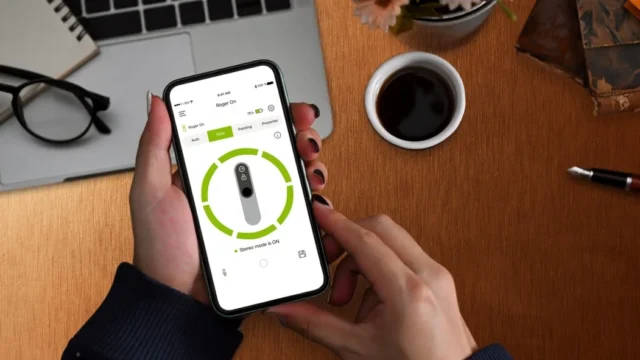
A key aspect of Fortell’s design philosophy is the emphasis on user control for its most aggressive processing. While the All Day AI mode operates largely automatically, the profound intervention of Front Voices mode—actively removing certain talkers—necessitates manual activation. This design choice stems from a commitment to respect user agency and prevent unintended auditory experiences. As de Jonge explains, "When you’re actively removing some talkers from the scene, we don’t ever want to do that at the wrong time for you." This manual activation, via a button press on the device or a companion app, ensures that users consciously engage the "turbo mode" when desired, empowering them to navigate their complex listening environments effectively.
Reinventing the Care Model: Integrated Clinics and Audiologist-Centric Support
Fortell’s departure from the traditional hearing aid distribution model is as significant as its technological innovations. Instead of selling through a network of independent audiologists or retailers, Fortell operates its own clinics. The company launched its flagship clinic in New York City and has since expanded to locations in Greenwich and Palm Beach, with plans for further expansion both nationally and internationally. This vertically integrated approach is driven by a "North Star" mission: to provide an experience for patients that the founders wished had been available to their own family members.
This integrated model allows Fortell to control every detail of the patient journey, from initial consultation and fitting to ongoing care and technological support. It rests on three pillars: sophisticated technology, highly skilled audiologists, and a concierge level of patient support. The decision to operate proprietary clinics was born from the belief that only through direct control could Fortell guarantee consistency across all three dimensions.
Audiologists play an indispensable role in this model. Beyond basic fitting, Fortell’s audiologists are integral to optimizing the advanced AI technology for individual preferences and hearing loss profiles. They work with patients to calibrate the different listening modes, ensuring the sound processing aligns with specific needs and situational awareness desires. This direct-to-consumer, audiologist-led model fosters a continuous feedback loop, allowing Fortell to gather real-world insights that directly inform ongoing research and development, exemplified by updates like AI 2.0.
Rigorous Validation: Clinical Evidence and Performance Metrics
Unlike many companies that rely on anecdotal evidence or marketing hype, Fortell has committed to rigorous scientific validation of its technology. Cole Morris, as the first author on two pivotal clinical studies, spearheaded efforts to objectively measure the impact of Fortell’s hearing aids. These studies, conducted with esteemed academics like Marco Svirsky and Bill Shapiro from NYU (intelligibility study) and Joe Montano and Barbara Weinstein (subjective study), focused on the most challenging environment: multi-talker noise.
The intelligibility study, a speech-in-noise test, compared Fortell’s performance against a leading AI-powered hearing aid already on the market. Participants wearing Fortell’s devices were able to understand words equally well at a 9 dB more challenging SNR. To put this into perspective, the 3 dB improvement typically offered by directional microphones is considered a significant gain. A 9 dB improvement represents a profound leap in the ability to discern speech in noisy conditions, a result Morris described as "pretty astonishing."
The second study employed a "Pepsi challenge" methodology, where participants listened to recordings from Fortell and the latest technology from five major legacy manufacturers in multi-talker noise. Blinded to the device source, 19 out of 20 participants preferred Fortell for ease of understanding, with one tie. The overwhelming nature of these results underscores the potential for Fortell’s AI to deliver a genuinely superior listening experience.
The involvement of independent academics and adherence to strict scientific protocols, including blinding and randomization, were crucial for establishing the credibility of these findings. This commitment to peer-reviewed research directly addresses the industry’s historical lack of robust scientific evidence for many marketing claims. While current studies primarily focus on intelligibility and preference, Fortell acknowledges the critical importance of listening effort and cognitive fatigue. Anecdotal evidence from patients suggests a significant reduction in end-of-day exhaustion. The company plans future research utilizing advanced techniques like neural imaging and pupillometry to quantitatively measure these subjective experiences, further solidifying the holistic benefits of its technology.
Market Position and Affordability in a Evolving Landscape
Fortell’s entry into the prescription hearing aid market comes with a clear pricing strategy. Its hearing aids are offered at approximately $6,800, a price point that includes an extensive package: five years of unlimited audiological care from a dedicated audiologist and a three-year comprehensive warranty covering loss or damage. This positions Fortell below the top-tier, fully loaded offerings from established manufacturers, while providing a value proposition that emphasizes long-term support and advanced technology.
The company’s strategic focus is on the high-value, high-performance segment of the prescription market, rather than the emerging over-the-counter (OTC) hearing aid market. This allows Fortell to maintain aggressive investment in research and development, ensuring continuous technological advancement. The co-founders emphasize that the cost reflects the extensive five years of "heads down" R&D into core AI science and custom chip development, which they believe was necessary to avoid launching another "mediocre, incrementally better hearing aid."
A Vision for Continuous Evolution and Broader Impact
Looking ahead, Fortell’s roadmap includes sustained technological innovation and significant expansion of its clinical footprint. Shortly after the initial interviews, the company introduced AI 2.0, a significant software update. This update leverages expanded real-world training data and refinements to its signal-processing algorithms, promising further improvements in speech-in-noise performance. This iterative development underscores Fortell’s commitment to continuous improvement, acknowledging that the "human auditory system is so majestically complicated that this is a problem we will never solve, we will never finish."
The ambition extends to geographic expansion, with plans to establish more clinics across the United States and internationally. The long-term vision is for patients to spend "a lot less time thinking about their hearing loss and a lot more time having fun, enjoying the people around them." By demonstrating a measurable and perceived improvement in core listening capabilities, Fortell aims to be a catalyst for change across the hearing aid industry. Its disruptive model and technological advancements could pressure established manufacturers to accelerate their own innovation cycles, ultimately benefiting millions of individuals grappling with hearing loss.
Fortell’s journey, born from personal experience and driven by a scientific and economic imperative, represents a pivotal moment in hearing healthcare. By integrating cutting-edge AI, a unique care delivery model, and a commitment to rigorous scientific validation, Fortell is not merely introducing a new product but is actively seeking to redefine the standard of care for one of humanity’s most pervasive and isolating health challenges.