The Evolution of Core Vocabulary Instruction
The methodology behind the "Year of Core Vocabulary" series is rooted in the linguistic principle that a relatively small set of "core" words—comprising pronouns, verbs, descriptors, and prepositions—accounts for approximately 80% of the words used by typical speakers. By prioritizing these high-frequency words in therapy and classroom settings, practitioners can provide AAC users with the most powerful tools for functional communication.
The initiative began as a grassroots effort to provide educators with a roadmap for language modeling. In the early 2010s, practitioners identified a critical gap: while AAC devices were becoming more sophisticated, the pedagogical strategies for teaching language usage were often inconsistent. Dr. Zangari, through the PrAACtical AAC platform, launched the first "Year of Core Vocabulary Words" series to bridge this gap. This initial project established a monthly cadence of word selection, providing teachers with a predictable, scalable framework.
Chronology of Resource Development
The development of these resources has been an iterative process, expanding significantly in scope and depth over the past decade.
- 2012–2015: The foundational series was launched, focusing on a primary list of core words to be modeled throughout the school year. These early efforts focused on establishing a baseline of vocabulary selection.
- 2016–2019: The project expanded with "Another Year of Core Vocabulary," incorporating diverse teaching strategies and the introduction of activity calendars. During this period, Rachael Langley, an AAC-specialized speech-language pathologist and co-founder of Talking AAC, introduced structured activity calendars, which allowed for better integration of core vocabulary into daily classroom routines.
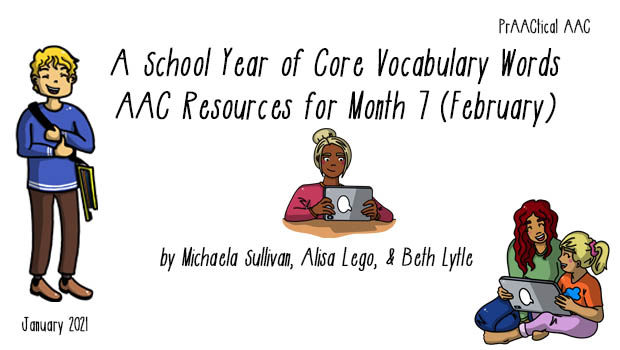
- 2020: The "School Year of Core Vocabulary" was introduced, marking a pivot toward more classroom-integrated, curriculum-aligned resources. Authored by Michaela Sullivan, Alisa Lego, and Beth Lytle, this series emphasized the importance of peer-to-peer modeling and educational inclusion.
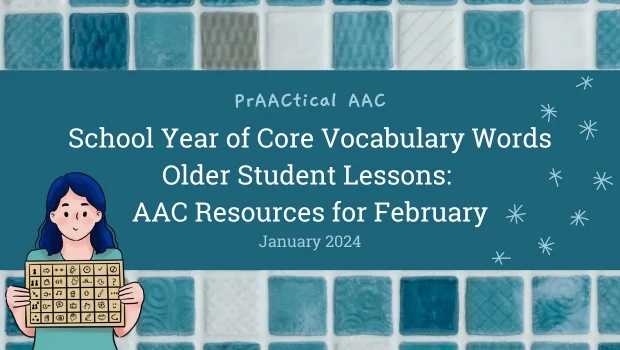
- 2023–2024: Recognizing the specific needs of older students, a specialized curriculum was developed by Michaela Sullivan and Lindsay Dougherty. This phase of the project addressed the challenge of providing age-appropriate, respectful content for teenagers and young adults who require AAC, moving away from "child-centric" themes to focus on functional, age-aligned communication.
Data-Driven Approaches to AAC Intervention
The effectiveness of these resources is supported by current trends in clinical practice. According to recent surveys within the AAC community, the primary barrier to successful communication intervention is not hardware or software limitation, but rather the "implementation gap"—the struggle for communication partners to model language consistently throughout the day.
The "Year of Core Vocabulary" resources address this by providing "ready-to-use" materials. Data suggests that when educators use systematic, planned vocabulary lists, the frequency of aided language stimulation increases by as much as 40%. By reducing the cognitive load on the instructor—who no longer needs to spend hours brainstorming which words to target—these resources allow the instructor to focus on the quality of the interaction.
Moreover, the transition from preschool to high school materials reflects a critical understanding of longitudinal language development. Research indicates that vocabulary instruction for AAC users often stagnates as they move into secondary education. The 2023-2024 curriculum serves as a vital intervention, ensuring that high school students are exposed to complex vocabulary and social-pragmatic language skills necessary for independent living and post-secondary transitions.
Expert Perspectives and Community Collaboration
The collaborative nature of these resources is a defining feature of the initiative. By involving guest contributors—specialists who work in the trenches of public school districts and private clinics—the materials maintain a high degree of ecological validity.
"The success of these programs lies in their adaptability," notes a representative from a regional assistive technology consortium. "When you provide a teacher with a framework that works for a four-year-old but can be scaffolded for a fourteen-year-old, you create a culture of consistency. That consistency is the single biggest predictor of long-term communicative success."
The inclusion of multiple sets of words—often referred to as "Set 1" and "Set 2"—allows districts to rotate their focus, ensuring that students do not become bored with the same vocabulary lists year after year. This prevents the "plateau effect" often seen in long-term therapy, where students stop making progress because the vocabulary targets remain static.
The Broader Impact on Inclusive Education
The implication of this work extends far beyond the therapy room. As schools move toward more inclusive models of education, the need for general education teachers to participate in AAC instruction has become urgent. The "School Year of Core Vocabulary" series is specifically designed to be accessible to teachers who may not have specialized training in speech-language pathology.
By aligning with standard classroom activities, these resources help normalize the presence of AAC in the classroom. When a general education teacher uses the same core vocabulary model as the SLP, the student benefits from "universal design for learning" (UDL). This creates a communicative environment where the AAC user is not isolated in their learning but is instead part of a shared linguistic community.
Challenges and Future Directions
Despite the proliferation of these resources, challenges remain. The primary hurdle is the integration of these materials into high-pressure classroom environments where standardized testing and core curriculum requirements take precedence. Advocacy groups are increasingly calling for AAC intervention to be viewed not as an "extra" activity, but as a fundamental requirement for literacy and academic access.
The ongoing "reprising" of these posts by Dr. Zangari serves as a strategic effort to keep these resources in the public eye. By periodically highlighting the historical contributions and updating the links to current pedagogical standards, the community ensures that new teachers entering the field have access to a decade of refined, battle-tested wisdom.
Conclusion
The "Year of Core Vocabulary" resources stand as a testament to the power of community-driven knowledge sharing. From the initial, simplified lists of 2012 to the sophisticated, age-appropriate lessons of 2024, the project has mirrored the growth of the AAC field itself. As educators and therapists enter the month of February, these resources provide a structured, evidence-based pathway to improve the communication outcomes for thousands of students.
For those implementing these tools, the focus remains on the "prAACtical" application: consistency, modeling, and the belief that every student, regardless of age or ability, possesses the fundamental right to communicate. As these materials continue to be shared and utilized, they reinforce the critical lesson that language instruction is not a sprint, but a carefully planned, long-term commitment to the communicative success of the AAC user.