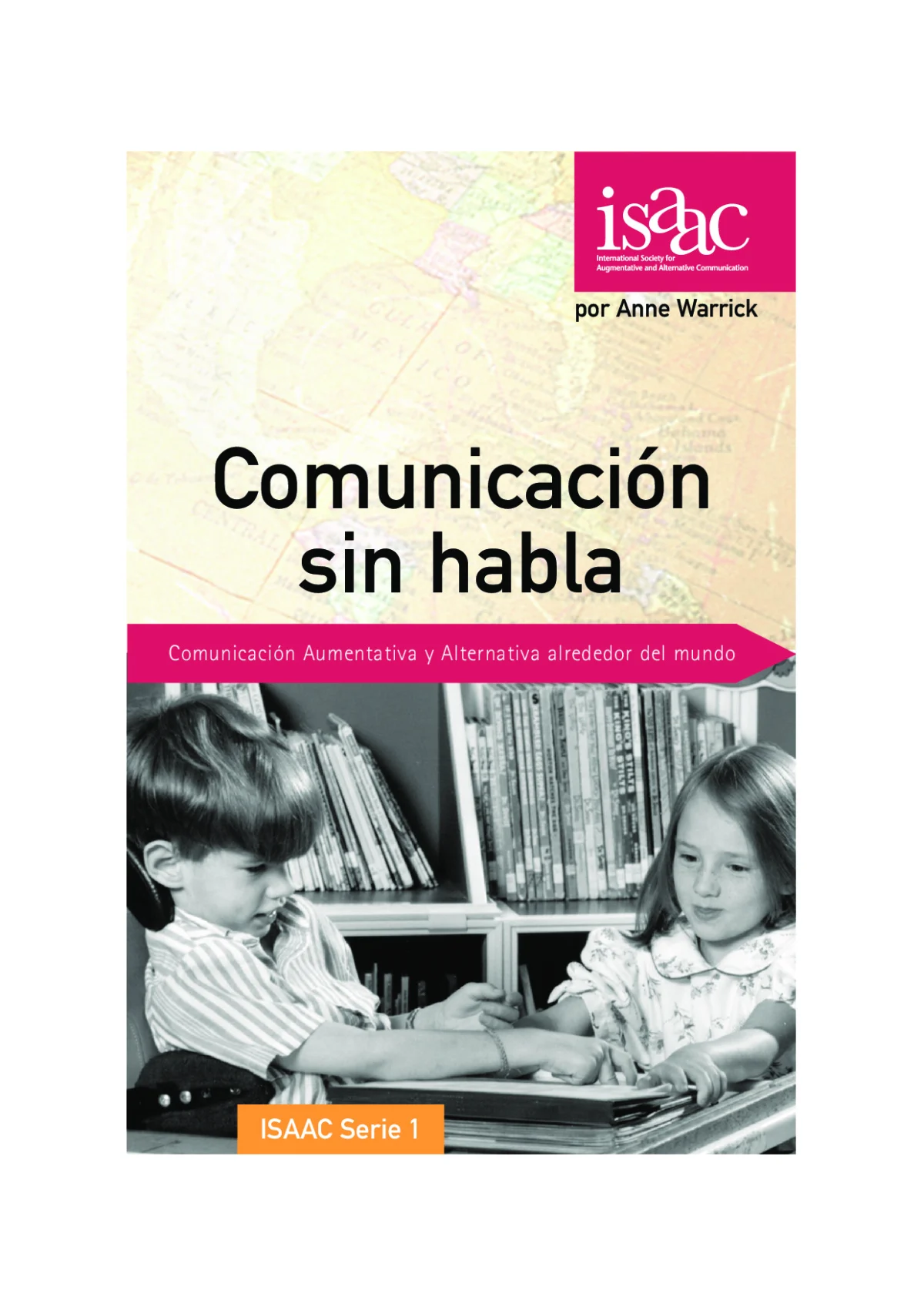
The Historical Context of International Book Day and Literacy
International Book Day, established by UNESCO in 1995, commemorates the death of literary giants such as William Shakespeare and Miguel de Cervantes. While its origins are rooted in general literature, its mandate has expanded to encompass the right to access information for all populations, including those with disabilities. In the context of AAC, "literacy" takes on a dual meaning: the traditional ability to read and write, and the technical proficiency required to use non-verbal communication systems. By aligning with this global initiative, advocates are bridging the gap between clinical theory and daily practice, ensuring that families, educators, and speech-language pathologists (SLPs) in Spanish-speaking regions have access to the same high-level research as their English-speaking counterparts.
Chronology of AAC Resource Development
The evolution of AAC literature has undergone a marked transformation over the last three decades:
- 1980s–1990s: The field was largely dominated by foundational North American and Northern European research. Materials were almost exclusively in English, creating a "knowledge barrier" for practitioners in Latin America and Spain.
- 2000s: The International Society for Augmentative and Alternative Communication (ISAAC) began intensifying its global outreach. Regional chapters started advocating for the translation of key diagnostic and intervention manuals.
- 2010s: The digital revolution allowed for the rapid dissemination of e-books and localized training modules, though the translation of comprehensive academic textbooks remained a slow, specialized process.
- 2020s: A surge in scholarly collaboration has resulted in the release of authoritative Spanish-language editions of seminal texts, such as the comprehensive work by von Tetzchner, Martinsen, and Stadskleiv, marking a new era of linguistic parity in clinical education.
Evidence-Based Foundations in Spanish
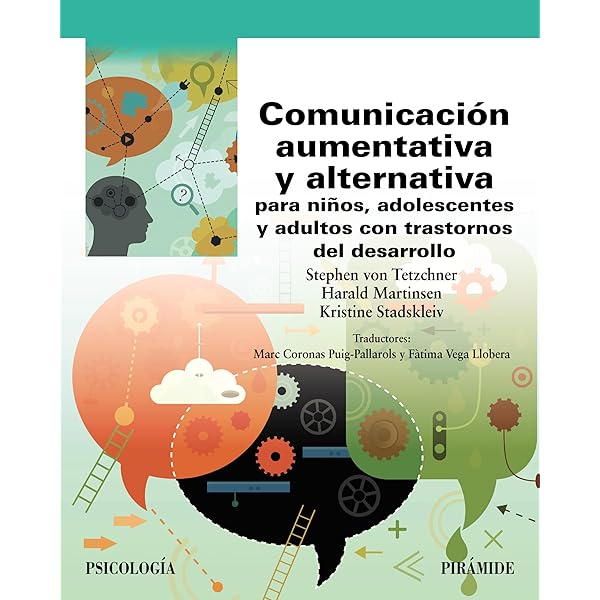
A critical development in this landscape is the availability of "Augmentative and Alternative Communication for Children, Adolescents and Adults with Developmental Disorders" by Stephen von Tetzchner, Harald Martinsen, and Kristine Stadskleiv. This text has been widely cited as a definitive resource, offering a multidimensional approach to communication support.
The significance of this publication lies in its evidence-based methodology. Unlike early, anecdotal models of AAC intervention, this text provides a rigorous framework for:
- Assessment: Standardized protocols for identifying the unique communication requirements of individuals with developmental disabilities.
- Intervention Design: Strategies that integrate technology with social interaction.
- Language Development: Longitudinal approaches that treat AAC not merely as a temporary tool, but as a permanent, evolving linguistic system.
Data indicates that when clinicians and family members have access to research in their native language, the efficacy of AAC interventions increases. A study published in the International Journal of Speech-Language Pathology suggested that culturally and linguistically matched intervention materials can reduce the rate of "system abandonment"—a common issue where users stop utilizing their communication devices due to poor training or lack of contextual relevance.
Bridging the Knowledge Gap: Official Responses and Institutional Efforts
Organizations like ISAAC play an instrumental role in this dissemination. By facilitating the peer-review process for translations, they ensure that the technical nuances of AAC terminology are accurately represented in Spanish. Experts in the field argue that these translations are not merely linguistic conversions; they are cultural adaptations.
"The challenge has never been a lack of interest in Spanish-speaking regions," says one representative familiar with the translation process. "The challenge has been the logistical and financial hurdle of high-quality translation for highly technical, clinical textbooks. By securing funding for these translations, we are effectively leveling the playing field for clinicians working in resource-constrained environments."

Analysis: Implications for Global Practice
The shift toward a more robust, Spanish-language library for AAC has profound implications for the future of inclusive education and healthcare.
1. Professional Standardization
As more professionals access the same foundational theories, the quality of service delivery becomes more consistent across borders. This standardization is vital for clinical research, as it allows for multi-center studies that span across different countries, utilizing shared terminology and methodology.
2. Family Empowerment
One of the most underserved segments in the AAC ecosystem is the family unit. When academic texts are translated into accessible, accurate Spanish, parents and caregivers can take a more active, informed role in the therapeutic process. This "home-centered" approach is documented to correlate with faster mastery of communication systems by the user.
3. Economic and Educational Inclusivity
Educational systems in Latin America, which are increasingly adopting inclusive mandates, require teachers to have basic training in alternative communication. The proliferation of these books provides a syllabus for teacher training programs that were previously reliant on outdated or inaccessible English-language literature.
Challenges and Future Directions
Despite this progress, barriers remain. The cost of academic publishing in specialized fields often creates a high barrier to entry for practitioners in developing nations. Furthermore, the rapid pace of technological advancement in AAC—specifically regarding Artificial Intelligence (AI) and brain-computer interfaces—outstrips the traditional book publishing cycle.
Future efforts, according to experts, must focus on a "hybrid model" of knowledge sharing. This involves combining traditional, long-form academic books with real-time digital updates and peer-to-peer training networks. As we move further into the decade, the integration of these materials into digital platforms will be essential to maintain the momentum generated by the recent influx of translated literature.
Conclusion: Sustaining the Momentum
The recent focus on International Book Day as a platform for promoting AAC resources underscores a broader realization: knowledge is the primary fuel for innovation. By ensuring that Spanish-speaking professionals and families have the tools to understand the theoretical and practical underpinnings of AAC, the global community is fostering a more inclusive society.
As practitioners continue to explore these resources, the focus must remain on the ultimate goal: the empowerment of individuals with complex communication needs. The transition from theory to practice is a continuous loop, fueled by the availability of high-quality, accessible information. Whether through foundational texts or contemporary clinical guides, the investment in a diverse, multilingual library of AAC resources serves as a testament to the commitment of the global community to ensuring that every voice—regardless of the modality—is heard. The path forward involves continued collaboration between international research bodies, local educational institutions, and the dedicated families who serve as the primary advocates for those who use AAC every day.