

Understanding Meniere’s Disease: A Chronic Inner Ear Condition
Meniere’s disease is characterized by recurring episodes of vertigo, fluctuating hearing loss, tinnitus (ringing in the ears), and a sensation of fullness or pressure in the affected ear. The exact cause remains elusive, but it is widely believed to stem from an imbalance of fluid (endolymph) within the inner ear, a critical component responsible for both hearing and balance. This condition typically affects one ear, though in some cases, it can progress to involve both.

The "four stages" of Meniere’s disease are not rigid diagnostic categories but rather a conceptual framework to illustrate how symptoms may evolve over time. It’s crucial to recognize that not everyone experiences all four stages, and the progression can vary significantly from person to person. Symptoms may overlap between stages, and some individuals may remain stable for extended periods.
The Four Stages of Meniere’s Disease: A General Framework
The progression of Meniere’s disease is often described through four general stages: Early, Middle, Late, and Advanced (sometimes referred to as the "Burnout" phase). This model helps to contextualize the changing nature of symptoms and their potential impact.
Stage 1: Early Stage
In the initial phase of Meniere’s disease, symptoms often manifest intermittently and unpredictably. Key characteristics include:

- Vertigo: Sudden, intense episodes of vertigo that can last from 20 minutes to several hours. This sensation may feel like the room is spinning or tilting.
- Hearing Loss: Typically fluctuating, meaning hearing in the affected ear may decrease during an attack and then partially or fully recover between episodes. This can manifest as muffled hearing or difficulty discerning sounds.
- Tinnitus: Often described as a ringing, buzzing, roaring, or humming sound in the ear. This can vary in intensity and pitch.
- Aural Fullness: A sensation of pressure, blockage, or congestion in the ear.
- Balance: Balance is usually normal between vertigo attacks.
During this stage, individuals may find it challenging to pinpoint the cause of their symptoms, attributing them to stress, fatigue, or other common ailments. Maintaining a detailed symptom diary, noting the timing, duration, and nature of attacks, can be invaluable for diagnosis and treatment planning.
Stage 2: Middle/Intermediate Stage
As Meniere’s disease progresses, symptoms may become more persistent and noticeable in daily life. While some characteristics of the early stage may persist, the following changes are commonly observed:
- Vertigo: Vertigo attacks may continue, though some individuals report they become less frequent or less severe. However, unpredictable episodes remain a hallmark.
- Hearing Loss: Hearing loss may become more constant, with less recovery between episodes. This can lead to more significant difficulties in understanding speech, particularly in noisy environments.
- Tinnitus and Aural Fullness: Tinnitus may become more constant, and the sensation of ear fullness may last longer.
- Balance: Mild unsteadiness or imbalance may begin to be experienced even between vertigo attacks.
Communication challenges can increase during this stage, impacting social interactions and professional life. Periods of remission are still possible, but the overall impact of symptoms on daily routines may become more pronounced.
Stage 3: Late Stage
In the later stages of Meniere’s disease, the nature of the symptoms often shifts. While vertigo attacks may become less frequent or less severe, the focus often moves to more permanent issues:
- Vertigo: Vertigo episodes may decrease in frequency or intensity, which can sometimes be misinterpreted as an improvement.
- Hearing Loss: Significant and more constant hearing loss becomes a prominent feature. This can lead to substantial difficulties in everyday communication.
- Tinnitus and Aural Fullness: Ongoing tinnitus and ear fullness persist.
- Balance: Persistent balance problems become more common, often exacerbated in low light, on uneven surfaces, or when fatigued. This can lead to a fear of falling and impact confidence.
The shift towards more permanent hearing and balance deficits can significantly affect an individual’s independence and participation in activities. Support from healthcare professionals, including audiologists and balance therapists, becomes crucial for developing coping strategies.
Stage 4: Advanced Stage (Burnout Phase)
The advanced stage, sometimes termed the "burnout phase," is characterized by a reduction or cessation of vertigo attacks, while the underlying inner ear damage often remains.

- Vertigo: Vertigo attacks may become rare or absent.
- Hearing Loss: Permanent and often severe hearing loss is a defining characteristic.
- Tinnitus and Aural Fullness: Tinnitus and ear fullness can continue to be present.
- Balance: Ongoing balance problems persist due to the inner ear’s compromised ability to send reliable signals. In some cases, individuals may experience "drop attacks," characterized by sudden falls without loss of consciousness, posing a significant injury risk.
It is important to note that reduced vertigo does not always signify recovery. In this stage, the long-term effects on hearing and balance can remain even if the acute vertigo episodes subside.
The Chronology of Meniere’s Disease: A Variable Timeline
The progression through these stages is not dictated by a fixed timeline. Meniere’s disease is characterized by its variability. Some individuals may experience fluctuating symptoms for many years, while others may develop more persistent hearing loss or balance issues over a shorter period. The "four stages" serve as a general description of potential symptom patterns, not a definitive roadmap. Periods of remission, where symptoms lessen or disappear for months or even years, are common and contribute to the unpredictable nature of the condition.
Understanding Attacks: Before, During, and Between Episodes
Meniere’s disease symptoms often occur in distinct phases:
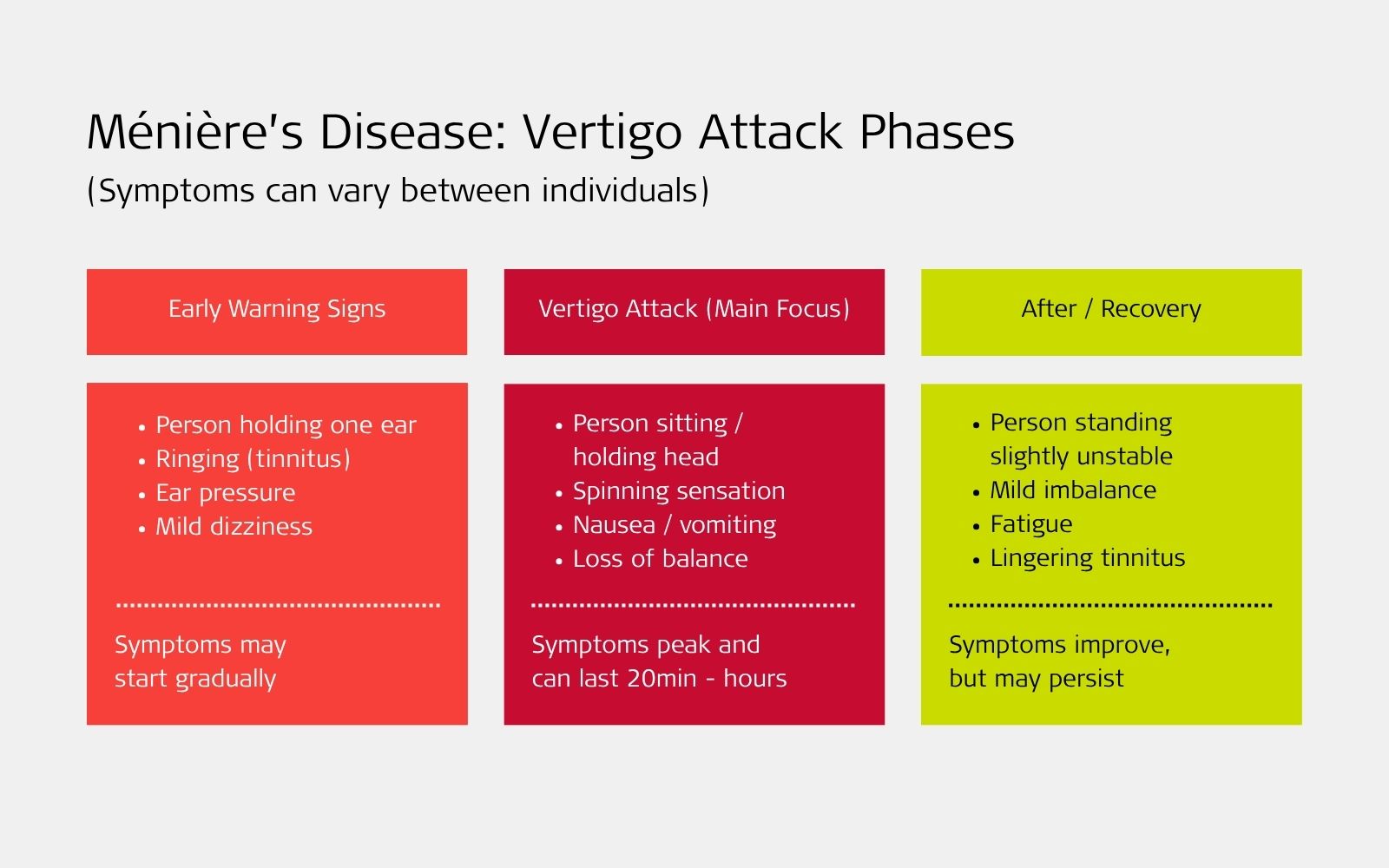
- Early Warning Signs: Some individuals report subtle precursors to a vertigo attack. These may include increased aural fullness, louder tinnitus, muffled hearing, mild dizziness, or a general sense of imbalance. These warning signs, if present, can provide a critical window to seek safety, such as sitting down or informing others of an impending attack. However, these premonitory symptoms are not universal, and many experience sudden onset.
- During a Vertigo Attack: The hallmark of a vertigo attack is the sensation of spinning or movement, even when stationary. These episodes can be debilitating, often accompanied by nausea, vomiting, sweating, and profound difficulty with ambulation. The recommended response is to rest in a stable position, avoid head movements, and wait for the episode to subside.
- Between Episodes and Remission: The period between attacks can vary greatly. Some individuals feel almost entirely normal, while others may experience lingering fatigue, unsteadiness, or persistent tinnitus and hearing difficulties. Symptom severity and frequency can fluctuate significantly, underscoring the importance of ongoing medical evaluation.
Diagnostic Pathways for Meniere’s Disease
Diagnosing Meniere’s disease typically involves a comprehensive evaluation by an otolaryngologist (ENT specialist). There is no single definitive test, and diagnosis relies on a combination of factors:
- Symptom Pattern: The presence of recurrent vertigo, fluctuating hearing loss, tinnitus, and aural fullness is a primary indicator.
- Medical History: A detailed account of the patient’s symptoms, their onset, duration, and frequency is crucial.
- Hearing Tests (Audiometry): These tests assess the type and degree of hearing loss, often revealing a characteristic pattern of low-frequency sensorineural hearing loss in the early stages.
- Vestibular Function Tests: These assessments evaluate the balance system to identify any abnormalities in the inner ear’s vestibular function.
- Ruling Out Other Conditions: It is essential to exclude other conditions that can mimic Meniere’s disease, such as vestibular migraine, acoustic neuroma, labyrinthitis, or central nervous system disorders.
Treatment and Long-Term Management Strategies
While there is no cure for Meniere’s disease, a multi-faceted approach to treatment can effectively manage symptoms, mitigate risks, and enhance quality of life. Treatment plans are individualized and often evolve with the disease’s progression.
Lifestyle and Safety Adjustments
- Dietary Modifications: Many individuals benefit from reducing sodium intake, as salt can contribute to fluid imbalance in the inner ear.
- Stress Management: Stress can be a significant trigger for Meniere’s disease episodes. Techniques like mindfulness, meditation, and regular exercise can be beneficial.
- Trigger Avoidance: Identifying and avoiding personal triggers, such as caffeine, alcohol, and nicotine, can help reduce the frequency of attacks.
- Safety Measures: Given the risk of sudden falls during vertigo attacks, implementing safety measures at home and work, such as removing tripping hazards and ensuring adequate lighting, is important.
Medical Interventions
- Medications: Diuretics (water pills) may be prescribed to reduce fluid buildup. Medications like meclizine or benzodiazepines can help manage acute vertigo symptoms and nausea.
- Vestibular Rehabilitation Therapy (VRT): This specialized physical therapy aims to retrain the brain to compensate for inner ear disturbances, improving balance and reducing unsteadiness, particularly in later stages.
- Intratympanic Injections: In some cases, medications like gentamicin or steroids may be injected into the middle ear to reduce the excitability of the vestibular nerve.
Hearing Support in Later Stages
As Meniere’s disease progresses and hearing loss becomes more significant and permanent, hearing support becomes critical.

- Hearing Aids: For mild to moderate hearing loss, traditional hearing aids can be effective.
- CROS/BiCROS Systems: For single-sided deafness (hearing loss in only one ear), CROS (Contralateral Routing of Signals) or BiCROS systems can help by transmitting sound from the deaf ear to the hearing ear.
- Bone Conduction Solutions: These devices bypass the outer and middle ear to transmit sound directly to the inner ear via vibrations of the skull.
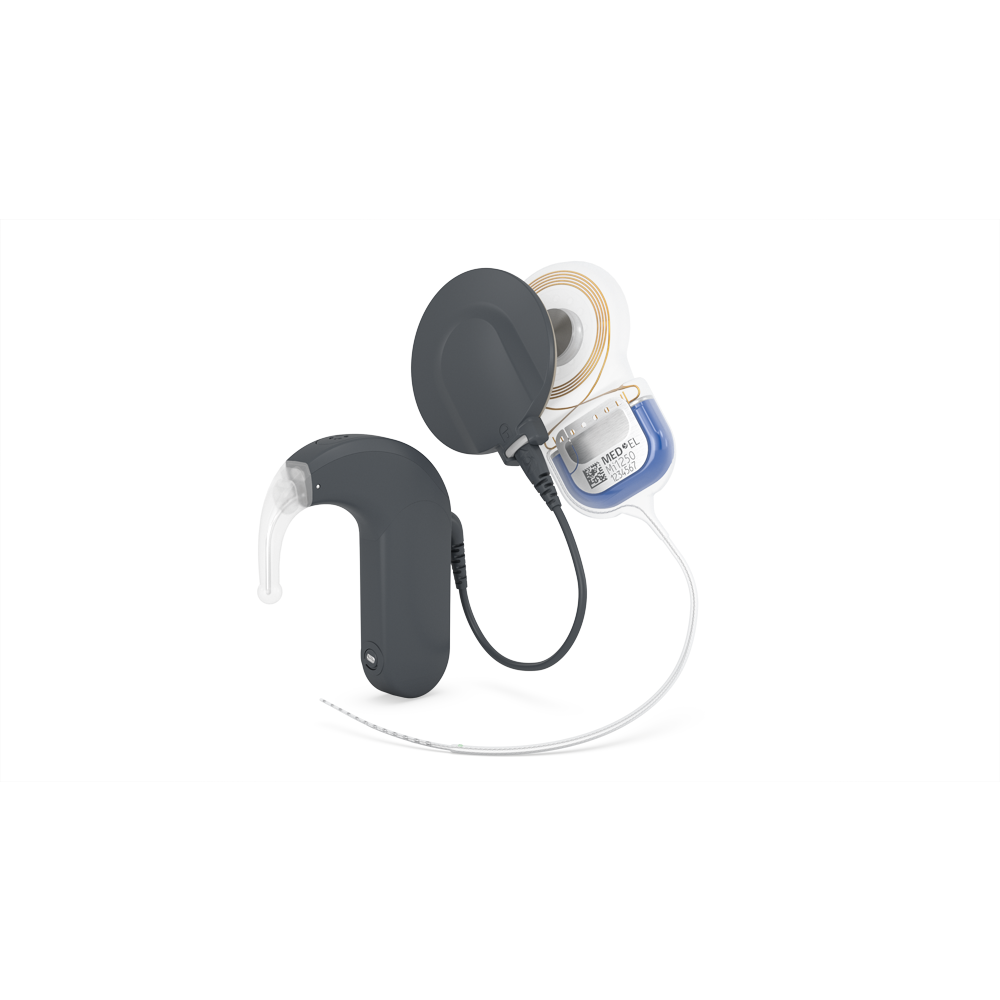
- Cochlear Implants: For individuals with severe to profound sensorineural hearing loss, cochlear implants can provide access to sound and significantly improve communication abilities. Helen, an audiologist from Australia, shared her transformative experience with a MED-EL cochlear implant after developing single-sided deafness due to Meniere’s disease. She noted, "My MED-EL cochlear implant also silenced my tinnitus, which is really quite amazing and a huge relief." This highlights how advanced hearing solutions can address multiple facets of the condition.
The Underlying Mechanism: Endolymphatic Hydrops
The driving force behind Meniere’s disease is believed to be endolymphatic hydrops, a condition characterized by an abnormal buildup of endolymph fluid within the inner ear. This excess fluid can distort the delicate structures responsible for converting sound waves into electrical signals for hearing and body movements into balance signals. Initially, these pressure fluctuations can lead to transient symptoms. However, repeated disruption can damage the sensory hair cells and other crucial inner ear components, resulting in more permanent hearing loss and balance deficits over time.
When to Seek Medical Advice
Prompt medical attention is crucial for anyone experiencing symptoms suggestive of Meniere’s disease. Individuals should consult an ENT specialist or audiologist if they notice:
- Recurring episodes of vertigo.
- Fluctuating or progressive hearing loss in one ear.
- Persistent tinnitus.
- A sensation of fullness or pressure in the ear.
New or severe dizziness, especially when accompanied by other concerning symptoms like weakness, speech difficulties, chest pain, or severe headaches, requires immediate medical evaluation to rule out more serious conditions.

Conclusion: Navigating Meniere’s Disease with Knowledge and Support
The four stages of Meniere’s disease offer a valuable framework for understanding the potential trajectory of this complex condition. However, it is imperative to remember that each individual’s experience is unique. The stages should be viewed as general indicators of possible symptom patterns, not as a rigid or predictable pathway. With accurate diagnosis, personalized treatment, and ongoing medical support, individuals with Meniere’s disease can effectively manage their symptoms, mitigate risks, and maintain a fulfilling quality of life. Early intervention and a proactive approach to hearing and balance rehabilitation are key to navigating the challenges posed by this chronic inner ear disorder.