

The Onset of a Chronic Vestibular Crisis
Before her health declined, Michelle Anthony’s life was characterized by the high-energy demands of raising a one-year-old and a four-year-old while maintaining a successful career. Her lifestyle was active and social, centered on fitness and family. This foundation was fractured when a severe sinus infection introduced a sensation of constant spinning and spatial disorientation. Unlike typical vertigo, which may resolve with rest or basic medication, Anthony’s symptoms evolved into a persistent state of sensory mismatch.
She described the sensation as "walking on marshmallows," a common clinical descriptor for the instability associated with PPPD. Her world felt perpetually tilted, and her visual processing lagged behind her physical movements, a phenomenon known as oscillopsia. These symptoms are not merely physical inconveniences; they represent a fundamental breakdown in the body’s ability to integrate sensory information from the eyes, the inner ear (vestibular system), and the muscles (proprioception). When these systems fail to align, the brain is forced into a state of constant high alert, leading to profound physical and mental exhaustion.
The Diagnostic Odyssey and Medical Frustration
Anthony’s journey toward a diagnosis followed a pattern all too familiar to vestibular patients: the "diagnostic odyssey." Statistics from the Vestibular Disorders Association (VeDA) suggest that the average patient visits four to five different physicians before receiving an accurate diagnosis. Anthony consulted an array of specialists, including ear, nose, and throat (ENT) doctors, neurologists, physical therapists, and primary care physicians.
Despite the severity of her symptoms—which included ear fullness, tingling head pressure, and sandbagging fatigue—standard clinical examinations often yielded normal results. This "invisible" nature of vestibular illness frequently leads to mounting frustration for both the patient and the provider. In Anthony’s case, repeated cycles of antibiotics and steroids failed to provide relief, as the underlying issue was no longer an infection but a functional neurological disorder of the vestibular system.
The lack of immediate answers had significant psychological repercussions. The inability to navigate a grocery store due to "visual vertigo"—where complex patterns, bright lights, and moving crowds overwhelm the brain’s processing capacity—led to social withdrawal. Anthony recalls that at her lowest point, the combination of relentless physical symptoms and the absence of a medical roadmap led to deep depression and thoughts of self-harm. Her experience highlights a critical intersection between chronic physiological dysfunction and mental health, where the "dizzy-anxious-dizzy" cycle creates a self-perpetuating loop of disability.
Understanding the Diagnosis: VM and PPPD
The turning point for Anthony came through self-advocacy and digital community engagement. After discovering an online support group, she was directed to a neuro-otologist—a highly specialized physician focusing on the neurological aspects of the inner ear. It was here that she received a dual diagnosis: Vestibular Migraine (VM) and Persistent Postural Perceptual Dizziness (PPPD).
Vestibular Migraine is a nervous system problem that causes repeated dizziness or vertigo in people who have a history of migraine symptoms. Unlike traditional migraines, VM does not always involve a painful headache; instead, it manifests as spatial disorientation and motion sensitivity. According to the Journal of Neurology, VM is estimated to affect approximately 1% of the general population, making it a leading cause of episodic vertigo.
PPPD, on the other hand, is a chronic functional vestibular disorder. It is often triggered by an initial event—such as an infection, a panic attack, or a bout of Benign Paroxysmal Positional Vertigo (BPPV)—that leaves the brain in a state of hyper-vigilance. Even after the initial trigger has resolved, the brain continues to over-rely on visual cues and remains hypersensitive to motion. It is currently recognized by the World Health Organization (WHO) as a distinct clinical entity, yet many clinicians remain untrained in its specific diagnostic criteria.
A Multidisciplinary Approach to Recovery
Recovery from VM and PPPD is rarely linear and typically requires a "patchwork" of interventions. For Anthony, this involved Vestibular Rehabilitation Therapy (VRT), a specialized form of physical therapy designed to desensitize the nervous system and retrain the brain to process balance signals correctly. VRT exercises often involve deliberate head movements and balance challenges that, while initially uncomfortable, are essential for habituation.
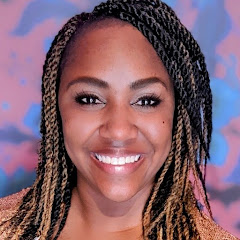
In addition to therapy, Anthony utilized pharmacological interventions, dietary modifications (often involving the elimination of migraine triggers like caffeine or aged cheeses), and various supplements. Managing the psychological component was equally vital. By addressing the anxiety that naturally accompanies the loss of physical balance, Anthony was able to reduce the nervous system’s "fight or flight" response, thereby lessening the intensity of her dizziness.
The workplace also required significant adaptation. As a young professional, Anthony was unable to leave her job due to financial necessity. She utilized blue-light blocking glasses and screen-dimming applications to mitigate the visual triggers of her office environment. Her ability to work from home became a critical "saving grace," allowing her to manage her symptoms in a controlled environment without the added stress of a commute or office-based sensory overload.
The Impact on Family and Social Dynamics
Chronic illness within a family unit often necessitates a painful renegotiation of roles. For Anthony, the most distressing aspect of her condition was the impact on her young children. The sensory sensitivity associated with VM and PPPD meant that the normal noise and activity of a household were often intolerable.
The social cost was also high. Anthony recounts the emotional difficulty of missing family milestones, such as a professional basketball game, because the visual environment of a stadium—crowds, stairs, and fast-paced motion—would have triggered a severe relapse. This isolation is a hallmark of the vestibular experience, where the fear of a "dizzy spell" in public can lead to agoraphobia or severe social anxiety. However, the support of her extended family—including her parents, brother, and friends—provided a necessary emotional safety net during her multi-year recovery process.
Advocacy and the Role of VeDA
Having regained her quality of life, Michelle Anthony has transitioned from a patient to an advocate. She became a volunteer Ambassador for the Vestibular Disorders Association (VeDA) and an active member of the "Dizzy Moms Club," an online support group that provides a platform for mothers navigating similar challenges.
VeDA plays a pivotal role in the vestibular community by providing resources that bridge the gap between patients and specialized care. For individuals like Anthony, the organization serves as a lifeline of knowledge, offering peer-reviewed information that can significantly shorten the time to diagnosis. Anthony’s advocacy work is driven by the belief that early intervention and community support can prevent the years of isolated suffering she endured. "If I can touch one person, that’s enough," she states, emphasizing the importance of visibility for these often-invisible conditions.
Broader Implications for the Healthcare System
The story of Michelle Anthony serves as a case study for the necessary evolution of vestibular healthcare. The economic implications of misdiagnosed vestibular disorders are substantial, involving lost productivity, unnecessary emergency room visits, and redundant testing. A study published in the Laryngoscope estimated that the cost of vestibular-related emergency department visits in the United States exceeds $4 billion annually, much of which is attributed to the lack of specialized triage for dizziness.
Furthermore, Anthony’s journey underscores the need for better education within the medical community. General practitioners and ENTs are often the first point of contact for dizzy patients; however, without specific training in functional disorders like PPPD or neurological conditions like VM, these providers may dismiss symptoms as "anxiety" or "age-related."
As research into the "brain-ear" connection continues to advance, the medical community must adopt a more integrated, multidisciplinary approach to balance disorders. This includes recognizing the validity of patient-reported symptoms even in the absence of abnormal imaging or blood work.
Today, Michelle Anthony has returned to an active life—one that includes traveling, swimming, and even riding roller coasters. While she acknowledges that VM and PPPD require lifelong management, they no longer dictate her identity. Her journey from the "lowest points" of despair to a position of leadership and advocacy provides a powerful testament to the resilience of the human spirit and the transformative power of accurate medical information. Her story is a reminder that while the loss of balance can upend a life, the process of finding it again can lead to a profound sense of purpose.