The Evolution of the Isolated Workforce
To understand the current crisis in lone worker safety, one must examine the operational trajectory of the last two decades. In the early 2000s, the "team-based" approach was the gold standard in manufacturing and logistics; safety was a collective responsibility, with multiple sets of eyes monitoring potential hazards. However, the 2008 financial crisis accelerated the shift toward lean manufacturing, a philosophy that prioritizes the elimination of "waste"—including surplus labor.
By 2015, the proliferation of Internet of Things (IoT) sensors and advanced robotics allowed firms to monitor production lines with fewer human interventions. By 2020, the global pandemic further catalyzed this transition, as social distancing mandates forced companies to reconfigure floor plans to ensure minimal contact. This created a "new normal" where warehouses that once housed 50 employees per shift were redesigned to accommodate only ten, with each worker assigned to a vast, partitioned zone.
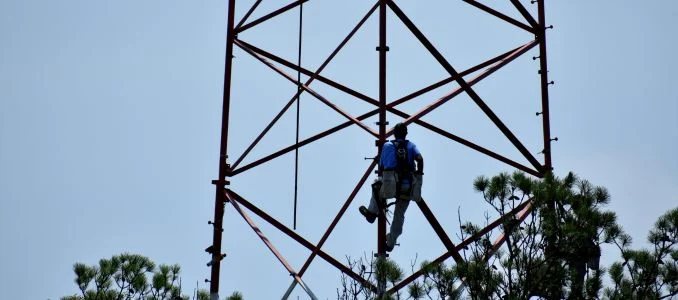
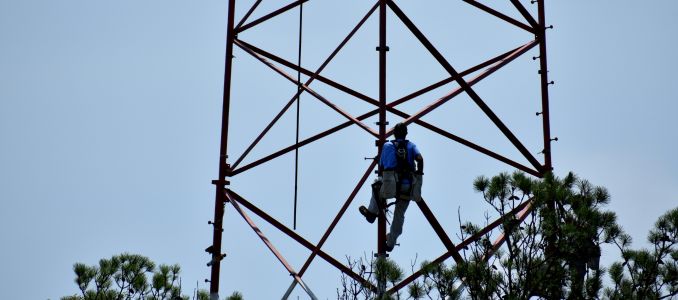
Today, this model has become standard. An employee in a massive, automated fulfillment center may be physically present in a building with hundreds of others, yet be effectively isolated by miles of racking, sound-dampening materials, and strict operational siloing. This is the "hidden" lone worker—someone who is not necessarily working in the woods or on a remote oil rig, but who is nonetheless invisible to their peers for the duration of their shift.
Quantifying the Risk: Data and Demographics
The data provided by the National Institute for Occupational Safety and Health (NIOSH) and other international regulatory bodies suggests that the incident rate for lone workers is disproportionately higher than for those in collaborative environments. The primary issue is not necessarily the inherent danger of the task, but the "time-to-rescue" interval.

In a standard work environment, a worker who suffers a cardiac event, a trip-and-fall, or a machinery entanglement can usually expect immediate intervention. For a lone worker, that window of opportunity often closes within minutes. Research indicates that the severity of workplace injuries for lone workers is often exacerbated by the delay in discovery. A minor laceration that could be treated with a first-aid kit can become a life-threatening hemorrhage if the worker is unable to reach a communication device or if they lose consciousness before help is summoned.
Furthermore, the demographic profile of the lone worker is shifting. It is no longer limited to utility linemen or long-haul truckers. The modern lone worker is increasingly found in:
- Automated Logistics: Personnel managing robotic sorting lines in vast, sound-isolated cages.
- Data Center Maintenance: Technicians working in deep-facility basements with restricted connectivity.
- Agricultural and Forestry Operations: Employees utilizing GPS-guided machinery in remote, unmonitored zones.
- Healthcare/Community Services: Home health aides visiting patients in isolated, unpredictable environments.
The Technological Barrier and the Communication Gap
The physical environment of the modern workplace creates structural barriers that are often overlooked during initial safety assessments. In high-density automated warehouses, the sheer scale of the infrastructure serves as a literal wall between employees. Towering shelving units can block line-of-sight communication, while the decibel levels produced by modern high-speed conveyor systems and automated stamping presses create a sonic barrier that renders human shouting ineffective.

In these environments, traditional "buddy systems" have failed. When a worker is operating a punch press or a forklift, they are frequently required to focus entirely on the machine. If the machine malfunctions or if a safety sensor fails, the worker has no way to alert a colleague who is likely separated by both distance and noise.
Occupational Health and Safety (OHS) professionals are increasingly turning to wearable technology to bridge this gap. Modern solutions include:
- Fall-Detection Sensors: Accelerometer-based devices that automatically trigger an alert to a monitoring center if a sudden impact or loss of verticality is detected.
- Geofencing: GPS-enabled wearables that track employee movement, ensuring they do not enter high-risk zones without authorization.
- Check-in Protocols: Digital systems that require periodic "status pulses," which, if missed, initiate an automated emergency response sequence.
Implications for Corporate Liability and Safety Culture
The shift toward isolated work has profound implications for corporate liability. Under the Occupational Safety and Health Act (OSHA) in the United States, employers have a "General Duty Clause" to provide a place of employment that is free from recognized hazards that are causing or are likely to cause death or serious physical harm. As evidence mounts regarding the risks associated with lone working, the legal threshold for "recognizing" these hazards is rising.

Companies that fail to provide adequate monitoring systems are increasingly finding themselves at the center of negligence litigation. When a lone worker is injured, the lack of a documented safety check-in procedure is often interpreted by courts as a failure to meet the standard of care.
Beyond legal liability, there is the issue of retention and employee trust. Workers who feel that their employer prioritizes production speed over their personal safety are statistically more likely to experience higher levels of burnout and lower job satisfaction. In an era where skilled labor is in short supply, the implementation of robust lone worker safety protocols is not just a regulatory necessity; it is a competitive advantage in workforce retention.
Moving Toward a Holistic Safety Framework
A comprehensive approach to lone worker safety requires moving beyond simple technology. It requires a multi-layered framework that includes:

- Pre-Shift Risk Assessment: Every lone work task must undergo a rigorous assessment that accounts for the specific environment, the worker’s skill level, and the potential for equipment failure.
- Redundant Communication Systems: Relying solely on cellular networks is insufficient, as remote sites often feature "dead zones." Systems must include satellite-based backups or mesh-network communication tools.
- Psychological Support: The psychological toll of working in isolation is well-documented. Fatigue and stress are known precursors to physical accidents. Safety protocols should include regular check-ins that address both the physical state of the worker and their mental readiness.
- Emergency Response Integration: Monitoring technology is only as good as the response it triggers. Data from wearable devices must be piped directly into a centralized dashboard managed by professionals trained to distinguish between a false alarm and a life-threatening emergency.
Future Outlook
As we look toward 2030, the trend of autonomous and isolated work is expected to accelerate. The development of artificial intelligence in safety monitoring—systems that can predict a potential accident based on worker movement patterns before it occurs—is the next frontier.
However, technology must remain a supplement to, not a replacement for, sound human-centric safety policies. The "lone" in lone worker does not have to mean "abandoned." By acknowledging the reality of the isolated workforce and investing in the necessary infrastructure to keep them connected, industry leaders can ensure that the gains of the modern industrial age are not achieved at the cost of human lives. The safety of the isolated worker is a litmus test for the ethical integrity of the modern corporation; those who pass this test will be the ones who thrive in an increasingly automated world.