Context and Collaborative Origins
Augmentative and Alternative Communication encompasses a broad range of strategies and tools—from low-tech communication boards to high-tech speech-generating devices—that support individuals who are unable to rely on verbal speech to express their needs, thoughts, and feelings. Despite the global prevalence of individuals requiring such support, informational resources in native languages have historically been fragmented or gated behind expensive clinical training programs.
The initiative to bridge this gap began as a partnership between ISAAC Brazil, the regional branch of the International Society for Augmentative and Alternative Communication, and Fiocruz, one of the world’s most prominent public health research institutions. Originally drafted in Portuguese to serve the South American market, the document underwent a rigorous translation and localization process to ensure its concepts remained culturally and linguistically accurate for the broader Spanish-speaking community. By leveraging the research capabilities of Fiocruz and the clinical expertise of ISAAC, the resulting guide provides a bridge between medical necessity and daily life application.
Chronology of Development
The development of this resource follows a multi-year trend toward digitizing and open-sourcing therapeutic materials. Throughout 2024 and 2025, the working group conducted a series of stakeholder consultations, gathering input from speech-language pathologists, educators, and, most importantly, individuals who use AAC devices as their primary means of interaction.
- Early 2025: Conceptualization of the guide, focusing on the lack of standardized, accessible literature in Latin America.
- Mid-2025: Drafting of the original Portuguese edition by a multi-disciplinary team at Fiocruz.
- Late 2025: Expansion of the project scope to include a Spanish-language adaptation, reflecting the demographic reach of the ISAAC network.
- April 2026: Official release of the bilingual resource, coinciding with global awareness initiatives for inclusive communication.
Core Content and Clinical Foundations
The guide is structured to serve three distinct audiences: families, educational professionals, and clinical service providers. It prioritizes the "Universal Design" philosophy, ensuring that the methodologies discussed are applicable across various socio-economic settings.
The manual addresses several pillars of AAC implementation:
- Legal Rights and Advocacy: A detailed section outlining the international frameworks that protect the right to communication, including the UN Convention on the Rights of Persons with Disabilities.
- Basic Concepts: Definitions of low-tech versus high-tech systems and the importance of modeling—a process where communication partners use the AAC system themselves to show the user how to navigate it.
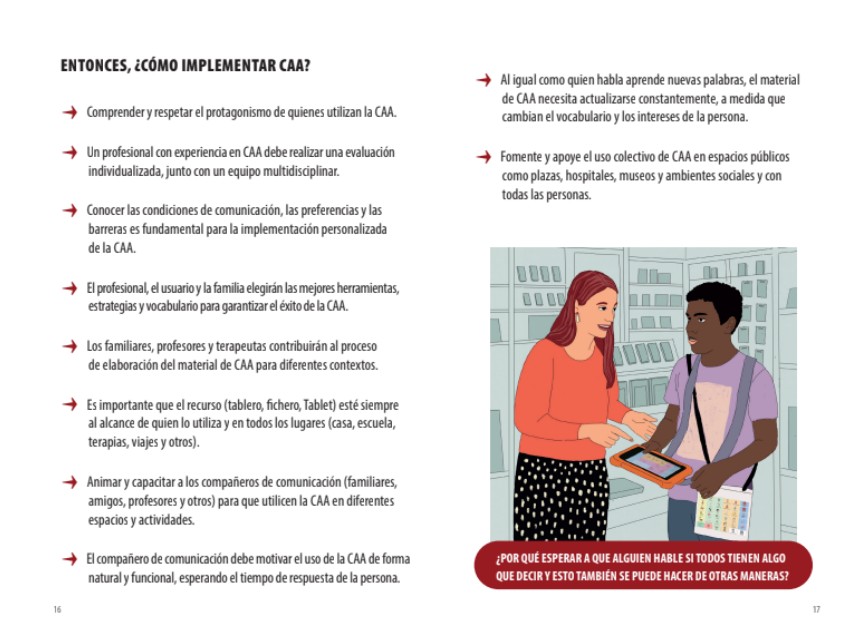
- Implementation Strategies: Step-by-step guidance on how to integrate devices into daily routines, moving away from "therapy-only" usage toward 24/7 communication access.
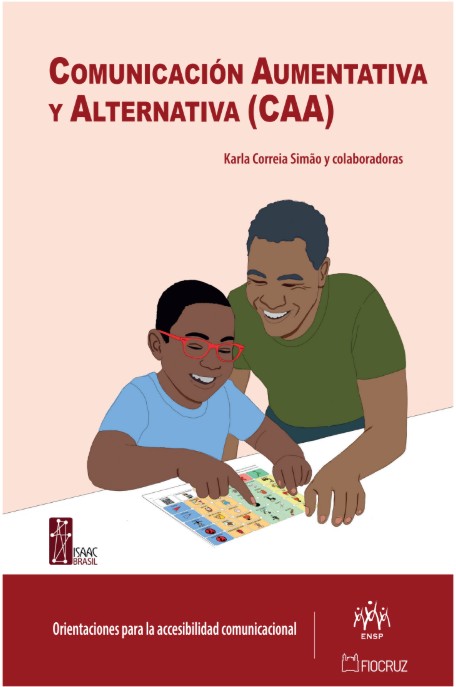
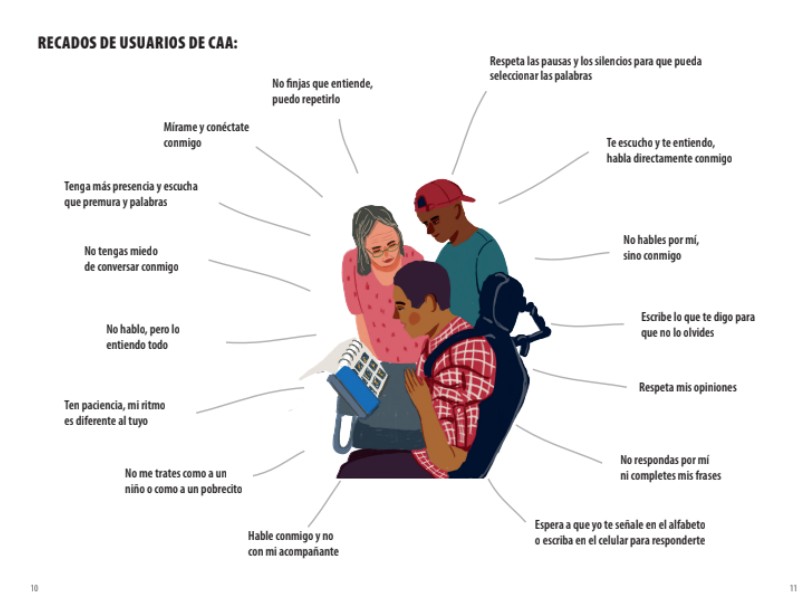
- Representation: A notable feature of the publication is its reliance on illustrations depicting real-life AAC users, which helps normalize the use of assistive technology in public spaces and educational settings.
Statistical Context and Prevalence
The necessity for such a resource is underscored by current global health data. According to the World Health Organization (WHO), more than 1 billion people live with some form of disability, a significant portion of whom experience limitations in communication. In many developing nations, the ratio of speech-language pathologists to individuals with complex communication needs remains critically low, often exceeding 1:50,000 in rural areas.

By providing a standardized, free, and digital-first guide, the project effectively decentralizes expert knowledge. Preliminary data from digital distribution channels suggest that the guide is already reaching underserved communities where access to private specialized clinics is non-existent.
Implications for the AAC Community
The release of this guide serves as a proof-of-concept for international non-profit collaboration. By removing the financial barrier to entry, the publishers have created a mechanism for faster dissemination of best practices.
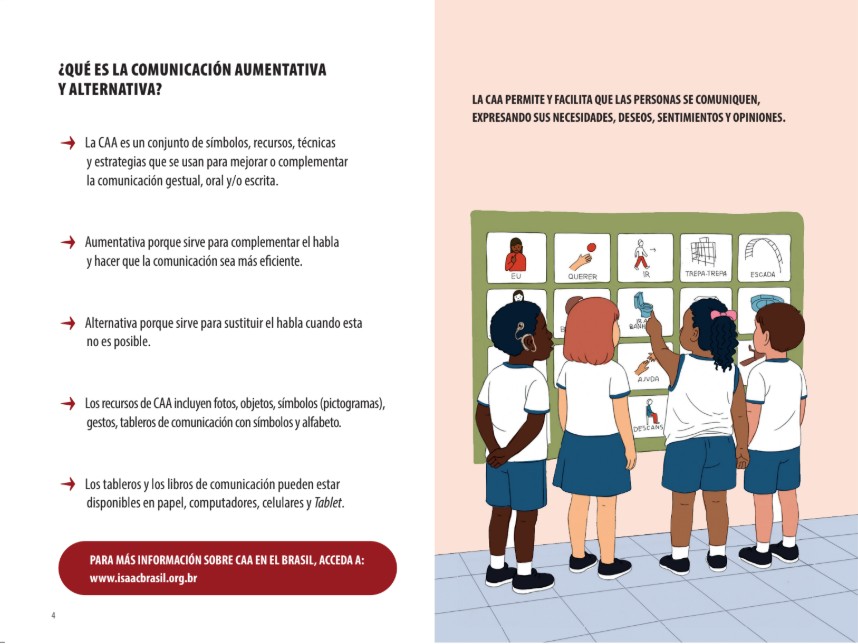
"The goal," according to representatives from the project, "is to ensure that the method of communication never becomes the obstacle to a person’s right to participate in society." By standardizing terminology and implementation strategies, the guide enables more consistent care for individuals who may move between different school systems or health providers.
Furthermore, the guide’s emphasis on the "lived experience" of its subjects—using images of actual users—shifts the narrative of AAC from a purely clinical, medicalized intervention to a human rights issue. This aligns with the "Nothing About Us Without Us" movement, which advocates for the full inclusion of people with disabilities in the creation of policies and tools that affect their lives.
Official Response and Future Outlook
ISAAC Spanish and related disability advocacy groups have championed the guide as a "foundational text" for the coming decade. Since its launch, the resource has seen widespread adoption in teacher training programs and has been shared across social media platforms like Instagram and Facebook to reach caregivers who might otherwise remain unaware of the support available to them.
The organizers have stated that the document is intended to be a "living resource," with plans for periodic updates based on user feedback and advancements in eye-tracking technology and AI-driven speech synthesis. The project is expected to influence upcoming legislation in various Spanish-speaking countries regarding the mandatory provision of communication support in public health systems.
Accessing the Resource
The guide remains available as a free, open-access download. Recognizing the digital divide, the publishers have ensured that the PDF is optimized for mobile devices, allowing for easy access on standard smartphones, which are often the primary computing devices in many of the targeted regions. Organizations interested in distributing the guide are encouraged to contact ISAAC Spanish through their official channels, where they can obtain promotional materials and QR-code enabled links for easy sharing.
As the global community continues to prioritize accessibility, the partnership between Fiocruz and ISAAC serves as a replicable model. By combining academic rigor with grassroots accessibility, they have provided a template for how inter-institutional cooperation can solve systemic problems, ensuring that communication—the most fundamental human tool—remains a right for all, rather than a privilege for the few.