
The Global Challenge of Untreated Hearing Loss and Evolving Solutions
Hearing loss represents one of the most prevalent chronic health conditions globally, particularly affecting older populations. According to the World Health Organization (WHO), over 1.5 billion people worldwide experience some degree of hearing loss, with approximately 430 million requiring rehabilitation services. Projections indicate that by 2050, nearly 2.5 billion people will have some level of hearing loss, and at least 700 million will require hearing rehabilitation. Untreated hearing loss is not merely an inconvenience; it is increasingly linked to a host of serious health consequences, including cognitive decline, increased risk of dementia, social isolation, depression, and a higher incidence of falls. Despite these profound impacts, global statistics show that adoption rates for hearing aids remain remarkably low, with only a fraction of those who could benefit actually using them. Historical barriers to accessing hearing care have included high costs, social stigma, limited access to qualified professionals, and a general lack of public awareness regarding the importance of hearing health.
In response to these challenges, particularly the low uptake of traditional hearing aids and the significant population living with untreated mild-to-moderate hearing loss, regulatory bodies and innovators have sought to democratize access to hearing technology. A significant milestone in this effort occurred in the United States in August 2022, when the Food and Drug Administration (FDA) finalized a rule establishing a new category of over-the-counter (OTC) hearing aids. This landmark decision allowed adults with perceived mild-to-moderate hearing loss to purchase qualifying devices directly from retail stores or online without a medical examination, prescription, or professional fitting. The intent behind this policy was clear: to increase accessibility, reduce costs, and simplify the purchasing process, thereby encouraging more individuals to address their hearing needs. Similar movements towards consumer-driven healthcare and self-fitting technologies are being explored or implemented in various forms across other developed nations. However, the Alnafjan study provides a timely counterpoint, indicating that while accessibility is crucial, it may not be the sole determinant of consumer adoption.
A Deep Dive into Older Adults’ Preferences: Methodology and Key Findings
The BMC Geriatrics study meticulously analyzed data collected between 2016 and 2018, predating both the widespread adoption of telehealth spurred by the COVID-19 pandemic and the introduction of FDA-regulated OTC hearing aids in the U.S. This chronological context is vital, as it provides a baseline understanding of consumer preferences before these significant shifts in the healthcare landscape. The research encompassed a robust sample of 9,510 eligible participants, all aged 60 and older. The participants were drawn from four diverse, high-income countries: Australia, Canada, England, and the United States, allowing for cross-cultural comparisons within similar healthcare infrastructures.
The core of the study revolved around three primary questions, each answered by approximately 8,000 respondents: where they preferred to obtain hearing health information, where they preferred to receive hearing testing, and where they preferred to acquire hearing aids or other hearing devices. Across all three categories and all four participating countries, the findings were remarkably consistent: older adults overwhelmingly favored traditional healthcare environments. This included audiologists’ offices, physicians’ offices, and hospitals.
For hearing health information, doctors and official medical or government websites were among the most preferred sources. Conversely, less authoritative and often commercial channels, such as radio and internet advertisements, ranked among the least preferred. This preference highlights a desire for credible, professionally vetted information, aligning with the trust associated with established medical institutions.
A similar pattern emerged when participants were asked about hearing testing. Audiology practices, physicians’ offices, and hospitals were consistently chosen over more commercial or community-based alternatives like pharmacies, supermarkets, technology retailers, community centers, or self-testing options. This indicates a strong inclination towards professional diagnostic accuracy and expert interpretation of results. While preferences were broadly similar, some national nuances were observed: audiologists’ offices proved particularly popular among respondents in Australia, Canada, and the United States, reflecting a strong reliance on specialized hearing care professionals in these regions. Participants in England, however, showed a stronger preference for general practitioners (GPs) and hospital-based services, potentially reflecting the structure and accessibility of their National Health Service (NHS), where primary care physicians often serve as the first point of contact for health concerns and referrals.
The preference for obtaining hearing devices followed much the same pattern, with audiologists’ offices, doctors’ offices, and hospitals favored over mail-order services and technology retail channels. This suggests that the process of selecting, fitting, and purchasing a hearing device is perceived by older adults as a complex medical decision requiring professional guidance and support, rather than a straightforward retail transaction.
Crucially, these preferences remained broadly consistent across various demographic and clinical subgroups. The study found no significant deviation in preferences regardless of the participants’ degree of hearing loss (from mild to severe), their specific age group within the 60+ cohort, their previous experiences in seeking help for hearing issues, or even whether they completed the survey online or in person. This robust consistency underscores the deeply ingrained nature of these preferences among the surveyed population. The researchers explicitly noted this stability, stating: “Regardless of the participants’ hearing-loss severity, prior help-seeking, survey mode, or geographic location, they consistently preferred to seek help in person, in provider-mediated clinical settings.” Interestingly, the study also observed that participants who reported having hearing loss demonstrated an increased preference for hearing testing in audiologists’ offices, potentially reflecting a greater familiarity with, and confidence in, specialized hearing care professionals gained through their personal experiences.

The Trust Factor: Why Medical Settings Resonate
The consistent preference for traditional medical settings is not merely a matter of habit; it reflects a deeper underlying value: trust. Medical environments inherently convey a sense of authority, expertise, and professionalism that retail or online channels may struggle to replicate. For older adults navigating complex health decisions, this trust is paramount.
Medical settings are associated with diagnostic accuracy, ensuring that any underlying medical conditions contributing to hearing loss are identified and addressed. The involvement of an audiologist or physician provides professional oversight, offering reassurance that the care received is appropriate, evidence-based, and tailored to individual needs. There is also the expectation of continuity of care—the idea that a healthcare provider will offer ongoing support, adjustments, and follow-up, forming a long-term relationship essential for managing a chronic condition like hearing loss. This contrasts sharply with the often transactional nature of retail purchases, where ongoing support can be less certain or personalized.
Furthermore, traditional medical settings are regulated environments with established protocols for patient safety, privacy, and quality of care. These institutional safeguards contribute to a sense of confidence and security for patients, particularly when dealing with sensitive health issues and expensive medical devices. The expertise of audiologists, who possess advanced degrees and specialized training in hearing and balance disorders, is a key component of this trust. They are equipped to conduct comprehensive evaluations, differentiate between various types of hearing loss, and provide personalized counseling and rehabilitation, capabilities that extend far beyond what a retail assistant or online algorithm can offer.
Implications for Over-the-Counter Hearing Aids and Future Models of Care
The findings of the Alnafjan study arrive at a critical juncture, coinciding with ongoing global efforts to make hearing healthcare more accessible through OTC hearing aids, self-fitting technologies, remote services, and the integration of hearing solutions into consumer electronics. While the study’s data predates the U.S. FDA’s OTC hearing aid category establishment in 2022, its implications for the adoption and integration of these newer modalities are profound.
The study suggests that merely expanding access through non-traditional channels may not automatically translate into widespread adoption if it deviates too far from established preferences for professional care. This perspective is reinforced by more recent industry research. The 2022 U.S. MarkeTrak survey, conducted after the FDA’s OTC rule was finalized, reported that approximately 78% of respondents expressed a preference for obtaining future hearing aids through traditional, in-person channels involving a hearing care professional. This sentiment was further solidified by the 2025 MarkeTrak survey, which found that an even higher percentage—85% of hearing aid owners—preferred to make future purchases in person with professional assistance. These subsequent findings, while separate from the BMC Geriatrics study, strongly corroborate the enduring influence of professional involvement on consumer preferences.
The inherent challenge lies in reconciling the desire for increased accessibility and affordability with the demonstrated preference for professional guidance and trusted medical environments. Traditional medical settings, while preferred, may not have sufficient capacity to meet the growing demand for hearing healthcare, particularly as global populations continue to age. This demographic shift necessitates innovative solutions that do not compromise patient trust or quality of care.
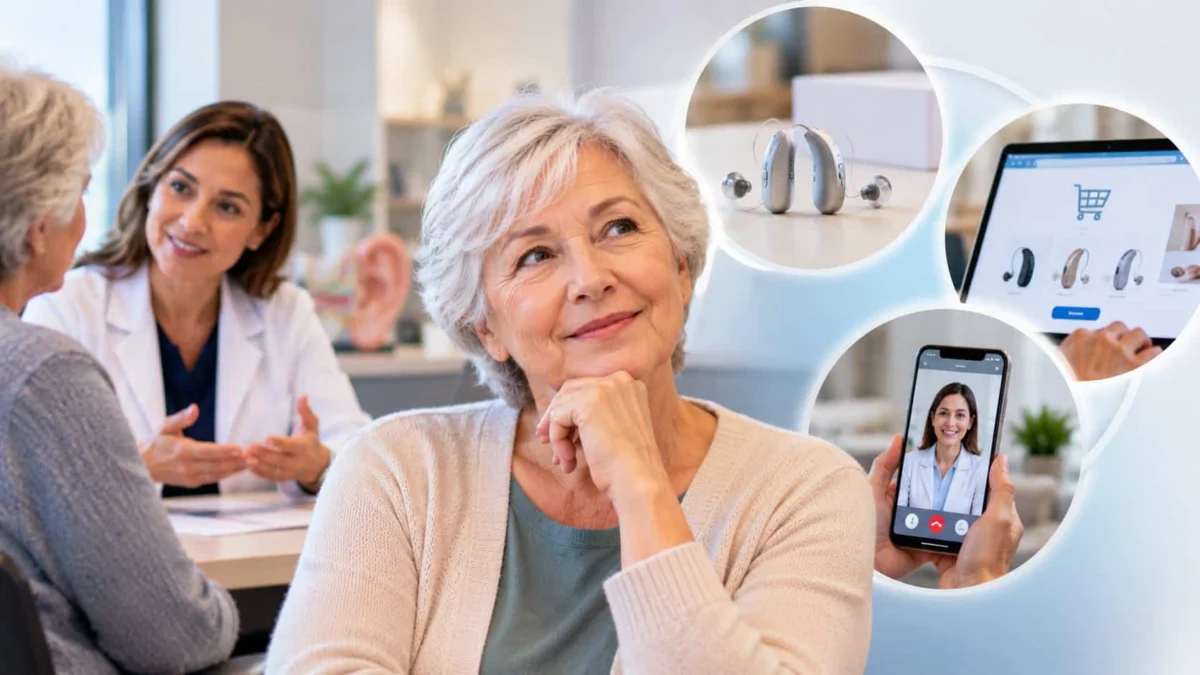
The researchers propose a pragmatic approach: integrating alternative services within established healthcare environments. This model could offer a viable pathway to expanding access while preserving the professional relationships and perceived quality of care that many older adults value. As articulated by Alnafjan and colleagues in BMC Geriatrics, “Employing trained personnel and offering complimentary in-person and remote services situated in medical-type settings, under the supervision of professional hearing care providers, may be a viable approach.” Such hybrid models could involve audiologists working collaboratively with other appropriately trained personnel, leveraging remote follow-up services, and incorporating accessible hearing technologies within care pathways that patients already recognize and trust. For instance, a medical clinic could offer a range of hearing solutions, from professionally fitted traditional hearing aids to OTC devices, all overseen by a hearing care professional who can provide guidance, initial setup, and ongoing support. This approach would allow consumers to benefit from the convenience and potentially lower cost of OTC options while still having access to expert consultation and follow-up.
Broader Impact and Implications for Stakeholders
The findings hold significant implications for various stakeholders within the hearing healthcare ecosystem.
For Hearing Care Professionals and Audiologists: The study unequivocally reinforces the central and indispensable role of professional guidance, patient relationships, and accessible clinical services. As the industry continues to explore new ways of reaching people with untreated hearing loss, audiologists can leverage this insight to emphasize the unique value proposition of their expertise, comprehensive care, and personalized approach. It encourages them to consider how new technologies, including OTC devices, can be integrated into their practices in a professionally supervised manner, rather than viewing them as direct competitors.

For Policymakers and Public Health Officials: The research highlights the complexities of healthcare policy design. While initiatives like OTC hearing aids aim to address accessibility gaps, policymakers must also consider consumer preferences and the factors that drive trust and utilization. Future policies may need to support the development of integrated care models that blend innovation with established professional oversight, ensuring that expanded access translates into effective and trusted care.
For Manufacturers and Retailers of OTC Hearing Aids: The study suggests that successful market penetration for OTC devices may require more than just convenience and lower price points. Manufacturers and retailers should explore strategies to build trust, perhaps through partnerships with healthcare providers, offering robust post-purchase support, or developing clear pathways for professional consultation when needed. The emphasis on "provider-mediated clinical settings" indicates that a purely retail-driven model, without some form of professional linkage, may face uphill battles in gaining widespread acceptance among older demographics.
For Public Health Campaigns: Understanding consumer preferences is crucial for designing effective public health campaigns that encourage individuals to address hearing loss. Campaigns should not only raise awareness about the availability of various options but also emphasize the benefits of professional consultation and the importance of a trusted healthcare relationship.
Limitations and Future Research Directions
The authors responsibly highlight several limitations that warrant consideration when interpreting the findings. As previously noted, the survey responses were collected between 2016 and 2018. This pre-pandemic, pre-OTC timeframe means that consumer attitudes may have evolved as newer technologies and purchasing options have become more familiar and as experiences with telehealth have become more common. The convenience sampling method used for participant recruitment, coupled with a study population that was predominantly White, limits the generalizability of the findings to more diverse populations or broader geographic regions.
Furthermore, the research examined "stated preferences" rather than actual purchasing behavior. There can often be a discrepancy between what people say they prefer and the decisions they make when faced with real-world factors such as differences in cost, convenience, immediate availability, or even marketing influences. A preference for a professional setting might be weighed against the significant cost savings of an OTC device, leading to a different actual choice.
Despite these limitations, the study provides an invaluable foundation for understanding the deeply rooted preferences of older adults in hearing healthcare. It underscores the need for ongoing research to track how these preferences evolve in light of new technologies and delivery models. Future studies should aim to survey diverse populations, explore actual purchasing behaviors, and investigate how newer generations of older adults, who may be more accustomed to digital and consumer-driven solutions, will approach their hearing healthcare decisions.
Ultimately, expanding access to hearing technologies is a complex endeavor that requires more than simply introducing new purchasing channels. It demands a nuanced understanding of where consumers feel comfortable seeking help—and critically, why they feel that comfort. Integrating these insights into the design of future hearing healthcare delivery models will prove equally important in achieving the overarching goal of improving hearing healthcare utilization and addressing the global burden of untreated hearing loss.
Reference
Alnafjan, F., Davis, A. C., Lee, M. L., McMahon, C. M., Mokdad, A. H., Mosley, C. L., Pichora-Fuller, M. K., & Tremblay, K. L. (2026). Consumer preferences for hearing health care information and services as described by older adults surveyed in Australia, Canada, England, and the United States. BMC Geriatrics, 26, Article 1285. https://doi.org/10.1186/s12877-026-07819-7