The Genesis and Evolution of Core Vocabulary Instruction
The Year of Core Vocabulary Words project emerged from the necessity to move beyond sporadic or incidental teaching methods. When the project launched, the goal was to provide a systematic, monthly roadmap for instructors. The initial iteration focused on a foundational list of words, which proved successful enough to warrant a second, expanded series. Over the years, this evolved into a multi-tiered ecosystem, catering to diverse age groups and developmental stages, ranging from early childhood intervention to high school-level transition planning.
A Chronological Timeline of Development
The project’s expansion reflects a growing recognition of the need for age-appropriate, scaffolded learning. The chronology of these resources illustrates the deepening commitment of the AAC community to educational excellence:
- Initial Series (The Foundation): The original Year of Core Vocabulary Words established the monthly framework, providing a baseline for clinicians and educators to introduce specific words alongside evidence-based modeling techniques.
- Expansion (Set 2): Following the success of the initial list, a second set of resources was curated, introducing new vocabulary sets and pedagogical strategies to maintain student engagement and build complexity.
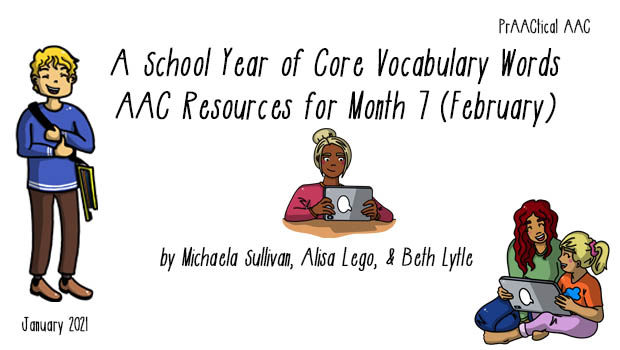
- 2020: The School Year of Core Vocabulary: Recognizing that classroom settings require more structured, curriculum-aligned materials, experts Michaela Sullivan, Alisa Lego, and Beth Lytle developed the School Year of Core Vocabulary Words. This iteration integrated lesson plans, classroom activity ideas, and data-tracking suggestions, specifically tailored to the K-12 environment.
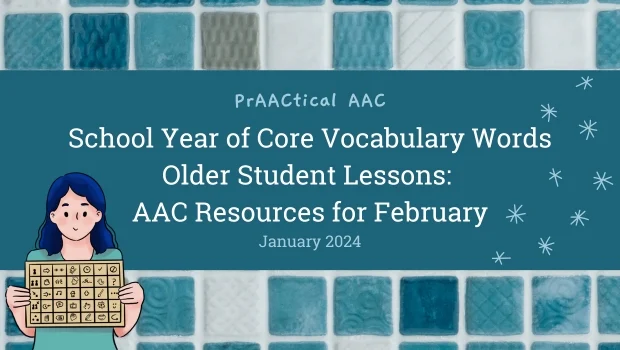
- 2023–2024: Older Student Initiatives: Addressing the often-overlooked demographic of adolescent and young adult AAC users, Michaela Sullivan and Lindsay Dougherty introduced a series of lessons geared toward high schoolers. These resources shifted the focus from early-childhood modeling to functional, age-respectful communication, emphasizing autonomy and self-advocacy.
Data-Driven Pedagogical Implications
The efficacy of the Year of Core Vocabulary resources is supported by the broader body of research surrounding AAC intervention. According to clinical data in the field of speech-language pathology, consistent modeling—often referred to as "aided language stimulation"—is the most effective way to teach AAC users how to navigate their communication devices. By providing educators with a structured calendar, these resources reduce the cognitive load on the instructor, allowing for more consistent and frequent modeling opportunities.
Research indicates that when AAC users are exposed to a focused set of core words within a consistent context, their ability to generalize those words to novel situations increases significantly. Furthermore, the inclusion of activity calendars, which have been championed by experts such as Rachael Langley, ensures that communication practice is embedded within natural daily routines. This prevents the isolation of communication training from functional classroom activities, a common pitfall in previous pedagogical models.
Expert Perspectives and Community Collaboration
The development of these materials has been a collaborative, iterative process. By soliciting guest contributors, the Year of Core Vocabulary series has tapped into the diverse, real-world experiences of clinicians working in varied settings, from high-resource urban districts to remote, underfunded rural schools.
Clinicians and educators who utilize these resources report a notable shift in their teaching philosophy. By moving away from "word-of-the-week" approaches that lack longitudinal planning, professionals are able to build a cumulative knowledge base for their students. The reactions from the broader AAC community emphasize the importance of these free, accessible, and high-quality resources. For many families and under-resourced schools, these tools provide a level of clinical support that would otherwise be cost-prohibitive.
Broader Impact on Inclusive Education
The implementation of systematic core vocabulary instruction has profound implications for educational equity. For students with complex communication needs (CCN), the ability to participate in general education curricula is heavily dependent on their communicative proficiency. When these students are provided with the same, if not more, structured linguistic support as their neurotypical peers, the gap in academic achievement begins to narrow.
The School Year of Core Vocabulary resources serve as a bridge between specialized therapy and classroom instruction. By aligning with standard educational cycles, the materials allow for a more cohesive team approach. When an SLP, a special education teacher, and a classroom aide all have access to the same core vocabulary goals for the month, the student benefits from a unified instructional environment. This consistency is the hallmark of effective AAC intervention and is essential for developing the communicative autonomy that every student deserves.
Future Directions for AAC Resources
As we move further into the 2026 academic calendar, the focus remains on accessibility and iteration. The reprisal of these monthly posts serves as a reminder that consistency is the cornerstone of progress. The digital nature of these materials—offering printable calendars, lesson guides, and multimedia support—allows them to be adapted for remote, hybrid, and in-person learning environments.
Looking ahead, the evolution of these resources will likely involve more integration with digital AAC software platforms and data-logging tools. As the industry moves toward more sophisticated, high-tech communication solutions, the need for human-centered, pedagogically sound content remains unchanged. The contributions of experts like Zangari, Sullivan, Lego, and Lytle have created a living archive of best practices that will continue to inform the field for years to come.
Conclusion
The Year of Core Vocabulary initiative represents more than just a collection of lessons; it is a vital infrastructure for the AAC community. By providing the tools to foster intentional, frequent, and contextually relevant communication, these resources empower both the instructor and the learner. For educators and therapists navigating the complexities of speech-language support, these monthly resources remain an essential component of professional development and direct intervention. As the series continues to support students from preschool through high school, its impact on the development of communication and self-advocacy skills for individuals with complex communication needs remains a landmark achievement in the field of inclusive education. Through continued collaboration and the widespread adoption of these evidence-based practices, the goal of creating a truly communicative environment for all students becomes increasingly attainable.