The Anatomy of a Workplace Hazard
Construction sites are inherently dynamic, with shifting hazards that require constant vigilance. When a guardrail is left unbolted or a piece of equipment is operated without a pre-shift inspection, these actions are frequently viewed as inconsequential—provided no immediate injury occurs. However, this perception of safety is deceptive. According to the "Swiss Cheese Model" of accident causation, hazards move through various layers of defense. When minor violations occur, holes are punched in these protective layers. If enough holes align, a catastrophic event becomes inevitable.
Data from the Bureau of Labor Statistics (BLS) highlights the persistent nature of these risks. In recent fiscal reporting, construction-related fatalities remained near record highs, with the "Fatal Four"—falls, struck-by incidents, electrocutions, and caught-in/between hazards—accounting for more than half of all construction worker deaths. A critical analysis of these incidents shows that in the vast majority of cases, multiple safety protocols had been bypassed in the days or weeks leading up to the tragedy.

The Normalization of Deviance: A Cultural Crisis
The psychological phenomenon known as the "normalization of deviance" describes how individuals or groups begin to accept previously unacceptable behaviors as standard practice. In a construction context, this begins when a worker skips a safety check to save five minutes on a task and suffers no negative consequences. The lack of a "negative feedback loop"—an injury or a reprimand—reinforces the behavior.
This normalization is contagious. When an experienced crew leader skips a harness check or ignores a lockout/tagout procedure, junior staff members internalize these shortcuts as the "real" way to get the job done. The official safety manual, gathering dust in the site trailer, becomes secondary to the informal, shortcut-laden culture established on the floor. By the time a supervisor notices the deviation, it is often too late; the unsafe practice is already entrenched in the daily workflow of the team.

Drivers of Non-Compliance: Beyond Negligence
Attributing safety violations solely to worker negligence is a simplistic approach that fails to address root causes. Industry experts point to three primary drivers: time pressure, cognitive fatigue, and inadequate leadership.
- Time Pressure and Productivity Mandates: In an industry driven by tight margins and rigid project schedules, workers often feel implicit or explicit pressure to prioritize speed over safety. When a project is behind schedule, the perceived cost of a ten-minute safety audit is weighed against the pressure to hit a milestone.
- The Curse of Expertise: Experienced workers are statistically more likely to engage in "shortcut behavior." After years of performing a task without incident, the perceived risk drops to near zero. This overconfidence leads to a gradual loosening of safety standards, as the worker believes they have the skill to mitigate hazards that would threaten a novice.
- Supervisory Silence: The role of the site foreman is the most critical variable in site safety. When supervisors ignore minor infractions—such as a worker failing to wear high-visibility gear or neglecting to secure a ladder—they provide tacit approval for that behavior. This silence acts as a green light for the crew to continue cutting corners.
Chronology of a Cascade
To understand how minor violations evolve into major accidents, one must look at the timeline of a typical site failure.

- Day 1: A safety clip is removed from a scaffolding platform to allow easier movement of materials. No injury occurs.
- Day 4: The behavior is repeated by other crew members because the original modification was never corrected.
- Day 12: A supervisor walks past the modified scaffolding but fails to issue a correction, focusing instead on production quotas.
- Day 20: A worker slips on the platform. Because the safety clip was missing, there is no secondary restraint to catch the fall.
- Day 20 (Aftermath): A major incident is recorded. The investigation identifies the slip as the primary cause, but the foundational cause—the modification of the safety equipment three weeks prior—is identified as the systemic failure.
Industry Implications and Official Responses
Industry associations, including the Associated General Contractors of America (AGC), have increasingly shifted their focus toward "Safety Climate" initiatives. These programs move away from punitive measures—which often lead to the underreporting of hazards—toward a culture of "psychological safety," where workers feel empowered to halt production if they identify a risk without fear of retaliation.
The implications for firms are significant. Beyond the moral imperative to protect human life, the economic impact of safety failures is catastrophic. Direct costs, such as medical bills and workers’ compensation, are often dwarfed by indirect costs, including project delays, legal fees, loss of reputation, and increased insurance premiums. Furthermore, firms with poor safety records face heightened scrutiny from regulatory bodies, leading to frequent inspections and potential project shutdowns.

The Path Forward: From Compliance to Culture
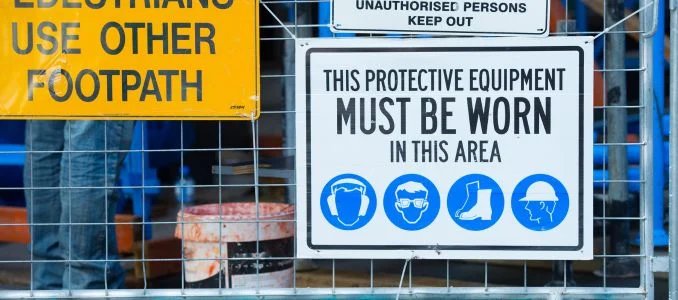
Transforming safety culture requires more than just updated signage or quarterly training sessions. It requires a fundamental shift in how construction firms manage the "small stuff."
- Active Supervision: Foremen and project managers must be held accountable for the safety culture they cultivate. This includes rewarding "near-miss" reporting, where workers identify a hazard before it results in an injury.
- Data-Driven Interventions: Using mobile safety applications to track near-miss data allows companies to identify trends before they manifest as accidents. If data shows a spike in "missing guardrail" reports, the company can address the root cause—such as poor site logistics or equipment maintenance—before a fall occurs.
- Peer-to-Peer Accountability: Empowering workers to correct one another in a professional, non-confrontational manner is the most effective way to combat the normalization of deviance. When safety becomes a team responsibility rather than a top-down mandate, compliance rates increase significantly.
Ultimately, the goal of any robust safety program is to move from a reactive posture—where the response to an accident is the primary driver of change—to a proactive one. Every "small" violation is a warning signal. In the construction industry, the difference between a minor oversight and a fatal incident is often a matter of seconds and inches. By treating every minor shortcut as a significant event, construction firms can dismantle the chain of failures before they ever begin, ensuring that the final outcome of every project is the safe return of every worker to their family. The evidence is clear: safety is not a rule to be followed; it is a discipline to be practiced, every hour, on every site, by every member of the crew.