The findings, released by federal regulators in late October 2026, underscore the persistent dangers associated with excavation work, an industry sector that remains a focal point for OSHA enforcement due to the high fatality rate associated with trench collapses. The citations include three repeat violations and one serious violation, reflecting a pattern of non-compliance that has prompted the agency to seek maximum accountability from the contractor.
Chronology of the Inspection and Regulatory Findings
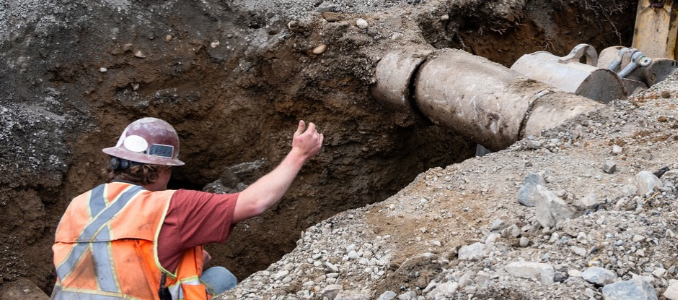
The OSHA inspection was not a routine audit but a targeted enforcement action triggered by the agency’s National Emphasis Program. This program allows inspectors to initiate an investigation upon observing hazardous conditions, such as those found at the Always Underground LLC site. Upon identifying workers operating in an unprotected trench—a situation that presents an immediate danger to life and health—inspectors conducted a thorough assessment of the site’s safety protocols.
The documentation provided by OSHA highlights four primary areas of concern:
- Lack of Cave-in Protection: The most critical finding involved the absence of any protective system, such as trench boxes, shoring, or sloping, designed to prevent the walls of the excavation from collapsing.
- Inadequate Egress: The trench lacked a safe, designated means for workers to exit the excavation in the event of an emergency, violating basic requirements for rapid egress.
- Improper Spoil Pile Management: Equipment and excavated materials were stored less than two feet from the edge of the trench, creating a risk of surcharge loads that could cause the walls to collapse or result in materials falling onto workers below.
- Failure to Provide Personal Protective Equipment (PPE): The company failed to provide workers with hard hats, leaving them vulnerable to injuries from falling debris or equipment failures.
The classification of the first three items as "repeat violations" suggests that the employer had previously been cited for similar infractions. Under OSHA’s enforcement framework, a repeat violation is one in which the employer has been previously cited for a substantially similar condition within the past five years. This designation carries increased fines and demonstrates a failure by the employer to implement long-term corrective measures after prior warnings.

The Anatomy of Trenching Hazards
Trenching and excavation represent some of the most dangerous activities in the construction industry. According to data maintained by the Bureau of Labor Statistics (BLS), cave-ins are the primary cause of fatalities in this sector. A single cubic yard of soil can weigh as much as 3,000 pounds—roughly the weight of a compact car. When a trench collapses, the weight of the soil can pin workers, causing asphyxiation or crush injuries within seconds.
The "two-foot rule" referenced in the OSHA citation is a fundamental safety standard. By keeping spoils and heavy equipment at least two feet back from the edge of an excavation, contractors prevent "surcharge loads" from exerting unnecessary pressure on the trench walls. When this distance is ignored, the risk of a wall failure increases exponentially, particularly in areas where soil composition may be loose or saturated with water.
Furthermore, the requirement for a safe means of egress—such as a ladder, ramp, or stairway—is mandatory for any trench four feet or deeper. The fact that workers were operating at a depth of eight feet without such a mechanism left them with virtually no chance of survival or escape should a collapse have occurred.

Implications for the Utility Construction Industry
The $380,664 penalty serves as a stark reminder of the financial and operational risks associated with safety non-compliance. Beyond the immediate fiscal impact, such citations can lead to long-term consequences for a contractor’s ability to secure municipal or federal utility contracts. Many government-led projects require contractors to demonstrate a clean safety record or a low Experience Modification Rate (EMR) as a condition of bidding.
Industry experts note that the cost of implementing proper trenching safety equipment—such as aluminum hydraulic shoring or steel trench boxes—is often a small fraction of the potential costs associated with a fatality or a heavy OSHA fine. The persistence of these violations suggests that some companies continue to view safety as an optional cost rather than a fundamental operational necessity.
Company Recourse and Next Steps
Following the receipt of the citations, Always Underground LLC has been granted a period of 15 business days to respond. The company has several procedural options available under the Occupational Safety and Health Act:

- Compliance: The employer may choose to accept the findings, pay the proposed penalties, and provide evidence that the hazardous conditions have been permanently corrected.
- Informal Conference: The company may request a meeting with the local OSHA area director to discuss the citations. In some cases, this can lead to a settlement agreement or a modification of the penalties if the employer demonstrates a proactive commitment to future compliance.
- Contestation: The employer has the right to formally contest the findings before the Occupational Safety and Health Review Commission (OSHRC), an independent, quasi-judicial agency that hears appeals regarding OSHA citations.
Should the company choose to contest, the case could move into a lengthy legal process involving administrative law judges. However, given the evidence captured during the site visit—including the observed presence of workers in the hazardous trench—the burden of proof remains heavily on the employer to explain the deviations from established federal safety standards.
Broader Regulatory Context
OSHA’s National Emphasis Program on Trenching was reinvigorated in recent years to combat a spike in trenching-related deaths. By empowering inspectors to stop work and issue immediate citations upon identifying life-threatening conditions, the agency has shifted its strategy from post-incident investigation to proactive prevention.
The agency maintains a comprehensive suite of resources for employers, including the "Trenching and Excavation" compliance assistance guide, which provides technical details on soil classification, protective systems, and emergency response planning. OSHA has consistently encouraged contractors to utilize these resources, emphasizing that "free help" is available to any employer seeking to bring their job sites into full compliance with federal law.

As the industry faces ongoing challenges with labor shortages and tight project timelines, the pressure to complete work quickly often competes with the need for safety. However, federal regulators maintain that there is no legitimate justification for bypassing safety protocols. The case of Always Underground LLC highlights that when safety is deprioritized, the consequences are not only legal and financial but represent a fundamental failure in the duty of care owed to workers.
Moving forward, the construction industry will be watching to see how the case concludes. For now, the citations stand as a warning to other utility contractors that OSHA remains vigilant in its oversight of excavation sites and will continue to pursue aggressive enforcement actions against firms that consistently disregard the safety of their workforce. The final resolution of this case will be a significant indicator of the current regulatory climate and the agency’s commitment to enforcing a zero-tolerance policy regarding trenching hazards.