The research, which spanned a decade of investigation, demonstrates for the first time that lithium is not merely a pharmaceutical agent used to treat mood disorders, but a vital, naturally occurring trace element in the human brain. The study reveals that lithium acts as a multi-functional shield, maintaining the integrity of all major brain cell types and protecting against neurodegeneration. According to the findings, the loss of this elemental protection is one of the earliest detectable changes in the progression toward dementia, preceding the significant loss of neurons and the onset of clinical symptoms.
A Unifying Theory of Neurodegeneration
Alzheimer’s disease currently affects an estimated 400 million people globally, a number projected to rise sharply as populations age. Despite the prevalence of the disease, modern medicine has struggled to develop treatments that do more than modestly slow the rate of decline. Most contemporary therapies target amyloid-beta, but these interventions often fail to reverse memory loss or stop the underlying disease process. The Harvard study, led by senior author Bruce Yankner, a professor of genetics and neurology at the Blavatnik Institute at HMS, suggests that the medical community may have been focusing on the symptoms rather than the foundational cause.
In the 1990s, Yankner was the first to demonstrate that amyloid-beta is toxic to neurons. His latest work builds upon that legacy by identifying why that toxicity occurs. The team discovered that as amyloid-beta begins to form deposits in the brain, it physically binds to lithium, sequestering it and preventing it from performing its protective functions. This "lithium trap" creates a localized deficiency that triggers a domino effect of cellular failure, including brain inflammation, the loss of synaptic connections, and the breakdown of myelin—the protective coating on nerve fibers.
The Chronology of Discovery: A Decade in the Making
The path to this discovery began when Yankner and first author Liviu Aron, a senior research associate in the Yankner Lab, set out to investigate the neuroprotective protein known as REST. During their research, they noted that lithium appeared to interact with this protein in ways that suggested a deeper biological role for the metal. To determine if lithium was naturally present in the human brain—and how its levels fluctuated during the onset of disease—the team collaborated with the Rush Memory and Aging Project in Chicago.
This partnership provided access to an extensive bank of postmortem brain tissue from thousands of donors who had been tracked throughout their lives, ranging from those with perfect cognitive health to those with advanced Alzheimer’s. The researchers utilized advanced mass spectroscopy to analyze trace levels of approximately 30 different metals within the brain and blood samples.
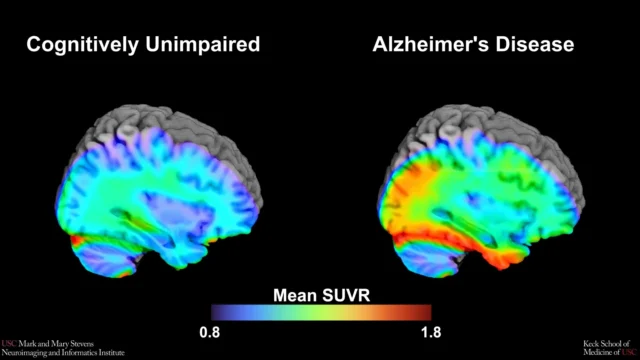
The results were striking: of all the metals tested, only lithium showed a significant and consistent correlation with cognitive health. High levels of lithium were present in the brains of cognitively healthy individuals, whereas those with mild cognitive impairment (MCI) and full-blown Alzheimer’s showed a marked and early depletion of the element. This finding was replicated across multiple independent brain banks, establishing a clear link between lithium loss and the earliest stages of memory decline.
Experimental Evidence and the Impact of Lithium Restriction
To confirm that lithium depletion was a cause of the disease rather than a side effect, the researchers conducted a series of experiments using mouse models. They found that by placing healthy mice on a lithium-restricted diet, they could lower the animals’ brain lithium levels to match those seen in human Alzheimer’s patients.
The results of this restriction were profound. The mice exhibited accelerated aging, increased brain inflammation, and a significant loss of synapses. Furthermore, in mice genetically predisposed to Alzheimer’s, the lack of lithium dramatically accelerated the formation of amyloid plaques and tau-like tangles. The researchers observed that lithium depletion activated microglia—the brain’s immune cells—but in a dysfunctional way that prevented them from clearing out toxic proteins.
Crucially, the study also revealed that lithium influences the activity of genes associated with Alzheimer’s risk, most notably the APOE gene. By maintaining stable lithium levels, the researchers were able to prevent the onset of Alzheimer’s symptoms in mice, suggesting that lithium acts as a master regulator of neurological stability.
A New Strategy for Prevention and Treatment: Lithium Orotate
One of the most significant hurdles in using lithium as a treatment for Alzheimer’s has been the toxicity associated with its standard clinical forms, such as lithium carbonate. Used to treat bipolar disorder, these compounds require high doses that can cause severe side effects in older patients, including kidney damage and tremors.
The Harvard team addressed this challenge by developing a screening platform to identify lithium compounds that could bypass the "amyloid trap." They discovered that a compound called lithium orotate was uniquely effective. Unlike other forms of the metal, lithium orotate was not captured by amyloid-beta plaques, allowing it to reach the brain cells that needed it most.
In animal trials, lithium orotate was found to be effective at a dose one-thousandth of that typically prescribed for psychiatric conditions. This ultra-low dose was sufficient to mimic natural brain levels without any evidence of toxicity, even when administered over the course of the animals’ entire adult lives. In older mice with advanced disease, the treatment reversed pathology, prevented further cell damage, and restored memory function.
Scientific Context and Broader Implications
The findings offer a biological explanation for previous epidemiological observations. For years, public health researchers have noted that regions with higher levels of naturally occurring lithium in the drinking water tend to have lower rates of dementia, suicide, and violent crime. Until now, these correlations lacked a definitive cellular mechanism. The HMS study provides that mechanism, positioning lithium as an essential nutrient for the brain, comparable to how iron is essential for blood or vitamin C for immune function.
The implications for public health and diagnostics are vast. If lithium levels in the blood can be shown to accurately reflect lithium levels in the brain, a simple blood test could become a standard screening tool for Alzheimer’s risk. This would allow for early intervention decades before the onset of irreversible dementia.
While the scientific community has reacted with cautious optimism, experts emphasize the need for human clinical trials. "You have to be careful about extrapolating from mouse models," Yankner noted, "but so far the results are very encouraging." The potential for a low-cost, low-toxicity intervention that targets the disease at its fundamental level represents a paradigm shift in geriatric medicine.
The Path Forward: Clinical Trials and Public Health
The next phase of research will involve translating these findings into human clinical trials to determine if lithium orotate can prevent or reverse cognitive decline in humans. Researchers are also interested in studying "escapers"—individuals who possess genetic risk factors for Alzheimer’s or significant plaque buildup but never develop dementia—to see if higher natural lithium levels are the source of their resilience.
The study authors explicitly warn the public against self-medicating with over-the-counter lithium supplements, as the safety and efficacy of these compounds for neuroprotection have not yet been established in humans. However, the discovery that lithium is a natural and necessary component of brain health opens a new chapter in the fight against Alzheimer’s.
In summary, the research from Harvard Medical School unifies decades of disparate observations into a single, cohesive theory. By identifying lithium deficiency as a primary driver of the disease, the study provides a roadmap for a future where Alzheimer’s is not an inevitable consequence of aging, but a manageable—and perhaps preventable—deficiency. As the global burden of dementia continues to grow, this discovery offers a promising new avenue for preserving the memories and cognitive dignity of millions of people worldwide.