
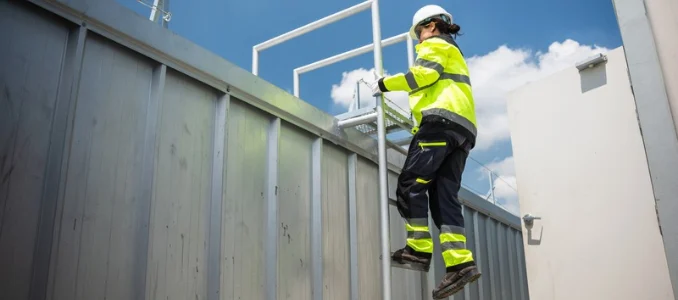
The Scope of the Crisis
The statistics surrounding ladder-related incidents remain a sobering reminder of the hazards inherent in construction, maintenance, and industrial work. According to data provided by the National Institute for Occupational Safety and Health (NIOSH), the year 2020 saw 22,710 workplace injuries specifically attributed to ladder use in the United States. Perhaps more concerning is the human toll: 161 workers lost their lives in these preventable incidents during that same 12-month period.

These figures are not merely numbers; they represent a systemic failure to account for human variability. Ronilla Ernest, founder and principal consultant of the Safety Leader Institute, LLC, and author of the article "Ladder Safety for Women Workers: Integrating Evidence Into Safety Management Systems," argues that current safety protocols often overlook the biomechanical realities of a diverse workforce. By defaulting to equipment designed for a singular body type, employers may be creating "shrinking margins for error" for anyone who falls outside that narrow demographic.
Chronology of Safety Standards and Evolution
The history of workplace safety equipment has long been dominated by standardized sizing. For decades, safety management systems were built upon anthropometric data that focused primarily on the average male, a practice that gained traction during the rapid industrialization of the 20th century. While this approach provided a baseline for manufacturing, it did not account for the significant physiological differences in grip strength, reach, and center of gravity found across the broader population.
In recent years, the push for gender diversity in trades—such as construction, electrical work, and manufacturing—has brought these design flaws to the forefront. As more women enter roles that require frequent ladder use, the "male-centric" design of both equipment and personal protective equipment (PPE) has moved from an overlooked nuisance to a critical safety liability. The publication of the ASSP article marks a turning point in this discourse, transitioning from anecdotal observations to evidence-based recommendations for safety professionals.

The Biomechanics of Risk
The ASSP article synthesizes ergonomic and biomechanical studies to explain why standardized ladder protocols often fail. The risk of a fall is not strictly tied to the worker’s balance; it is a complex interaction between the worker’s physical traits and the equipment provided.
Key biomechanical factors identified in the research include:
- Grip Strength: Ladder rungs and handrails are often designed for the average male hand size and strength. For workers with smaller hands or less grip strength, the physical exertion required to maintain a secure hold increases significantly, leading to earlier muscle fatigue.
- Reach and Vertical Clearance: When equipment is sized for taller individuals, shorter workers—regardless of gender—often have to overextend or adopt awkward postures to reach their work, which shifts their center of gravity and reduces stability.
- Balance Recovery: The ability to recover from a slip is highly dependent on a worker’s leverage and strength. When a ladder is not matched to the specific task or the worker’s stature, the threshold for a "near miss" to become a "full fall" is lowered.
- PPE Fit: Perhaps the most overlooked factor is the role of PPE. Heavy, ill-fitting gloves, vests, or harnesses can restrict movement, interfere with tactile feedback, and add unnecessary bulk, making the act of climbing and maneuvering on a ladder inherently more dangerous.
Integrating Evidence into Safety Management
To mitigate these risks, the article proposes a three-pronged integration strategy for existing safety management systems.

1. Ergonomic Ladder Selection
Safety professionals should move away from the "all-purpose" ladder philosophy. Job hazard analyses (JHAs) must evolve to include specific criteria regarding the worker’s physical dimensions and the nature of the task. If a task requires extended reach, heavy load handling, or long durations at height, the default should not be a standard extension ladder. Instead, employers are encouraged to deploy platform ladders, mobile work platforms, or scaffolds, which offer inherent stability advantages over traditional designs.
2. Training Focused on Capability
Training programs must move beyond compliance-based rule recitation. Instead, they should empower both workers and supervisors to identify "shrinking margins for error." This involves training crews to recognize when a specific combination of ladder, task, and PPE creates an unstable environment. If a worker is struggling to maintain a three-point contact or is showing signs of fatigue, the protocol should mandate a re-evaluation of the work setup rather than simply expecting the worker to be "more careful."
3. Inclusive PPE Procurement
Purchasing departments often source PPE in bulk, frequently ignoring the need for diverse sizing. The article emphasizes that buying decisions must include input from the actual users. A "fit check" should be standard practice, ensuring that gloves allow for dexterity and that harnesses do not impede a worker’s range of motion.

Broader Implications for the Workforce
While the primary focus of the ASSP article is the protection of women workers, the implications of this shift are universal. A safety system that accounts for human variability is, by definition, a safer system for everyone. The principles advocated by Ernest apply equally to older workers, individuals with past injuries, or those with different physical builds who have traditionally struggled with equipment designed for a "standard" worker.
Furthermore, the article calls for a more robust data-collection strategy. Employers are urged to monitor near misses and PPE fit issues as "leading indicators." By sorting injury data by task, ladder type, and demographic when practical, companies can move from reactive safety measures to proactive, data-driven interventions.
Analysis: Moving Toward a More Inclusive Safety Culture
The shift toward inclusive safety management is not merely a matter of equity; it is a matter of operational efficiency and risk management. Workplace accidents are costly in terms of insurance premiums, lost productivity, legal liabilities, and, most importantly, human lives.

For the construction and industrial sectors, the findings present a clear challenge to the status quo. Industry leaders must acknowledge that the "one-size-fits-all" model is a legacy of an era that lacked the biomechanical insights available today. The transition to a more inclusive approach will require investment—not just in better equipment, but in a culture that values individual capability over standardized assumptions.
As the industry continues to evolve, the integration of ergonomic research into daily safety protocols will likely become a benchmark for excellence. Companies that prioritize these inclusive practices will likely see a reduction in injury rates, improved worker morale, and a more resilient workforce. The path forward involves a departure from the "default worker" assumption, replacing it with a nuanced understanding of the diverse physical capabilities that define the modern labor force. Through continued education and the adoption of evidence-based safety management, the industry can significantly reduce the prevalence of preventable ladder-related incidents, ensuring that every worker returns home safely, regardless of their physical profile.