
The internal investigation was prompted by observed behaviors on professional forums and intranets, where employees expressed a growing preference for reading or scanning text over watching full-length video presentations. By analyzing a cross-section of personnel, the MOD sought to quantify these behaviors and understand the underlying motivations. The results provide a compelling case for the universal application of the Web Content Accessibility Guidelines (WCAG) 2.2 AA standard, demonstrating that inclusive design serves as a catalyst for efficiency across all user demographics.
The Shift Toward Text-Based Consumption
The core of the MOD’s research focused on how colleagues interact with video transcripts when they do not have specific accessibility requirements, such as hearing or visual impairments. For the purpose of the study, the MOD provides transcripts as separate, downloadable, or scrollable text files located directly beneath video content on their internal network. This is in addition to integrated captions, ensuring multiple layers of access.
The findings were stark: out of 87 respondents surveyed in the initial sample, 57% reported that they prefer to read the transcript only, rather than watching the video. In contrast, only 14% of respondents chose to watch the video exclusively. A further 29% utilized a hybrid approach, both watching the video and reading the transcript to reinforce their understanding of the material.
These figures suggest that the traditional reliance on video as a primary communication tool may be overlooking the diverse ways in which modern professionals process information. The preference for text-based transcripts among more than half of the surveyed group highlights a significant demand for "scannable" content that allows for rapid information retrieval.
Chronology of Digital Accessibility Standards
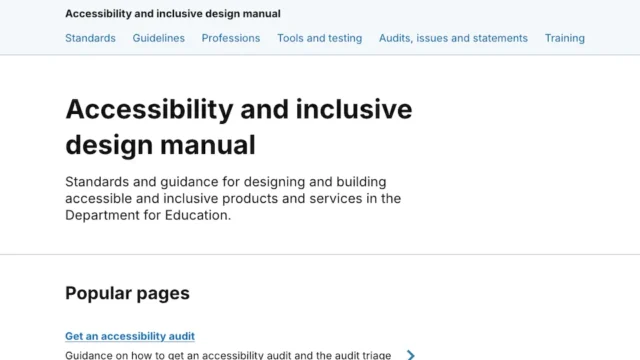
The MOD’s current focus on transcripts is the result of a multi-year evolution in digital standards within the United Kingdom’s public sector. Understanding the current landscape requires a look back at the regulatory milestones that have shaped these communication strategies:
- The Equality Act 2010: This established the legal requirement for public bodies to make "reasonable adjustments" to ensure services are accessible to people with disabilities.
- The Public Sector Bodies (Websites and Mobile Applications) (No. 2) Accessibility Regulations 2018: This mandated that all public sector websites and apps meet specific accessibility standards, specifically pointing toward the Web Content Accessibility Guidelines (WCAG).
- Introduction of WCAG 2.1 (2018): These guidelines introduced more robust requirements for mobile accessibility and for users with low vision or cognitive disabilities.
- Implementation of WCAG 2.2 (2023-2024): The most recent update, which the MOD currently follows at the AA level, includes nine new success criteria focused on improving navigation and input modality, further emphasizing the need for alternative content formats like transcripts.
By adhering to these evolving standards, the MOD has inadvertently created a "curb-cut effect"—a phenomenon where features designed for people with disabilities (like sidewalk ramps) end up providing significant benefits to the general public (like people with strollers or delivery carts).
Data Analysis: Why Users Prefer Transcripts
The MOD study categorized the reasons why non-disabled users opt for transcripts over video. The data indicates that the motivations are largely practical, centered on time management and environmental constraints.
Efficiency and Information Density
The most common reason cited for reading transcripts was the ability to "scan" for relevant information. In a professional setting, employees often need to find a specific data point or a particular instruction within a 10-minute briefing. Watching the video in its entirety is seen as a time-inefficient process. Transcripts allow users to utilize "Ctrl+F" functions to jump directly to the keywords they need, effectively digitizing the "videotape" experience into a searchable database.
Environmental and Technical Constraints
The research highlighted several situational factors that make video consumption difficult. Many MOD personnel work in open-plan offices where playing audio without a headset is considered disruptive. While the MOD provides headsets, many respondents expressed a dislike for wearing them for extended periods, citing physical discomfort or the need to remain aware of their physical surroundings.

Technical limitations also played a role. "Bandwidth" was cited as a recurring issue. In certain remote locations or on secure networks with restricted data speeds, streaming high-definition video is often laggy or prone to buffering. A text transcript, by comparison, requires negligible bandwidth and loads instantaneously, ensuring that the communication reaches the employee regardless of their technical environment.
Cognitive Reinforcement
For the 29% of users who use both formats, the transcript serves as a secondary check. This is particularly relevant for technical or jargon-heavy briefings common in the Ministry of Defence. Reading the text while listening to the audio helps clarify complex terminology, ensuring that no information is "lost in translation" due to audio quality or the speaker’s accent.
Official Responses and Strategic Implications
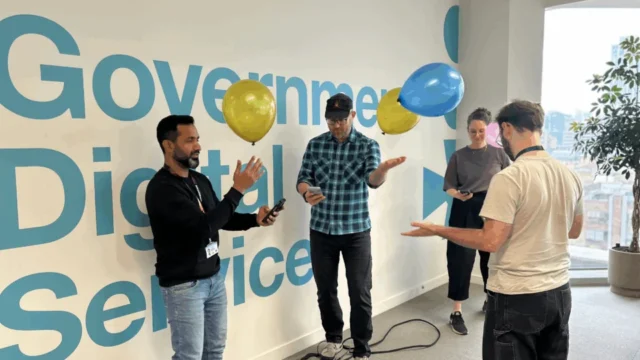
While the MOD’s study focused on internal communications, the implications are being noted by digital strategists across the UK government. The Government Digital Service (GDS) has long championed the "user needs" approach, and these findings reinforce the idea that user needs are not monolithic.
Inferred statements from digital inclusion advocates suggest that this data will be used to justify the additional time and budget required to produce high-quality transcripts. Previously, transcripts were sometimes viewed as a "compliance chore"—a task done solely to satisfy legal requirements. However, the MOD’s data proves that transcripts are a high-value content product in their own right.
"Accessibility is usability," the report concludes. This sentiment is echoed by digital content designers who argue that by designing for the margins, you improve the experience for the center. If a video is inaccessible to a screen reader, it is also unsearchable by a search engine. By providing a transcript, the MOD is not only helping a visually impaired staff member but also improving the Search Engine Optimization (SEO) of their internal knowledge base.
The "Sound-Off" Culture and Broader Impact
The MOD’s findings mirror broader trends in global media consumption. According to various digital marketing studies, upwards of 80% of social media videos are watched without sound. This "sound-off" culture has forced private sector companies to rely heavily on captions and text overlays. The MOD’s research confirms that this trend has permeated the professional and governmental sectors as well.
The broader impact of this research is likely to be felt in how government departments allocate resources for content creation. The production of a "good" transcript—which the MOD defines as being accurate, identifying speakers, and including relevant non-speech sounds—requires specialized tools or human oversight. With 57% of the audience preferring the transcript, the argument for investing in high-quality speech-to-text AI and human editors becomes much stronger.
Furthermore, the study suggests a potential shift in the "Video-First" strategy that many organizations have adopted over the last decade. While video remains a powerful tool for emotional engagement and visual demonstration, it is clear that for information retention and professional utility, text remains the dominant and preferred medium.
Conclusion: Redefining Digital Inclusion
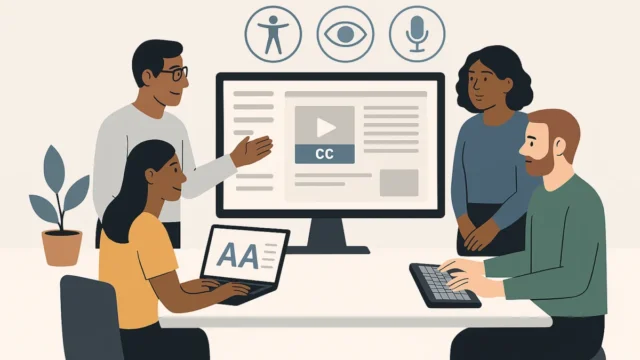
The Ministry of Defence’s investigation into video transcripts serves as a vital case study for any organization looking to optimize its digital presence. It moves the conversation of accessibility away from a narrow focus on disability and toward a broader framework of human-centric design.
As the UK public sector continues to implement WCAG 2.2 standards, the focus will likely remain on providing multi-modal content. The MOD’s data serves as a reminder that providing a transcript is not just about helping a few; it is about empowering the many. Whether it is a soldier in a low-bandwidth environment, a policy officer in a noisy office, or a manager scanning for a specific quote, the digitisation of spoken word into text has become an essential pillar of modern workplace productivity.
By treating the transcript as a standalone, high-value piece of content, the MOD ensures that its message is heard—or rather, read—by the widest possible audience, fulfilling both its legal obligations and its operational goals.