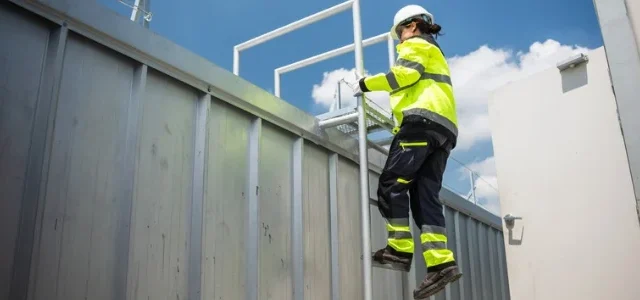


The complexity of these "handoff" phases cannot be overstated. During this transitional period, electrical crews may be conducting high-voltage switchgear testing while mechanical contractors simultaneously finalize cooling infrastructure in the same physical space. This convergence of disciplines introduces a multifaceted hazard profile, ranging from energized electrical arcs and high-pressure fluid leaks to the risks associated with heavy equipment movement and overhead work. Protecting the workforce during this phase requires more than standard compliance; it necessitates a granular approach to site governance, rigorous qualification verification, and a unified communication strategy.
The Evolution of Site Risks and the NFPA 70E Standard
The risks inherent in data center buildouts are dynamic. As a facility transitions from a "cold" construction site to a "live" environment, the hazards shift from structural and fall-related risks to those involving energized systems. The 2027 edition of NFPA 70E has become a cornerstone document for safety managers in this sector, reinforcing the absolute necessity of documented electrical safety training.

The updated standards emphasize a crucial distinction: professional qualifications are not universal. A worker may be highly skilled in installing conduit but remain unqualified to perform diagnostic testing on energized switchgear. The 2027 NFPA 70E guidelines underscore that employers must not only verify certifications but also ensure that workers are specifically authorized for the exact task they are performing at any given moment. In a data center environment, where system interdependencies are profound, a minor oversight in qualification verification can lead to catastrophic electrical arcs or system-wide failures.
The Workforce Crisis: Balancing Speed with Competence
The pressure to meet aggressive delivery deadlines has exacerbated a pre-existing labor shortage, creating a "perfect storm" for safety professionals. Data from the Associated General Contractors of America (AGC) indicates that 58% of contractors involved in data center construction report increased competition for skilled labor. More concerning, 50% of these contractors have reported that the available candidate pool lacks the necessary certifications or technical proficiencies required for the specialized nature of mission-critical facility construction.

This skills gap directly influences safety outcomes. When projects are staffed by workers who may be under-trained for the specific environment of a high-density data center, the likelihood of human error increases. Safety managers are now tasked with implementing comprehensive onboarding programs that serve as a "bridge" between general construction competency and site-specific safety protocols. These programs must be iterative, evolving alongside the physical progress of the building to account for the increasing density of energized equipment.
Chronology of a Data Center Buildout and Safety Milestones
To manage these risks effectively, safety leaders often break down the project into distinct, high-risk transition phases:

- Phase I: Core and Shell Construction (Months 1–12): Focus is primarily on structural integrity, heavy machinery, and fall protection. The site is largely "cold," with safety protocols mimicking traditional large-scale industrial construction.
- Phase II: Infrastructure Installation (Months 10–18): Electrical and mechanical contractors begin massive installations. The risk profile shifts toward heavy lifting, confined spaces, and high-voltage distribution wiring.
- Phase III: The Overlap (Months 16–22): This is the most dangerous phase. Construction work continues while testing and commissioning (T&C) teams begin energizing systems. This requires the implementation of strict lockout/tagout (LOTO) procedures and physical demarcation zones that are updated daily.
- Phase IV: Full Commissioning and Handover (Months 20–24): The focus is on verifying system uptime and redundancy. Safety concerns center on energized electrical safety, arc flash awareness, and the protection of sensitive equipment.
The Imperative of Unified Communication
The primary failure point during the transition from construction to commissioning is a breakdown in communication. In many cases, the contractors responsible for building the facility and the teams responsible for testing it operate under different management structures and reporting lines. When these silos are not breached, critical information—such as a circuit being energized ahead of schedule—may not reach the construction crew working on the other side of the room.
Industry best practices now suggest the implementation of a "Centralized Safety Command" for large-scale data center projects. This command structure acts as the single source of truth for site conditions. It mandates that any change in the status of a system—such as the movement from a de-energized to an energized state—must be formally communicated and documented through a standardized verification process. This ensures that every worker on the floor is aware of the current hazards, regardless of whether they are employed by the general contractor, a specialized mechanical firm, or a third-party testing agency.

Broader Economic and Safety Implications
The sheer scale of the $85 billion annual investment in data centers suggests that the current safety challenges are not merely temporary growing pains but a new, permanent feature of the industrial construction sector. The implications for the insurance and regulatory sectors are significant. As the frequency and complexity of data center projects rise, insurers are increasingly looking for evidence of sophisticated safety management systems (SMS) that specifically address the commissioning overlap.
Furthermore, the integration of technology into safety management is becoming mandatory. Real-time site monitoring, digital credentialing systems that prevent unauthorized access to high-risk zones, and automated LOTO notification systems are moving from "optional innovations" to "baseline requirements." The goal is to move toward a "smart site" architecture, where digital tools augment human supervision, providing an extra layer of oversight in environments that are too complex for manual monitoring alone.

Conclusion: A Proactive Future
The path forward for the data center industry involves a fundamental shift in how safety is conceptualized. It can no longer be viewed as a checklist of regulatory compliance requirements to be satisfied at the start of a project. Instead, safety must be integrated into the project’s DNA, treated as a dynamic, living component of the construction process.
By prioritizing the verification of worker qualifications, investing in site-specific safety training, and fostering an environment of transparent communication between construction and commissioning teams, the industry can protect its most valuable asset: its workforce. The surge in data center construction is a testament to the nation’s technological ambition; ensuring that this ambition does not come at the cost of human life is the most significant challenge facing safety leaders today. As the sector continues to evolve, the ability to manage these complex handoffs will ultimately define which firms lead the market and which fall victim to the inherent risks of this high-pressure, high-reward environment.