

The Complexity of the Auditory Experience
The conference, which served as a focal point for international researchers, clinicians, and neuroscientists, steered away from the pursuit of a singular, "silver-bullet" cure. Instead, the proceedings emphasized the profound complexity of tinnitus, moving the conversation beyond the outdated perception of the condition as a simple, peripheral ear issue.
Historically, tinnitus was often categorized solely as an auditory system failure. However, contemporary research presented at the forum confirms that the condition is systemic, involving complex brain networks responsible for attention, stress, emotional processing, memory, and perception. This shift in perspective is critical; it suggests that treating tinnitus may require a multi-disciplinary approach that addresses the brain’s neural plasticity rather than focusing exclusively on the cochlea.
The Mechanism of Neural Compensation
A central theme of the gathering was the "gain control" theory. Researchers discussed the hypothesis that tinnitus often emerges as a compensatory mechanism following hearing loss or acoustic trauma. When the auditory system suffers damage, it experiences a reduction in sensory input from the environment. In response, the brain may attempt to compensate by increasing its internal sensitivity—effectively "turning up the volume" on a weak signal.
When this internal gain is turned up too high, the brain begins to amplify background neural noise. This phenomenon, known as maladaptive plasticity, results in the patient perceiving internal activity as a phantom sound. Furthermore, the conference shed light on the breakdown of homeostasis within the brain, where the balance between inhibitory (calming) and excitatory (activating) signals is disrupted. Speakers noted that when these pathways are poorly regulated, the resulting neural "static" manifests as tinnitus or hyperacusis, a heightened sensitivity to everyday sounds.
A Stratified Approach to Patient Care
One of the most significant takeaways from the conference is the increasing consensus that tinnitus is not a monolithic condition. Just as oncology has moved toward personalized medicine—treating different genetic subtypes of cancer with targeted therapies—tinnitus research is moving toward a stratified model.
Two patients may report identical symptoms of ringing or buzzing, yet the underlying biological drivers could be vastly different. In some, metabolic or inflammatory factors may predominate; in others, the condition may be rooted in structural neural changes or psychological stress-response loops. By acknowledging this heterogeneity, the scientific community is beginning to pivot away from universal treatments, which have historically yielded inconsistent results, toward personalized interventions designed for specific patient subgroups.
The Role of Pharmacology and Gene Therapy
The conference provided a sober look at the current state of pharmacological research. While the prospect of drug-based treatments is promising, the field faces significant hurdles. Scientists are currently targeting specific neurotransmitter systems and ion channels to modulate neural excitability. However, the lack of a standardized, objective biomarker remains a bottleneck for clinical trials.
Unlike hypertension, which can be measured with a blood pressure cuff, or diabetes, which is tracked via blood glucose levels, tinnitus remains a subjective, patient-reported experience. This makes clinical validation difficult, as there is no single, objective test to confirm if a drug has effectively "silenced" the phantom sound. Despite these challenges, the discussion surrounding gene therapy suggested a potential long-term horizon where the underlying auditory damage might be repaired at the molecular level, though researchers cautioned that such breakthroughs are still in the early stages of development.
Integrating Psychological and Biological Modalities
A major theme of the conference was the harmonization of treatment models. For decades, a divide existed between those who favored psychological interventions—such as Cognitive Behavioral Therapy (CBT)—and those who prioritized biological or pharmacological research. The consensus reached at this conference was that these fields are not competitors but rather complementary pillars of care.
CBT and other behavioral therapies are highly effective at retraining how the brain interprets and reacts to the tinnitus signal, thereby reducing the distress associated with the sound. Meanwhile, future pharmacological agents aim to modify the neural activity that produces the sound in the first place. The integration of these two approaches is likely to form the standard of care for the coming decade.
Looking Toward 2027: A Global Collaborative Effort
The discourse initiated at this conference is set to gain further momentum at the upcoming 4th World Tinnitus Congress and 15th International Tinnitus Seminar, scheduled to take place in London in 2027. This landmark event, organized in partnership with a vast consortium of global health organizations—including Tinnitus UK, the British Academy of Audiology, the American Auditory Society, and the International Society of Audiology—represents an unprecedented level of global cooperation.
The scope of this partnership, which also includes the RNID, ENT UK, and the Misophonia Research Fund, underscores the urgency with which the global scientific community is treating the condition. By bringing together audiologists, ENT specialists, psychologists, and patient advocacy groups, the 2027 summit aims to bridge the gap between laboratory research and clinical practice.
Implications for the Future
The implications of the research presented are far-reaching. As the global population ages, the prevalence of hearing loss—and by extension, tinnitus—is projected to rise. The shift toward a neuro-biological understanding of tinnitus suggests that we are entering a new era of "precision audiology."
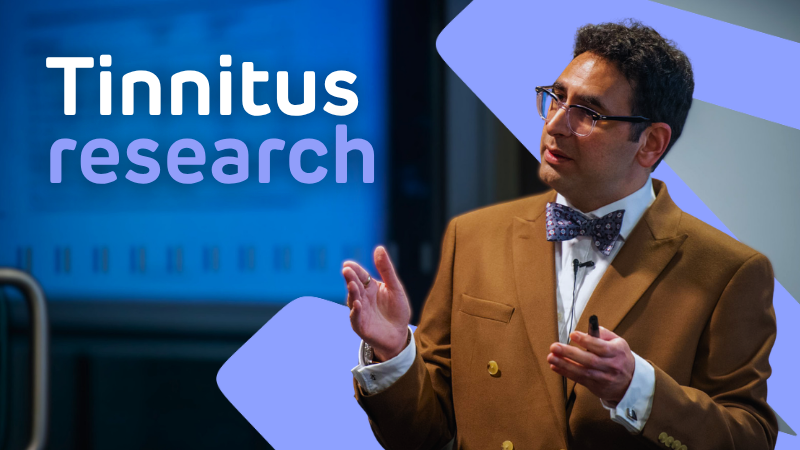
While immediate cures may not be on the horizon for every patient, the strategic, data-driven approach discussed by experts at this conference offers a more realistic and hopeful path forward. Dr. Hashir Aazh, the President of the upcoming Congress and a leading voice in the field, emphasizes that the goal is not just the management of symptoms, but a fundamental improvement in the quality of life for those affected.
By continuing to prioritize the study of neural networks, investing in the identification of biological markers, and maintaining a commitment to a multi-disciplinary treatment model, the scientific community is slowly dismantling the barriers that have historically kept tinnitus in the shadows. For patients, the message is one of cautious optimism: the scientific community is finally looking at the condition with the complexity it demands, moving steadily toward a future where the sound of silence is a reachable goal for many.
The progress documented over these sessions serves as a testament to the fact that while tinnitus is a complex, multi-faceted challenge, it is no longer being treated as an untreatable mystery. Instead, it is being treated as a solvable medical problem, one that requires time, global collaboration, and the rigorous application of the scientific method. As we look toward the 2027 summit in London, the collective focus remains on accelerating the translation of these complex findings into tangible patient outcomes.