Historical Context and Policy Evolution
The "Zero Tolerance" framework, which gained significant traction in American public policy during the late 20th century, was originally popularized within the United States justice system and educational institutions. Historically, these policies were characterized by mandatory, predetermined punishments for specific offenses, regardless of context or mitigating factors. In the decades since their inception, numerous academic and social studies have indicated that such policies often disproportionately affect marginalized groups, leading to exclusionary outcomes that fail to address the root causes of conflict or behavioral issues.
For the NAD, the policy in question has been a staple of its biennial national conferences and organizational events for several cycles. Its primary objective was to establish a clear, enforceable standard of conduct to prevent discrimination, bullying, and abuse during large-scale gatherings. However, as social discourse around restorative justice and trauma-informed practices has shifted, members of the deaf and hard-of-hearing community began to voice concerns that the punitive connotations of "zero tolerance" were inconsistent with the organization’s broader mission of advocacy, inclusion, and empowerment.
Chronology of Internal Feedback
The momentum for this review did not materialize overnight. In the lead-up to the 2026 announcement, discussions regarding organizational accountability began to permeate internal forums and social media channels utilized by the deaf community. Advocates and community stakeholders highlighted that the terminology used by the NAD—while intended to provide a protective shield—was perceived by some as rigid, potentially dehumanizing, and antithetical to the principles of restorative justice.
By mid-2026, the NAD Board of Directors began documenting these concerns, acknowledging that the linguistic framing of the policy had become a distraction from its intended purpose. The decision to initiate a comprehensive review reflects a strategic pivot: the Board is now tasked with determining whether the title and the underlying mechanics of the policy align with the organization’s core values of "equity, inclusion, accountability, fairness, respect, and belonging."
Data and Behavioral Standards in Non-Profit Governance
Non-profit organizations, particularly those representing specific identity groups, face unique challenges in balancing administrative safety with community trust. According to organizational governance benchmarks, high-functioning non-profits are increasingly moving away from strictly punitive frameworks in favor of "Accountable Conduct" models. These models focus on addressing the behavior while providing a framework for conflict resolution that does not necessarily rely on exclusionary measures.
The NAD’s current policy operates as a protective layer during its high-profile biennial conferences, which attract thousands of attendees. In environments where communication barriers are already a factor, the perceived threat of a "zero tolerance" mandate can create an atmosphere of anxiety. Analysts suggest that by reviewing this policy, the NAD is attempting to mitigate potential alienation among its membership, ensuring that the very people the organization represents feel empowered to participate without fear of a rigid, opaque disciplinary process.
Official Response and Institutional Strategy
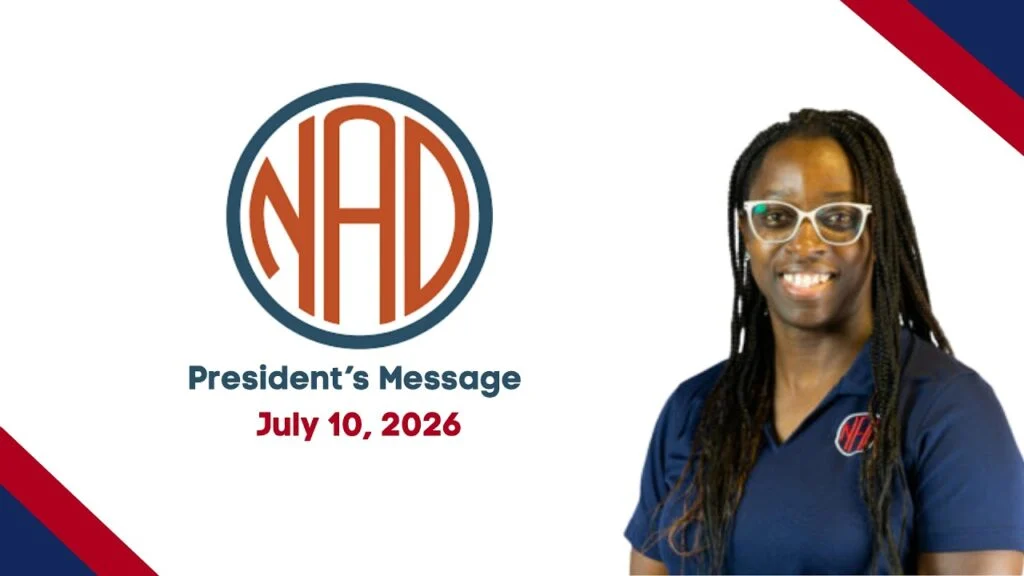
In her July 10 statement, President Stephanie Hakulin explicitly addressed the distinction between intent and impact. She acknowledged that "good intentions do not replace the need to understand how the language is interpreted and experienced by our community." This acknowledgement is significant, as it signals a shift toward a more transparent, stakeholder-driven approach to policy-making.
The review process is slated to be both comprehensive and methodical. The Board has established that:
- Current protections remain in place: To prevent a lapse in security, the existing policy remains the governing standard for all ongoing and near-future NAD activities.
- Stakeholder consultation: The Board will actively solicit feedback regarding alternative terminology that better captures the essence of safety and mutual respect.
- Restorative potential: The Board is exploring whether a transition toward restorative approaches—which emphasize repairing harm rather than merely enforcing compliance—is viable for an organization of its size and scope.
The Broader Implications for Advocacy Organizations
The debate surrounding the NAD’s policy is reflective of a wider trend in American civil society, where organizations are increasingly interrogating their internal policies through a lens of social justice. When an organization like the NAD—which has historically fought for the rights and recognition of its members—faces internal criticism, it underscores the necessity of internal institutional hygiene.
If the NAD successfully transitions its policy to something more reflective of modern, inclusive values, it could serve as a model for other national advocacy organizations. The move suggests that for a policy to be effective, it must not only be legally sound but also culturally resonant. If the language of a policy causes a disconnect between the leadership and the base, the policy’s effectiveness in maintaining a "safe space" is inevitably compromised.
Looking Toward the Future
The path forward for the NAD involves a delicate balancing act. On one hand, the organization must ensure that it continues to provide robust protections against real threats, such as harassment and abuse. On the other, it must demonstrate a willingness to evolve in response to the ethical concerns of its members.
As the Board of Directors begins this review, the community is watching closely. The process will require an analysis of best practices in mediation, the integration of trauma-informed conduct standards, and a clear communication strategy to ensure that all members understand how their safety is being managed.
The NAD has committed to keeping the community apprised of the review’s progress. This transparency is vital for maintaining the trust that is the cornerstone of the organization’s legitimacy. While no decisions regarding a name change or a restructuring of the policy have been finalized, the very act of conducting this review suggests that the NAD is prioritizing institutional growth over bureaucratic inertia.
Summary of Stakeholder Perspectives
While the Board has received criticism, there is also a recognition among many members that a policy protecting against discrimination is non-negotiable. The tension lies not in the goal of the policy—safety—but in the methodology and the rhetoric used to achieve it. By separating the two, the NAD is engaging in a necessary dialogue about what it means to lead in an era where inclusivity is not just an aspiration but a standard of operation.
In conclusion, the National Association of the Deaf is currently undergoing an institutional introspection that mirrors the broader cultural shifts in how we define safety, justice, and community. The forthcoming months will be critical as the Board evaluates the input of its members and works to redefine the parameters of its conduct policies. By centering the values of "dignity, fairness, respect, and belonging," the NAD aims to ensure that its internal policies serve as a reflection of its external advocacy, reinforcing the organization’s slogan: "Together, we NAD rise."
The success of this review will be measured not by the final name of the policy, but by the degree to which the deaf and hard-of-hearing community feels heard, protected, and respected by the leadership they have entrusted with their collective future.