The Context of the NAD Leadership Search
The search committee, composed of board members and key stakeholders, has been tasked with identifying a candidate who possesses not only executive experience but also a deep understanding of Deaf culture, American Sign Language (ASL) advocacy, and the nuanced intersectionality of the community. The transition reflects the organization’s commitment to evolving its internal structure to better meet the demands of a 21st-century advocacy landscape.
Chronology of the Selection Process
The path to the finalist announcement began in late 2025, following an internal assessment of the organization’s long-term goals. The board of directors initiated a comprehensive search, engaging with national executive search firms specialized in non-profit leadership to ensure a wide and diverse pool of applicants.
- Initial Outreach (Late 2025): The search committee finalized the job description and launched a nationwide recruitment campaign, soliciting interest from leaders in education, public policy, and non-profit management.
- Review and Interview Phase (Early 2026): Throughout the first quarter of 2026, the committee conducted multiple rounds of interviews. These sessions were designed to evaluate the candidates’ strategic planning skills, financial management experience, and their ability to engage with a broad, often opinionated, membership base.
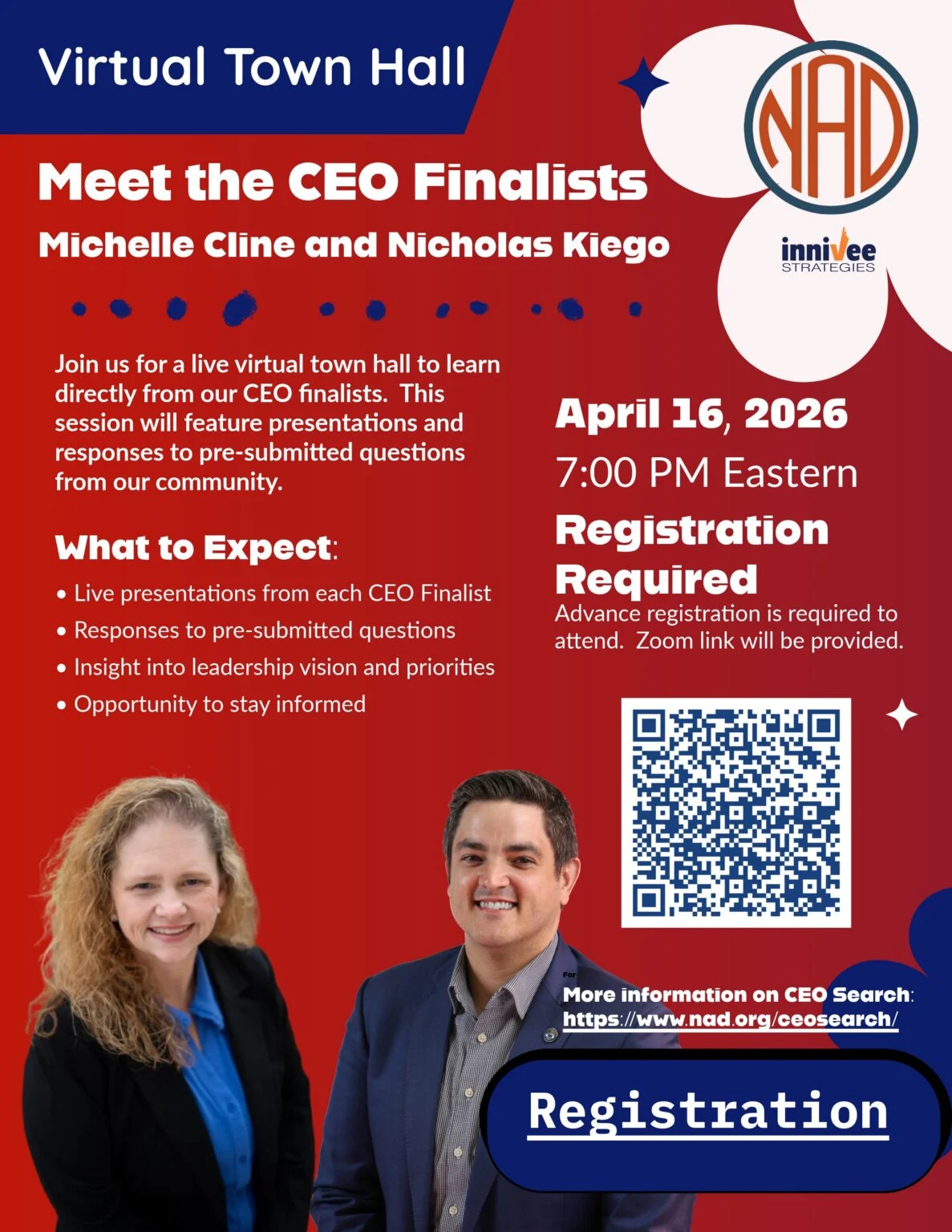
- Finalist Selection (April 2026): By early April, the committee narrowed the field to two individuals: Michelle Cline and Nicholas Kegio. Their selection was finalized based on their specific visions for the future of the NAD and their demonstrated ability to navigate the complex socio-political climate surrounding deaf rights.
- Public Engagement (April 16, 2026): The virtual town hall served as the final step in the vetting process, allowing the community to observe the candidates in a simulated leadership environment and providing the board with valuable public feedback before the final vote.
Profiles of the Finalists
The two finalists bring distinct backgrounds to the table, each reflecting a different approach to organizational stewardship. Michelle Cline, known for her background in systemic advocacy and organizational development, has positioned herself as a candidate focused on long-term sustainability and the expansion of the NAD’s reach through strategic partnerships. Her experience suggests a leadership style rooted in collaborative decision-making and data-driven outcomes.
Nicholas Kegio, conversely, has built a reputation through his work in grassroots community empowerment and policy reform. His approach emphasizes the amplification of marginalized voices within the deaf community and a rigorous commitment to the foundational principles of the NAD. His platform focuses on modernizing advocacy tools and ensuring that the organization remains agile in the face of legislative challenges.
The virtual town hall held on April 16, 2026, was structured to allow both candidates to address these priorities. By responding to pre-submitted questions, the finalists demonstrated their grasp of issues such as the integration of gene therapy discussions, the protection of language rights in educational settings, and the ongoing struggle for equal access to public health and emergency services.
Data and Implications for Advocacy
The NAD’s current search occurs against a backdrop of significant statistical shifts in the disability rights sector. According to reports from the National Institute on Deafness and Other Communication Disorders (NIDCD), the population of individuals identifying as deaf or hard of hearing is growing, necessitating more robust representation in federal policy.
Furthermore, the economic impact of the NAD’s advocacy is substantial. Through its influence on the Americans with Disabilities Act (ADA) compliance and its work with the Federal Communications Commission (FCC) regarding telecommunications relay services, the organization influences billions of dollars in infrastructure and accessibility spending. Consequently, the next CEO must be adept at handling the intersection of high-level government relations and the emotional, cultural needs of a community that is deeply protective of its linguistic identity.
The decision to hold a virtual town hall is also a reflection of the organization’s commitment to accessibility and transparency. By leveraging video conferencing technology, the NAD ensured that members across the country—regardless of geography—could participate in the process. This aligns with the organization’s broader goal of decentralizing its advocacy efforts and fostering a more inclusive membership model.
Analytical Perspectives on Organizational Transition
In any non-profit organization of the NAD’s stature, a change in leadership often signals a shift in priorities. Financial analysts and non-profit experts suggest that the next CEO will face three primary challenges:
- Fiscal Diversification: Moving beyond traditional donor models to ensure long-term financial health through diverse revenue streams, including corporate partnerships and federal grants.
- Technological Integration: Navigating the rapid pace of artificial intelligence and its implications for captioning, relay services, and educational technology. The next leader must ensure that these advancements remain equitable and accessible to all users.
- Internal Governance: Maintaining cohesion within an organization that represents a highly diverse community. The NAD must balance the needs of various subgroups, including deaf-blind individuals, deaf people of color, and those from different educational backgrounds.
The town hall format served as a diagnostic tool for the board to assess how each candidate handles pressure and public scrutiny. Their ability to articulate complex positions in a public forum is a strong indicator of how they will fare when lobbying on Capitol Hill or navigating internal disputes.
Broader Impact on the Deaf Community
The selection of a new CEO is not just an internal personnel matter; it is a signal to the broader public about the future trajectory of deaf rights in America. Historically, the NAD has been a beacon for the preservation of American Sign Language. As new medical technologies—such as cochlear implants and potential gene therapies—continue to spark intense debate within the community, the incoming CEO will be forced to act as a moderator of these discussions.
The organization’s position on these issues must be nuanced, respecting individual medical choices while simultaneously defending the cultural and linguistic integrity of the deaf community. This dual mandate requires a leader who is both a skilled diplomat and a firm advocate. Both Cline and Kegio have indicated their awareness of this balance, suggesting that the organization will likely continue its path of nuanced advocacy, regardless of which candidate is chosen.
Conclusion and Looking Forward
The virtual town hall of April 16, 2026, serves as a testament to the NAD’s dedication to a democratic selection process. By inviting the membership to participate, the organization is effectively building a mandate for its next leader. As the board of directors moves toward the final selection, the focus will shift from the candidates’ presentations to the evaluation of their long-term potential for growth, stability, and advocacy.
The NAD stands at a crossroads, with the challenges of the next decade requiring a leader who is as comfortable in a boardroom as they are in a community center. Whether the final decision results in a focus on institutional expansion or a focus on grassroots mobilization, the process has already succeeded in engaging the community in a dialogue about what the NAD should become. As the organization prepares for this new chapter, the attention remains firmly fixed on the goal: ensuring that the rights and the culture of the deaf community remain protected, vibrant, and influential for generations to come. The final outcome of this search will dictate the tone of these efforts for the foreseeable future, making the upcoming appointment the most consequential leadership decision for the NAD in the current decade.