A Strategic Commitment to Operational Safety
For Kalb Construction, the road to this recognition was paved by a deliberate shift in corporate strategy. Recognizing that construction remains one of the most hazardous sectors in the American economy, the company leadership opted to engage with SCATS to conduct a deep-dive assessment of their existing job-site practices. The resulting transformation involved a multi-pronged approach: the expansion of formal employee training modules, the implementation of rigorous, routine site inspections, and the creation of a formal "near-miss" reporting system.
By empowering employees to report potential hazards without fear of reprisal, Kalb Construction successfully democratized the safety process. This transition from a top-down management approach to a collaborative model ensured that those closest to the daily risks—the workers themselves—became the primary architects of site-specific safety solutions.

The Role of SCATS in Industrial Compliance
The Safety Consultation and Training Section (SCATS) is a vital resource for Nevada’s business sector. It operates on the premise that proactive prevention is significantly more effective and cost-efficient than reactive enforcement. As a division of the Nevada Department of Business and Industry, SCATS offers a suite of services, including confidential hazard identification, the development of customized safety and health management programs, and extensive training programs for both management and field personnel.
The Safe Partner Award is not merely a symbolic gesture; it is a rigorous designation. To qualify, companies must demonstrate that they have maintained a rate of "days away from work," restricted duty, or job transfers that falls well below the national average for their specific industry sector. Furthermore, the company must show sustained engagement with SCATS services, proving that the adoption of these safety standards is not a temporary compliance measure, but a permanent integration into the company’s business model.

Chronology of the Safety Transformation
While the formal presentation of the award marks a celebratory milestone, the internal shift at Kalb Construction began months prior. The timeline of this transformation reflects a systematic commitment to organizational change:
- Phase I: Engagement: Initial contact with SCATS representatives to identify critical gaps in the existing safety management system (SMS).
- Phase II: Audit and Assessment: A comprehensive, site-wide walkthrough conducted by safety consultants to flag potential ergonomic, mechanical, and behavioral hazards.
- Phase III: Program Development: The introduction of new, high-intensity training programs for field workers, focusing on OSHA standards and specialized hazard mitigation.
- Phase IV: Implementation and Cultural Shift: The formal launch of the near-miss reporting system and the creation of incentive programs designed to reward employees for proactive safety identification.
- Phase V: Evaluation and Recognition: A follow-up audit confirming that safety incidents had dropped significantly, leading to the recommendation for the Safe Partner Award.
Data-Driven Safety and Industry Benchmarks
The construction industry faces systemic challenges regarding workplace injuries. According to the Bureau of Labor Statistics (BLS), the construction sector consistently records one of the highest numbers of fatal and non-fatal injuries annually. The most common "Focus Four" hazards—falls, struck-by incidents, caught-in/between incidents, and electrocutions—account for the vast majority of these cases.

By aligning with the criteria established by SCATS, Kalb Construction has effectively mitigated these specific risks. Data from the company’s recent performance reviews indicates that by formalizing the near-miss reporting process, they were able to identify and rectify "latent hazards" before they escalated into reportable injuries. This data-centric approach is the cornerstone of the modern "Safety Plus" philosophy, which moves beyond simple compliance to predictive hazard management.
Official Perspectives and Leadership Involvement
The success of the initiative at Kalb Construction is largely attributed to the active participation of executive leadership. In many construction firms, safety is relegated to a mid-level department; however, the Kalb Construction model integrated safety directly into the daily oversight of company principals.

Industry observers note that when leadership actively participates in safety walkthroughs and publicly recognizes employees for identifying hazards, the psychological contract between worker and employer strengthens. This alignment ensures that the safety culture is not seen as a bureaucratic hurdle, but as a core value of the company’s identity. The inclusion of incentive programs for safe work practices further reinforces this, moving the needle from a punitive culture—where safety is enforced through discipline—to a positive culture, where safety is encouraged through recognition and reward.
Broader Implications for Nevada’s Construction Sector
The recognition of Kalb Construction carries implications for the broader Nevada construction market. In a state that has seen rapid urban development and massive infrastructure projects, the strain on safety resources is immense. The model established by Kalb Construction demonstrates that even mid-sized firms can achieve elite safety standards by effectively utilizing state-provided resources.

For other contractors, the message is clear: the path to lower insurance premiums, higher employee retention, and better project efficiency lies in the adoption of professional safety management systems. By reducing the frequency of lost-time injuries, companies like Kalb are not only protecting their workforce but also securing a competitive advantage in an industry where project delays caused by accidents can result in significant financial losses and reputational damage.
The Future of Occupational Health and Safety
Looking forward, the integration of technology into these safety programs is the next logical step. While the Kalb model relied on human-centric reporting and physical inspections, many experts suggest that the future of this program will likely incorporate digital tracking, wearable safety technology, and real-time data analytics.

As SCATS continues to promote the Safety and Health Practitioner Program, more companies are expected to follow in the footsteps of this year’s award recipients. The objective is to foster a state-wide ecosystem where the "Safe Partner" designation becomes the standard, rather than the exception. For Nevada’s labor force, this represents a significant increase in the quality of work life, ensuring that employees return home in the same condition they arrived in each morning.
Conclusion: A Standard for Excellence
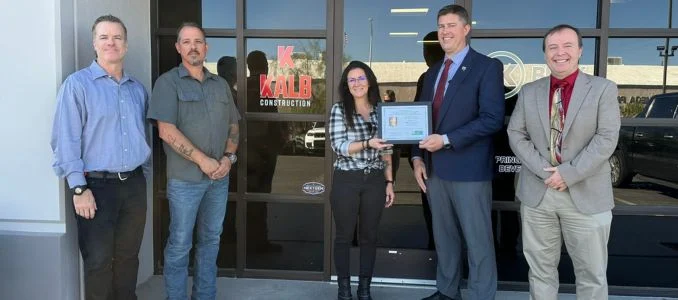
The awarding of the Safe Partner Award to Kalb Construction is a testament to what is possible when private enterprise collaborates with public health agencies. By prioritizing the human element of construction—the physical well-being of the worker—the company has set a high bar for its peers.

As the construction industry continues to navigate the complexities of modern labor demands and technical challenges, the success stories of firms that prioritize safety serve as a vital blueprint. It proves that safety is not an obstacle to productivity, but a fundamental prerequisite for sustained success. Kalb Construction’s journey from standard practice to an award-winning model of safety excellence stands as a clear indicator of the progress being made in the Nevada construction landscape, and it underscores the critical importance of the partnership between government oversight and industry responsibility.