
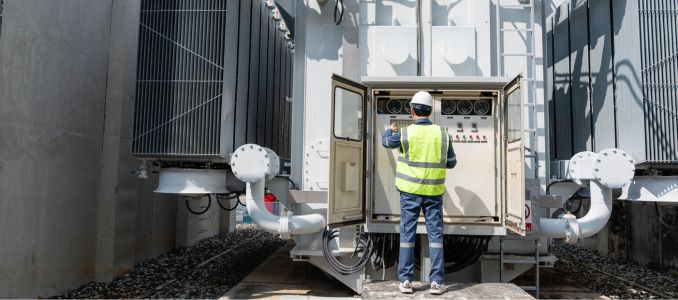
Arc flash incidents—sudden, violent releases of electrical energy—stand as a primary threat in this environment. With temperatures that can reach 35,000°F, an arc flash is not merely an equipment failure; it is a catastrophic event capable of vaporizing metal, causing severe third-degree burns, and resulting in fatalities. According to recent data from the Occupational Safety and Health Administration (OSHA), electrical hazards remain a perennial feature in the list of top workplace citations. Despite decades of safety mandates, these incidents continue to occur, often stemming from complacency, outdated infrastructure, or a failure to view safety as a continuous lifecycle rather than a periodic box-checking exercise.
The Evolution of Electrical Safety Standards
The history of electrical safety in the United States is marked by a shift from reactive to proactive protocols. Following the formalization of NFPA 70E (the Standard for Electrical Safety in the Workplace) in the late 1970s, industry standards began to emphasize the human element of electrical hazards. Before this, the focus was primarily on preventing fires; today, the focus is squarely on preventing injury to the individual technician.
The timeline of safety integration began with the initial adoption of NEC (National Electrical Code) standards, followed by the rigorous, risk-based approach introduced by NFPA 70E. In recent years, the mandate has expanded. Safety is no longer just about wearing PPE; it is about engineering controls, systematic maintenance, and data-driven risk management. For facility managers, the implication is clear: if an electrical safety program has not been overhauled in the last five years, it is likely functionally obsolete.
1. Establishing the Foundation: The Arc Flash Risk Assessment
The cornerstone of any modern electrical safety program is a comprehensive arc flash risk assessment. This is not a static document but a dynamic roadmap. A professional assessment identifies the "incident energy" at every point of potential contact within a facility. It calculates the specific thermal energy an employee would be exposed to during an arc fault, allowing for the precise selection of Personal Protective Equipment (PPE).

Without an updated assessment, organizations often rely on "rule-of-thumb" safety measures, which can lead to one of two dangerous outcomes: over-protection, which can hinder productivity and lead to heat stress for the worker, or, more dangerously, under-protection, where the PPE provided is insufficient to withstand the actual incident energy. Experts in the field, including industrial hygienists and electrical engineers, argue that the five-year re-evaluation cycle mandated by NFPA 70E is a minimum threshold. If a facility has undergone a system upgrade—such as the installation of new switchgear or the integration of renewable energy sources—the assessment must be updated immediately.
2. The Critical Role of Accurate Labeling
A technical assessment is only as effective as its communication to the end-user. A common failure point in industrial environments is the absence or degradation of safety labeling on electrical enclosures. When a technician approaches a piece of equipment, they must be able to instantly identify the potential risks.
Effective labels should include the following data points:

- System Voltage: Defining the nominal voltage of the equipment.
- Arc Flash Boundary: Identifying the distance at which an unprotected person could sustain second-degree burns.
- Incident Energy Levels: The calculated value in calories per square centimeter (cal/cm²).
- PPE Requirements: Explicit instructions on the level of flame-resistant clothing and gear required to perform work safely.
When labels are faded, missing, or inaccurate, the human error factor increases exponentially. Industry best practices suggest a "visual audit" of all electrical panels annually, ensuring that labels remain legible and that the information matches the current state of the facility’s distribution system.
3. Implementing a Preventive Maintenance Strategy
Maintenance is often the first casualty of budget cuts, yet deferring electrical maintenance is a high-risk gamble. Electrical distribution systems suffer from degradation due to environmental factors such as humidity, vibration, and dust accumulation. Over time, contact resistance increases, and insulation breaks down.
A preventive maintenance program should include:

- Infrared Thermography: Using thermal imaging to identify "hot spots" in connections before they fail.
- Circuit Breaker Testing: Ensuring that protective devices will actually clear a fault within the required timeframe. If a breaker fails to trip during an arc event, the incident energy can escalate significantly, turning a minor fault into a facility-wide catastrophe.
- Cleaning and Inspection: Removing debris that could facilitate a tracking fault or an arc event.
The logic is straightforward: a well-maintained system is a predictable system. When equipment is allowed to degrade, the "clearing time" of protective devices often slows down. Since arc flash energy is directly proportional to the time it takes for a breaker to trip, even a millisecond of delay in maintenance response can double or triple the potential injury severity.
4. Cultivating a Culture of Safety and Training
The final, and perhaps most important, pillar is the human element. Even with the best engineering controls, safety relies on the competence of the workforce. Training must move beyond basic compliance and into the realm of behavioral psychology.
Effective safety training programs should cover:

- The "Zero Energy" Principle: Emphasizing that no work should be performed on "live" equipment unless absolutely necessary and permitted by a documented risk assessment.
- Lockout/Tagout (LOTO) Mastery: Ensuring that every technician understands not just the procedure, but the necessity of verifying the absence of voltage before interacting with the equipment.
- Situational Awareness: Training workers to recognize the "red flags" of impending electrical failure—such as unusual odors, buzzing sounds, or signs of overheating.
Management responses to these requirements have been shifting. Increasingly, plant managers are partnering with third-party electrical safety specialists to conduct annual "gap analyses." These independent reviews provide an objective assessment of the safety culture, often highlighting gaps in knowledge that internal teams—due to familiarity and routine—might overlook.
Broader Impact and Industry Implications
The implications of ignoring these four pillars extend far beyond the immediate risk of physical injury. In the modern regulatory environment, the cost of an electrical incident includes substantial OSHA fines, potential litigation, increased insurance premiums, and long-term damage to corporate reputation.
Furthermore, the rise of "smart" electrical grids and the integration of IoT-enabled sensors are providing new tools for safety. Real-time monitoring of current, voltage, and temperature allows facilities to predict failures before they manifest as arc events. By moving toward a model of "condition-based" maintenance rather than "time-based" maintenance, forward-thinking organizations are reducing both their risk profiles and their operational costs.

As the industrial sector moves toward 2030, the complexity of electrical systems will only increase. With the proliferation of variable frequency drives (VFDs), large-scale battery storage, and complex automation, the potential for electrical arc flash events is evolving. The responsibility of the safety professional is to treat electrical infrastructure as a living system. By prioritizing regular risk assessments, maintaining clear and accurate documentation, adhering to strict maintenance schedules, and fostering a deep-seated culture of safety, facilities can safeguard their most valuable assets: their people and their operational reliability.
In summary, electrical safety is not a destination but a continuous process. Organizations that view these four pillars as fundamental business operations—rather than regulatory burdens—will find themselves better positioned to thrive in an increasingly automated and high-energy industrial future.