The Diagnostic Challenge of Parkinson’s Disease
Parkinson’s disease is a progressive disorder of the central nervous system that primarily affects movement, often including tremors, stiffness, and slowing of movement. For decades, the primary challenge for clinicians has been the "silent" nature of the disease’s early stages. By the time a patient exhibits the classic motor symptoms required for a clinical diagnosis, a significant percentage of dopamine-producing neurons in the brain have already been lost.
Current diagnostic protocols rely heavily on clinical rating scales, such as the Unified Parkinson’s Disease Rating Scale (UPDRS), and expensive neural imaging techniques like DaTscan. While effective in later stages, these methods can be subjective, costly, and often inaccessible to populations in developing regions or rural areas. The search for a "biomarker"—a measurable indicator of a biological state—has led researchers to explore various bodily fluids, including blood, cerebrospinal fluid, and more recently, the oily secretions of the skin.
From Sebum to Earwax: A Shift in Methodology
The genesis of this research lies in the understanding of sebum, an oily substance secreted by the sebaceous glands to lubricate the skin and hair. Previous studies have indicated that individuals with Parkinson’s disease often experience seborrheic dermatitis, an inflammatory skin condition, and that their sebum contains a distinct bouquet of volatile organic compounds (VOCs). These VOCs are thought to be byproducts of the systemic inflammation, oxidative stress, and neurodegeneration associated with the disease.
However, utilizing skin sebum as a reliable diagnostic medium presents significant hurdles. Sebum on the face or back is constantly exposed to environmental variables, including air pollution, humidity, topical skincare products, and varying temperatures. These factors can alter the chemical composition of the sebum, leading to "noise" in the data that complicates accurate diagnosis.
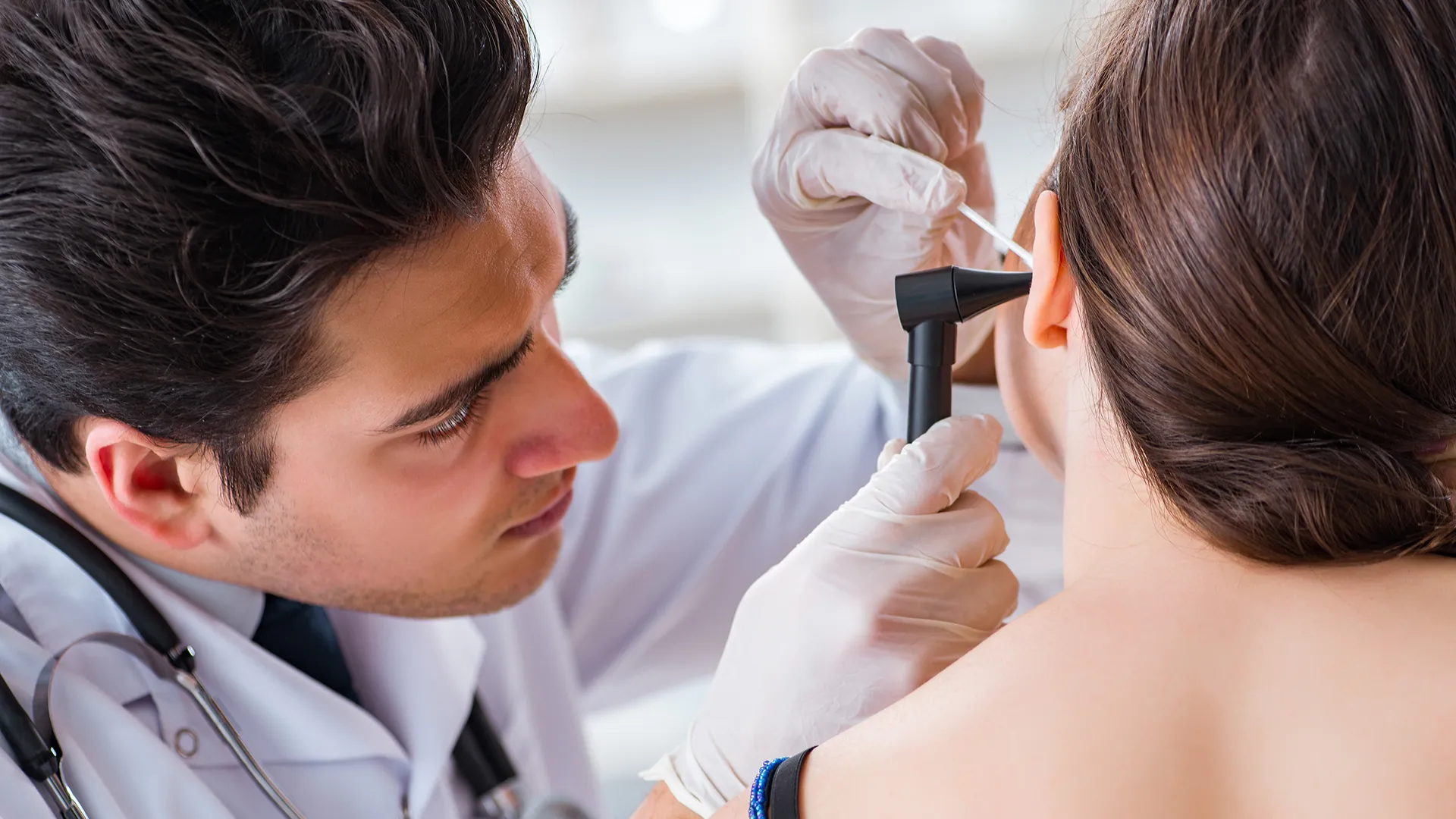
To circumvent these issues, Hao Dong, Danhua Zhu, and their colleagues turned their attention to the ear canal. The skin inside the ear is largely protected from the external environment, providing a stable microclimate. Earwax, or cerumen, is primarily composed of sebum mixed with dead skin cells and sweat. Because it is sheltered, earwax serves as a preserved reservoir of the body’s metabolic byproducts, making it an ideal candidate for chemical analysis.
Identifying the Chemical Fingerprints of Parkinson’s
The study involved a cohort of 209 human subjects, consisting of 108 individuals diagnosed with Parkinson’s disease and 101 healthy controls. The researchers collected samples by swabbing the ear canals of the participants, a process that is entirely non-invasive and takes only seconds.
Using gas chromatography-mass spectrometry (GC-MS)—a high-precision analytical method that separates and identifies different substances within a test sample—the team analyzed the volatile organic compounds emitted by the earwax. The analysis revealed a complex array of chemicals, but four specific VOCs stood out as being significantly altered in the Parkinson’s group compared to the healthy controls. These compounds are:
- Ethylbenzene: A common aromatic hydrocarbon.
- 4-Ethyltoluene: A compound often associated with metabolic changes.
- Pentanal: An aldehyde that is a known byproduct of lipid peroxidation, a process where oxidative stress damages fats in the body.
- 2-Pentadecyl-1,3-dioxolane: A more complex organic molecule whose presence in the earwax signaled a clear deviation from normal metabolic processes.
These four compounds were identified as the primary biomarkers for the disease. The presence of pentanal is particularly noteworthy, as lipid peroxidation is a hallmark of the cellular damage seen in Parkinson’s pathology.
The Role of the Artificial Intelligence Olfactory (AIO) System
Identifying the biomarkers was only the first step. To make the data actionable for clinical use, the researchers integrated their findings into an Artificial Intelligence Olfactory (AIO) system. This "electronic nose" was trained using the VOC data collected from the 209 subjects, learning to recognize the specific patterns and concentrations of the four key biomarkers that define a Parkinson’s profile.
The AIO-based screening model demonstrated a remarkable 94% accuracy rate in categorizing samples. This level of precision is significantly higher than many other preliminary screening tools and rivals the accuracy of specialists in the early stages of clinical diagnosis. By automating the analysis through AI, the system removes human subjectivity from the equation, providing a binary "positive" or "negative" screening result based on hard chemical data.
The Historical Context: The "Super Smeller" Phenomenon
The concept of "smelling" Parkinson’s disease is not entirely new and was famously popularized by the case of Joy Milne, a retired nurse from Scotland. Milne gained international attention when she claimed she could smell a "musky" change in her husband’s scent years before he was diagnosed with Parkinson’s. Her ability was eventually put to the test by researchers at the University of Edinburgh, where she correctly identified Parkinson’s patients by smelling their used T-shirts—even identifying one individual in the control group who went on to develop the disease months later.
Milne’s case provided the biological "proof of concept" that Parkinson’s alters the body’s odor. The current study by Dong and Zhu represents the technological evolution of that discovery, moving from the rare olfactory talents of a single individual to a standardized, machine-led diagnostic tool that can be deployed globally.
Implications for Global Healthcare and Early Intervention
The implications of an earwax-based AI screening tool are profound, particularly regarding the "Parkinson’s Pandemic." PD is currently the fastest-growing neurological condition in the world, with the number of cases expected to double by 2040.
Economic and Accessibility Benefits
In many parts of the world, access to a neurologist or an MRI facility is a luxury. An earwax swab, however, requires no specialized medical facility for collection. The samples can be collected by a general practitioner or even at home and sent to a central lab for AIO analysis. This could drastically reduce the cost of screening and ensure that high-risk populations are monitored more effectively.
The Window for Neuroprotection
The most significant benefit of early diagnosis is the potential for early intervention. While there is currently no cure for Parkinson’s, several emerging therapies aim to be "neuroprotective"—meaning they slow or stop the death of neurons. These therapies are most effective when administered at the earliest possible stage. By identifying patients through earwax screening before motor symptoms appear, doctors can initiate lifestyle changes, physical therapy, and pharmacological treatments that may significantly extend a patient’s quality of life.
Expert Reactions and Future Directions
The medical community has reacted to the study with a mixture of excitement and professional caution. While the 94% accuracy rate is impressive, researchers emphasize that this was a "small-scale single-center experiment" conducted in China.
"The results are highly promising and validate the long-held theory that PD has a distinct metabolic signature," says one independent neurologist not involved in the study. "However, before this can be implemented in a clinical setting, we need to see how these biomarkers hold up across different ethnicities, diets, and environmental backgrounds. What a person eats or the pollution levels in their city could potentially influence these VOCs."
Lead researcher Hao Dong echoed these sentiments, noting that the next phase of the research is critical. "The next step is to conduct further research at different stages of the disease, in multiple research centers and among multiple ethnic groups, in order to determine whether this method has greater practical application value," Dong stated.
Future studies will likely focus on:
- Longitudinal Tracking: Following high-risk individuals over several years to see how the earwax VOC profile changes as the disease progresses from the "prodromal" (pre-symptomatic) phase to clinical PD.
- Differentiation: Testing the AIO system against other neurological conditions, such as Alzheimer’s or Multiple System Atrophy, to ensure the biomarkers are specific to Parkinson’s.
- Device Miniaturization: Developing a portable, point-of-care device that could analyze the earwax on-site, providing results within minutes.
Conclusion
The development of an Artificial Intelligence Olfactory system to screen for Parkinson’s disease via earwax represents a fusion of traditional chemistry and modern computational power. By tapping into a protected biological resource and utilizing the pattern-recognition capabilities of AI, researchers have opened a new door in the fight against neurodegeneration. If validated in larger, more diverse trials, this method could become a first-line defense, transforming Parkinson’s from a disease of late-stage management to one of early, proactive intervention.
The study was supported by the National Natural Sciences Foundation of Science, the Pioneer and Leading Goose R&D Program of Zhejiang Province, and the Fundamental Research Funds for the Central Universities, underscoring the high level of institutional support for innovative diagnostic solutions in the field of aging and neurology.