
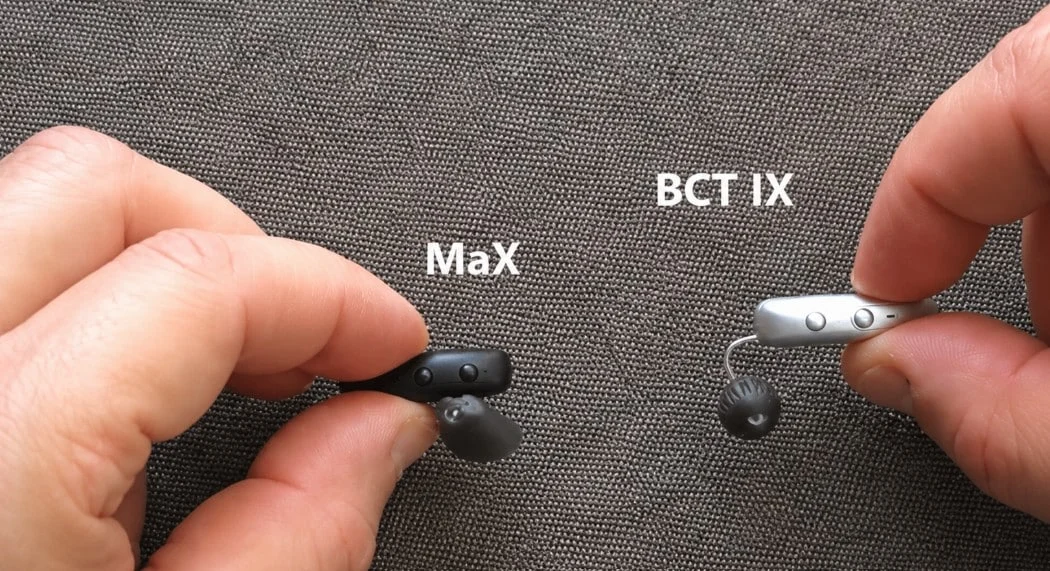
The MaX Platform: A Paradigm Shift in Processing Power
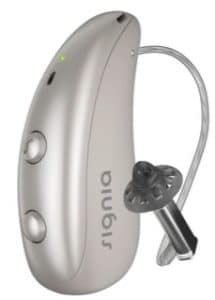
The inaugural device to harness the power of the MaX platform is the Pure Charge&Go MaX receiver-in-canal (RIC) hearing aid. This new device represents a monumental advancement in processing capabilities. Signia reports that the MaX chip boasts an astonishing 54 times more processing power than its predecessor, coupled with a 50% increase in energy efficiency and double the memory capacity. These hardware enhancements are crucial for supporting the continuous, real-time processing demands of the sophisticated Acoustic Intelligence system, ensuring seamless adaptation to changing sound environments without compromising battery life.
Historically, artificial intelligence in hearing aids has often been compartmentalized, primarily deployed for specific functions like noise reduction. Signia’s new architecture fundamentally redefines this approach. By enabling the four DNNs to operate in concert, sharing and integrating information, the MaX platform moves beyond isolated feature enhancement. This coordinated strategy allows the hearing aids to develop a much broader, more nuanced understanding of the wearer’s surrounding acoustic reality, leading to more natural and effective sound processing.
Jose Alves, Head of Signia, underscored the platform’s core objective: “We know that the biggest unmet need for hearing aid wearers is the ability to fully engage in the dynamic group conversations that happen in noisy, multi-talker environments. With Signia MaX, we’ve moved beyond the limitations of one-dimensional AI, unlocking system intelligence that understands the full moment. Acoustic Intelligence represents a new frontier in AI sound processing, fundamentally reimagining what hearing care professionals can offer their patients – and what patients can expect from their hearing aids.” This statement highlights Signia’s commitment to addressing the most challenging listening situations faced by individuals with hearing loss, pushing the boundaries of what is achievable with advanced AI.

Four Deep Neural Networks: A Coordinated Approach to Sound
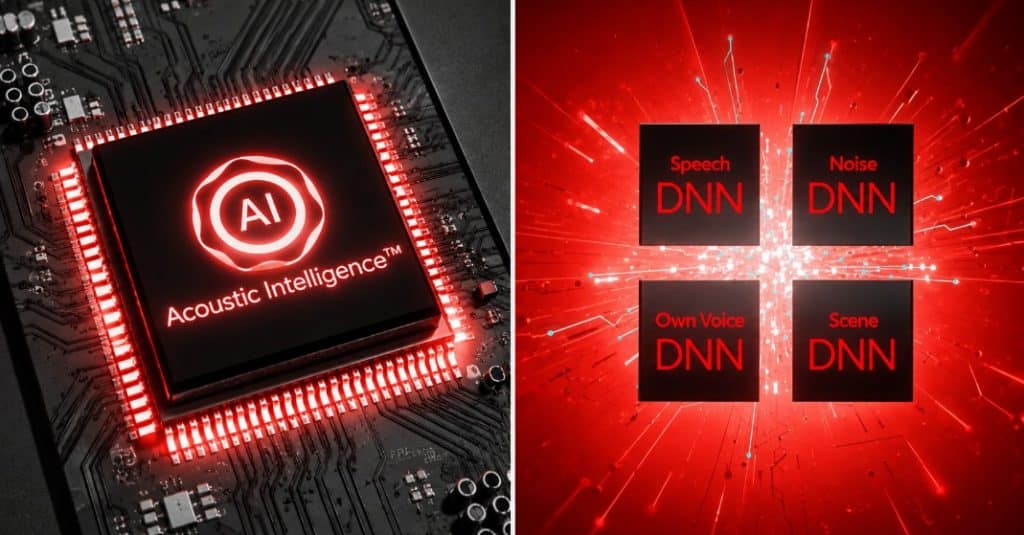
The Acoustic Intelligence framework is powered by four distinct DNNs, each meticulously trained to specialize in a different facet of the listening environment. While the article does not explicitly name each DNN, their functions can be logically inferred from the features they control:
- Speech Analysis DNN: Dedicated to identifying, analyzing, and isolating human speech from competing sounds.
- Noise Analysis DNN: Focused on detecting and categorizing various types of background noise.
- Environmental Conditions DNN: Responsible for assessing the overall acoustic scene, such as a quiet room, a bustling street, or a restaurant.
- Own Voice Recognition DNN: Specifically trained to recognize and process the wearer’s unique vocal characteristics.
These specialized networks synergistically control four corresponding features, each enhanced with AI capabilities: RealTime Conversation EnhancementAI, Own Voice ProcessingAI, Ambient Scene AdaptationAI, and Dynamic Noise ControlAI. This integrated system ensures that the hearing aids do not merely react to individual sound elements but intelligently respond to the complete acoustic context.
During a pre-launch event in Munich, Barinder Samra, MSc, Global Senior Commercial Audiology Manager for Signia, elaborated on this architecture, describing it as a "4-core brain." He emphasized that each DNN contributes its specialized knowledge to a unified processing strategy, allowing the system to achieve a comprehensive understanding of the wearer’s listening situation. This collective intelligence enables the different processing systems to collaborate in real-time, delivering a cohesive and natural sound experience.
Evolving Speech and Own-Voice Processing
The MaX platform builds upon and significantly enhances features introduced in Signia’s previous Integrated Xperience (IX) platform. The RealTime Conversation Enhancement feature, originally designed to track and amplify multiple conversation partners, now evolves into RealTime Conversation EnhancementAI. Samra explained that while IX utilized a machine-learning algorithm for speech identification, MaX employs a dedicated DNN, specifically trained for the intricate task of analyzing, detecting, and isolating speech. This new system processes 75% more data points per second than its IX predecessor, leading to dramatically improved speech clarity and comprehension, especially in multi-speaker environments.
The robustness of this AI is underpinned by extensive training. Signia reveals that the overall Acoustic Intelligence system was trained using approximately 40 million samples. This vast dataset encompassed a diverse range of auditory inputs, including various speech patterns, distinct own-voice signals, different types of noise, a multitude of environmental scenes, and multiple languages. Such comprehensive training ensures that the AI is highly adaptable and accurate across a wide array of real-world listening conditions.
Furthermore, internal Signia white-paper research substantiates the performance claims. One study reported that 97% of participants experienced improved performance with MaX in noisy group conversations compared to key competing devices. Another study highlighted MaX’s top ranking for signal-to-noise-ratio performance in group conversation testing, underscoring its efficacy in challenging acoustic environments. These findings suggest a tangible benefit for users struggling with one of the most common complaints about hearing aids: difficulty hearing in noise.
Another notable advancement in MaX is the transformation of Signia’s Own Voice Processing technology into Own Voice ProcessingAI. Previous versions required a specific in-office training procedure, where clinicians and wearers would work together to "teach" the hearing aids the unique acoustic characteristics of the wearer’s voice. With MaX, this training step is entirely eliminated. The dedicated DNN for own-voice recognition is engineered to automatically identify the wearer’s voice from the moment the hearing aids are activated. This automation streamlines the clinical workflow for hearing care professionals (HCPs) and ensures that the feature is consistently available to users without additional setup. This is particularly advantageous for modern care models, such as remote-first fittings, where traditional in-office calibration might be impractical.
Navigating Complex Environments: Noise and Scene Adaptation
Beyond speech, the MaX platform significantly refines how hearing aids interact with the broader environment. Signia’s Ambient Scene AdaptationAI transcends conventional scene classification, which typically involves switching between a limited number of fixed listening modes. Instead, this AI continuously evaluates multiple characteristics of the acoustic environment, offering a fluid and dynamic response that accurately reflects the nuances of the wearer’s surroundings.
Complementing this is Dynamic Noise ControlAI, an intelligent system designed to differentiate between various types of noise. Crucially, it also considers whether the wearer is actively participating in a conversation before determining the appropriate level of noise reduction. Samra provided a compelling example: imagine a wearer entering a bustling restaurant or bar. If they are not yet engaged in conversation, the system might subtly reduce ambient noise without completely isolating them from the environment. However, once a conversation begins, the same acoustic setting would prompt a different processing strategy, prioritizing speech clarity while aggressively managing competing noise. This intelligent context-awareness ensures that the hearing aid’s response is always aligned with the wearer’s listening intentions, providing a more intuitive and less fatiguing experience.
Empowering Users and Streamlining Care
Despite the sophisticated automation inherent in the MaX platform, Signia ensures that users retain meaningful control over their listening experience. Through the intuitive Signia app, wearers can select alternative programs or make fine-tuned adjustments when their personal listening intentions diverge from the automatic system’s determination. This balance between advanced automation and user empowerment is critical for patient satisfaction.
The Signia Assistant further enhances this user-centric approach. Wearers can use the Assistant within the app to ask questions and request specific adjustments. Samra explained that the system can analyze the wearer’s current environment and suggest changes within predefined fitting parameters. Importantly, these adjustments remain visible to the hearing care professional, allowing them to review the changes made by the user during follow-up visits. This transparency fosters better communication between wearers and HCPs, enabling more informed and personalized adjustments over time.
Furthermore, Signia integrates its AI processing with fast ear-to-ear communication, ensuring that the left and right hearing aids remain perfectly synchronized as acoustic conditions evolve. This coordinated binaural operation allows the entire system to function as a unified entity, providing a cohesive and immersive sound experience.
Unprecedented Connectivity: OneConnect Technology
The Pure Charge&Go MaX also introduces what Signia has dubbed OneConnect Technology, marking a significant milestone in hearing aid connectivity by consolidating multiple major technologies within a single device. The hearing aid natively supports Bluetooth Classic, Bluetooth LE Audio, telecoil, and Auracast broadcast audio.

This comprehensive connectivity suite is designed to offer unparalleled versatility. The inclusion of both Bluetooth Classic and LE Audio ensures broad compatibility with the vast array of existing smartphones and other consumer electronic devices, while simultaneously future-proofing the platform for the burgeoning ecosystem of LE Audio devices. Andrew Bellavia, who attended the pre-launch event, highlighted the growing importance of connectivity in daily hearing aid use, extending beyond simple phone calls to encompass computer meetings, media streaming, and assistive listening systems in public venues.
Signia’s decision to retain a telecoil is a pragmatic one, ensuring continued compatibility with existing hearing loop systems and other assistive listening technologies that remain widely deployed in public spaces globally. This ensures accessibility for users in various environments.
Looking to the future, Auracast support is built into the MaX platform. While full Auracast functionality is slated to be enabled through a firmware update delivered via the Signia One app by March 2027, its inclusion signifies Signia’s forward-thinking approach. Auracast, a new Bluetooth feature, promises to transform public audio experiences, allowing users to connect directly to broadcast audio in places like airports, gyms, and conference centers.
Jose Alves emphasized the liberation that OneConnect Technology brings: “With Signia Pure Charge&Go MaX, connectivity no longer needs to define the hearing aid conversation. Powered by OneConnect technology, it gives hearing care professionals one complete connectivity solution, so they do not need to begin by asking what phone a wearer has. They can focus on the patient’s audiological needs, listening environments, and desired outcomes – knowing they are fitting a device built for today and ready for tomorrow.” This statement underscores the strategic advantage of offering universal connectivity, allowing HCPs to prioritize patient needs over technical compatibility concerns.
Power and Durability for Daily Life
The advanced processing capabilities of the MaX platform are powered by the new MaX chip, which, as previously mentioned, delivers 54 times more processing power, 50% greater energy efficiency, and twice the memory compared to the previous generation. Despite continuously running four sophisticated DNNs, the rechargeable Pure Charge&Go MaX offers an impressive battery life of up to approximately 30 hours, according to Signia. This extended runtime is critical for users who rely on their devices throughout their waking hours.

The hearing aid ships with a compact portable charger, capable of storing up to four full charges. A complete charge takes approximately four hours, while a convenient 30-minute quick charge can provide up to six hours of runtime, offering flexibility for users on the go.
Durability is also a key consideration for daily wear. The Pure Charge&Go MaX is rated IP68 for water and dust resistance, signifying its robust protection against environmental elements. Additionally, it incorporates a plasma-enhanced coating, providing an extra layer of defense for its internal components, ensuring long-term reliability and performance.
Real-World Validation: First Impressions from Munich
To provide firsthand validation of the new technology, Andrew Bellavia was fitted with pre-release Pure Charge&Go MaX devices during the Munich pre-launch event. He embarked on an organized city tour, critically evaluating the new platform’s performance in real-world conditions. Bellavia also brought his personal Signia IX hearing aids, allowing for direct, comparative testing in various listening situations.
One notable test occurred in Munich’s bustling Marienplatz, where Bellavia engaged in a casual conversation amidst significant plaza noise. He reported no difficulty following the conversation while using MaX in its automatic mode. Out of curiosity, he switched to an omnidirectional setting, which reduced the DNN-driven processing. Bellavia immediately noticed a heightened awareness of the overall noise level, including the distinct sound of a nearby bubbling fountain. Upon returning to automatic mode, the fountain’s sound was effectively suppressed, while conversation remained prominently clear. This direct comparison vividly illustrated the power of Acoustic Intelligence in intelligently managing background noise.
Bellavia continued to switch between modes throughout the city tour, consistently preferring the automatic setting with the DNN processing fully engaged. Later, the group visited a beer hall, where approximately a dozen people were seated at a long table. Despite the moderately loud environment, Bellavia reported comfortable group understanding without significant listening strain. When he switched back to his own IX hearing aids, he described the older platform as sounding "somewhat more processed," while MaX delivered a sound that was "more natural and easygoing."

His overall assessment was highly positive: “I found the Signia MaX to do an excellent job improving speech awareness and comprehension including in some complex situations. It is a significant step forward for Signia, offering clear and meaningful improvements over previous generations.”
Market Outlook and Future Directions
The Signia MaX platform and the Pure Charge&Go MaX hearing aid are scheduled for commercial release beginning August 24, 2026, in key markets including the United States, Germany, and the Nordic countries. Signia has indicated that additional markets will follow later in 2026, signaling a global rollout strategy.
The Pure Charge&Go MaX will initially launch as a rechargeable RIC device and will be available in eight distinct colors, offering aesthetic choice to users. Importantly, Signia has positioned MaX as a foundational platform, implying that the underlying technology will eventually be expanded across a broader range of hearing aid styles and form factors, ensuring that more users can benefit from Acoustic Intelligence.
Beyond the core AI features, the MaX platform includes other notable enhancements such as Sound Smoothing 2.0. This feature is engineered to effectively reduce transient sounds – sudden, sharp noises like keyboard clicks or paper rustling – while meticulously preserving the clarity of speech. This attention to detail contributes to an overall more comfortable and less disruptive listening experience.
The launch of Signia MaX represents a pivotal moment in the hearing aid industry. By integrating multiple specialized deep neural networks into a cohesive "Acoustic Intelligence" system, Signia is setting a new benchmark for how hearing aids process and adapt to the complexities of real-world sound environments. This move towards a more holistic, context-aware AI promises to significantly enhance speech understanding in challenging situations, simplify the user experience, and provide hearing care professionals with advanced tools to deliver superior patient outcomes. The combination of unprecedented processing power, advanced AI, and comprehensive connectivity positions MaX as a transformative platform ready to meet the evolving needs of hearing aid wearers today and into the future.

For a deeper dive into the technology and Bellavia’s comprehensive review, an interview with Barinder Samra in Munich ahead of the MaX launch is available, covering the platform’s four-DNN architecture, connectivity, differences from Signia IX, and initial real-world impressions.
References
- Jensen et al. (2026). Signia Multi-adaptive Xperience outperforms key competitors in group conversation in noise. Signia White Paper.
- Jensen et al. (2026). Signia Multi-adaptive Xperience with Acoustic Intelligence: Holistic AI-driven enhancement of conversations in noise. Signia White Paper.